By Teni Oduntan. Edited on May 3rd
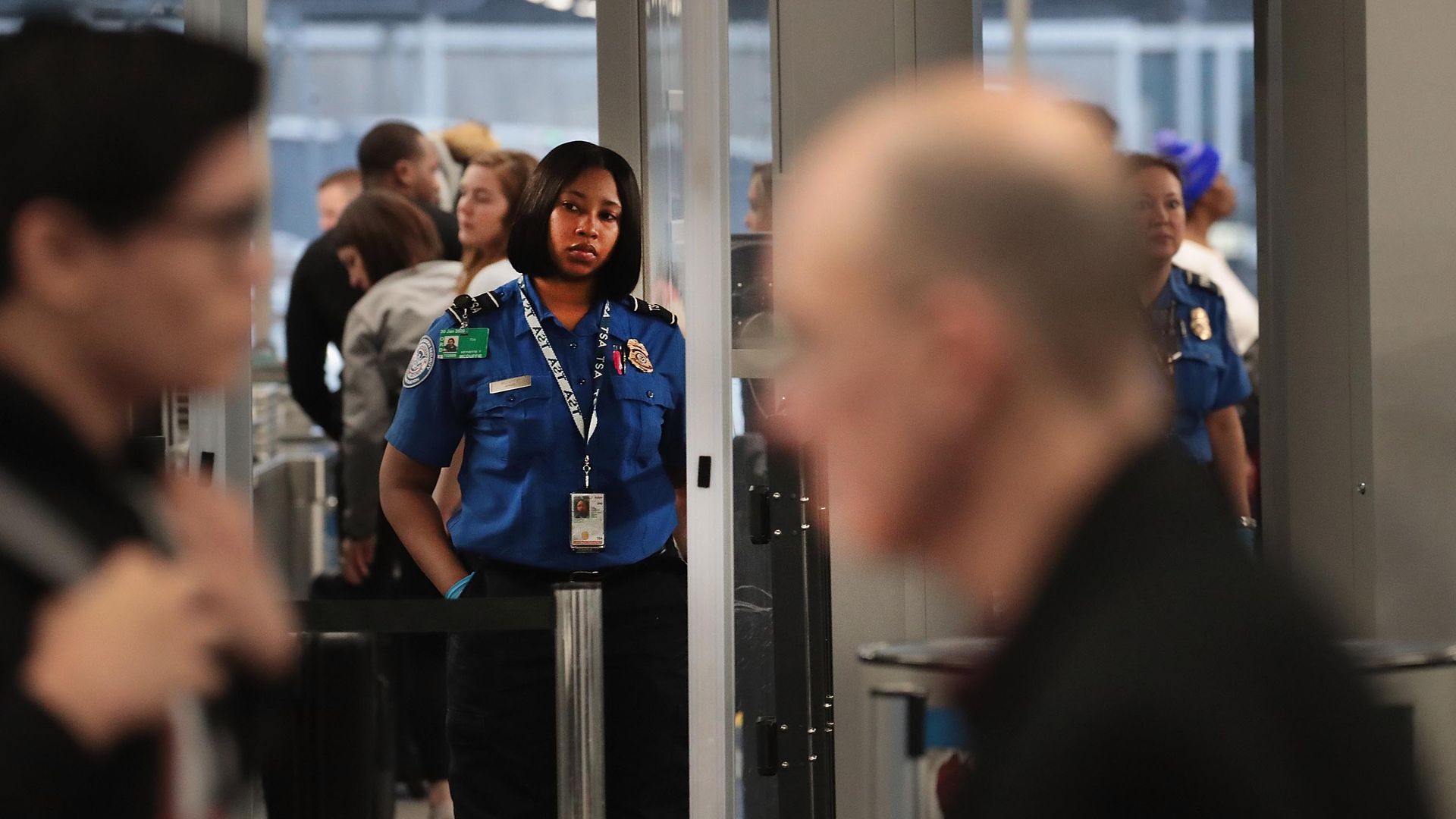
“I have never felt so vulnerable in my life.”
WASHINGTON DC– Although the news has given a warning to the public to control their mobility and physical contact from others, 54-year old Amandla Johnson still finds herself arriving at work every morning. As a Transportation Security Administration (TSA) agent at Dulles International Airport, Johnson is one of thousands of airport employees that are exposed to the 2.7 million passengers that pass through American airports daily, and all the risks comes with them.
Buzz on the virus began to circulate in late January, when a total of 9976 cases of Corona-Virus, also known as Covid-19 were reported in at least 21 countries. This included the first confirmed case of the 2019-nCoV infection in the United States, which was reported on January 20, 2020.
Fast-forward one and half months to March, and the 54-year-old agent is still going to work as her job deemed her an ‘essential worker’. “ At first, I didn’t take this whole thing seriously.” explained Johnson, “I thought it was going to be like the flu season, in one month and out, the next month.” She says with a joking smile on her face. She felt as though going to work would be normal.
The only difference is that Johnson’s once bustling workspace, filled with people from all walks of life, became a shadow of itself as the number of travelers reduced by more than 45%, within the month of January. Despite international air traffic taking precautions to reduce exposure, in countries with a high number of cases such as Italy and England, America seemed to be lagging behind.
Despite the notes and public service announcements for the public to be more cautious, the airport workers did not notice a difference in work conditions.
“They did not provide us with any gloves or masks. It was quite ironic that the passengers had masks, but we didn’t. It felt like we were exposed to the world,” said Johnson “I have never felt so vulnerable in my life.”
According to Transportation Security Administration, out of the 512 virus cases reported as of March, 456 of them were TSA agents, accounting for 87.9% of the total cases in the country. “I felt like I was in the belly of the beast, and that’s why so many airport workers [contracted] the virus,” expressed Johnson.

Things only seemed to worsen as this phenomena not only plagued Virginia but also Georgia. Fifty-five year old Georgia native and current TSA agent, Yinka Idowu has worked in the aviation industry for more than twenty years at Hartsfield-Jackson Atlanta international airport. He said has never seen this many of his colleagues stop coming to work until now.
According to the Federal Aviation Administration (FAA), since the start of the pandemic, the number of airport workers being fired has increased by nearly 40%, leaving numerous workers vulnerable and without income. Meanwhile, the remaining workers are left without airport provided amenities to protect themselves from the virus, which has resulted in drastic consequences. According to the Transport Security Administration, out of the 14 cases said to have been contracted at the airport, thirteen of them were TSA workers. Before the “mass firing” as Idowu prefers to call it, there was a ‘wall of obscurity’ between the TSA workers and the people in the FAA. Idowu explains that the process of firing was taken as a gradual one instead of an immediate pink slip.
“At first, they told us that they were willing to approve extended vacation times. This enabled workers to stay at home for more days than usually given, excluding the 14-day virus-mandated isolation period given to workers suspected of having the virus, ” Idowu expressed, “Then the narrative changed from ‘offering’ to recommending that certain people take time off. Later shifting to telling those agents not to come back.”
According to the Union of Federal Government Employees, the TSA workers are at a very disadvantaged position. “These are very strange times that we live in,” states Andrew Huddleston, the Director of Communications at the Union’s TSA division. “The agents are being left with a dilemma where they have to choose between their health or their livelihoods and it should not be that way.”
Huddleston then elaborates, saying that there are many factors in which the dilemma entails, which might cause an airport worker to hesitate before taking these offered extended off-days. “Some of these workers are living paycheck to paycheck, and due to the long hours, have shown that this is their primary or main source of income,” said Huddleston. Although the job leaves them vulnerable to contracting the virus, it does not stop the need for these agents to provide their families.
“The government offers social distancing, but a lot of people, specifically government workers, do not have the privilege to practice social distancing.” explains Huddleston “People need money to pay bills, people need money to buy groceries, but that is not possible if the on-ground workers (like the TSA agents) are practicing social distancing away from work. They cannot work from home.”
Despite the closure of borders around the country and the halt in air-traffic, Dulles airport has remained open in case of ‘emergency travel’. Despite the vast reduction in workers, the FAA directors did not mandate safety measures for the Airport workers until the pandemic worsened, meaning that the TSA workers were left at risk. “We did not expect the pandemic to reach the heights that it has reached,” explained Lorraine Herson- Jones, a manager for Airport Compliance and Management Analysis. in providing a safer working environment. “The airport is cleaned and disinfected twice a day.” and the TSA workers were mandated with an air conversion mask as well as their already mandated gloves, in order to prevent contact as well as spreading the disease. According to the FAA, the Transportation Security Administration screened just 87,534 travelers across the country on March 26th, the smallest number ever recorded in recent history. That was down from 2.21 million on the same day a year before, an extraordinary drop of more than 95 percent.

The Airports Authority is limiting each Mobile Lounge to 50 passengers or less. At peak times, some passengers may be held on their aircraft for a short time, which allows them to remain seated rather than standing.
Passengers then continue through the U.S. Customs and Immigration process.
Passengers who have connecting flights should notify their airline representative after clearing CDC screening.
The airport continues to work closely with our federal officials to make this process as quick and smooth as possible. “We appreciate everyone’s patience and understanding during this time” says Lorraine Herston-Jones, Manager of Airport Compliance at the FAA. “We understand the ambiguity of the situation, but and are working closely with the airports to ensure the prevention in increase of cases.”
Despite the implications, TSA workers are still going to work.“It is definitely a risky job” says Johnson. “ However, since travel has stopped, we do have contact with much less people, reducing the risk of infection. It is not as risky as, say, a medical professional’s job, but it still carries heavy risk,” expressed Idowu “Despite the risk,TSA agents manage to make it to work everyday.”
 Advanced Reporting Times, Spring 2020