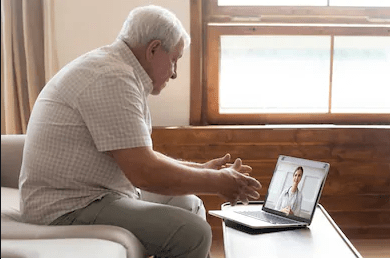
Man using telehealth services. Source: J. Fikes, Stock Images
By: Theo Smith // May 1, 2020
For Jessa Bohem, a speech and language pathologist for Fairfax County Public Schools, in-person care is essential. Bohem was undergoing fertility treatments but has delayed the process due to the COVID-19 outbreak.
“We have invested so much time and money into these treatments,” said Bohem. “My biological clock is ticking and the longer I wait to get treatment, the higher the risks associated with any future pregnancies.”
Since researchers still don’t understand the effects of the virus on pregnancy, the American Society for Reproductive Medicine (ASRM), a multidisciplinary organization dedicated to the advancement of science and practice of reproductive medicine, issued guidelines advising health professionals to avoid treatment cycles during this uncertain time.
“Of course I understand the safety concerns but putting this treatment on hold until a vaccine is found could take up to two years,” said Bohem. “Two years from now everything could be different and at that point there is a possibility that I wouldn’t be able to have children at all.”
In the past few months, the use of telehealth by health care professionals has increased exponentially and has provided patients with access to health information by video conferencing, remote treatment and virtual appointments. Telehealth is a relatively new part of the health care system and is being pushed onto the public sooner than many expected.
According to the World Health Organization (WHO), telehealth is the use of electronic information and telecommunication technologies to support long-distance clinical health care, patient and professional health education, and public health administration.
“Telehealth is an exciting development because of the possibility to reach more patients but it’s something that we as health care professionals should be skeptical about in some ways,” said Anna Charalambous, a Navy nurse currently stationed in Baton Rouge, Louisiana treating COVID-19 patients.
According to the Wall Street Journal, almost 80% of hospitals in the U.S. have some type of telehealth service available but not all staff members have been trained on how to use the technology appropriately.
Although telehealth offers doctors a solution to seeing patients during COVID-19, it is also negatively affecting health economics. Hospital workers who are not working with COVID-19 patients are losing their jobs, this includes out-patient care, maternity wards, and more.
“A big part of the hospital industry is out-patient care,” said Charalambous. “Not only do hospitals make a lot of money from offering out-patient care but it also employs hundreds of health care professionals.”
According to Kaiser Health News, many hospitals are facing mass cancellations of nonessential surgeries. This is typically the biggest moneymaker for hospitals and now they are dealing with increasing expenses due to an overflow of COVID-19 patients.
Since the start of the pandemic, health officials have been urging the public to use telehealth services when possible, in order to limit the spread of disease. However, for patients with chronic conditions, the use of telehealth has added additional road-blocks to receiving accurate and appropriate health services.
“Because of the crisis, health care for people with chronic conditions has been interrupted and for many people that just can’t happen,” said Charalambous. “We know from data that these are the same set of people who are extremely vulnerable to COVID-19 and if they can’t get access to their normal treatments, they are going to be even more vulnerable to the virus.”
There are significant concerns about how patients will halt non-emergency treatments and how their health will be affected during the COVID-19 pandemic.
“I have chronic hives and depend on in-person treatment,” said DC resident, Christina Howerton. “My condition may not be life threatening but it has extreme effects on my health and my ability to function on a day-to-day basis.”
For patients with chronic conditions, like Howerton, the stay-at-home orders in response to COVID-19, shut down in-person appointments and treatments. Many of these patients fear their health will be negatively affected during the pandemic and they will lack access to care.
“Everything has been super chaotic,” said Howerton. “There has been a lack of communication between patients and doctors, this has caused a lot of fear about the future of health care.”
For many people living with a chronic condition, telehealth services may not offer them the care they need in order to live a healthy life. However, for other patients and many health care professionals, telehealth offers major benefits and has proven to be useful during the COVID-19 crisis.
American University senior, Amanda Warshaw, is immunocompromised and has been experiencing increasing fear about COVID-19. Like many others during this uncertain time, Warshaw wanted to reduce her risk of exposure and stay at home as much as possible.
“Last week, I had a video call with my doctor because I needed to get my monthly check-up but I didn’t want to risk going in person,” said Warshaw. “I thought it was a really great tool because the appointment felt the same way it does in person, but I was still able to practice social distancing.”
In order to limit her exposure, she used telehealth services to communicate with her doctor and stay up-to-date on the latest information about the virus.
“I feel safer using online health services during coronavirus because I don’t want to put myself or my family at risk by going into the doctor’s office,” said Warshaw. “I don’t see a downside to telehealth because I still have the ability to talk to my doctor online and express any concerns.”
Many telehealth advocates argue that during COVID-19 they have successfully filled the gaps in the health care system and connected patients with appropriate services. While many doctors are temporarily shutting down their offices, the increased use of virtual appointments has helped widen the scope of telehealth services and make it more mainstream.
One concern for many patient advocates surrounds the quality of care when using telehealth. For the past decade, the patient community has been pushing legislation to protect health care quality in the U.S. Some of these groups are expressing concerns about how high-quality care will be administered through digital health services.
Still, many health professionals don’t think the quality of care will be affected as long as there is education and awareness about how to use these services appropriately.
“I think patients will still receive high-quality health care through digital services,” said Charalambous. “Doctors will actually have more time to make virtual appointments personalized and give patients additional time to talk through possible health concerns.”
One of the many reasons that hospitals and health care professionals have been hesitant about investing in telehealth is because of how it might negatively affect older patients, who may not be well-versed in technology. The concern is that increased use of digital services would prohibit older individuals from receiving care and the possibility that health related costs might increase.
However, according to the American Association of Retired Persons (AARP), the nation’s largest nonprofit organization dedicated to educating Americans over 50 about health services, Medicare will now cover telehealth services for routine follow-up visits. This helps ease the financial burden of health care and address concerns about the use of telehealth.
There is little doubt that the COVID-19 crisis has brought telehealth to the forefront of medicine and treatment. This pandemic is causing significant concerns globally and has drastically changed lives for people around the world.
While social distancing is an effective way to limit the spread of disease, it is also forcing health care professionals to use telehealth services, whether they are prepared to or not. Until a vaccine is found, the future of health care is in the hands of telehealth providers. At this point in time, it is important that the public is educated and aware of telehealth services and how to use them correctly.
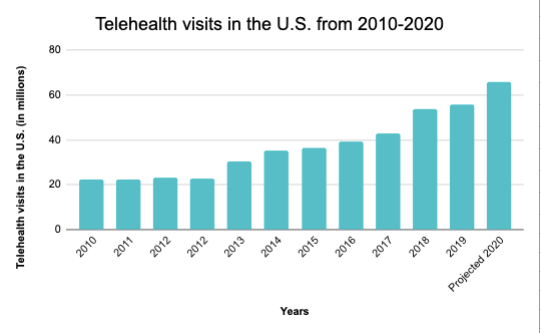
 Advanced Reporting Times, Spring 2020