By Gabrielle Bremer
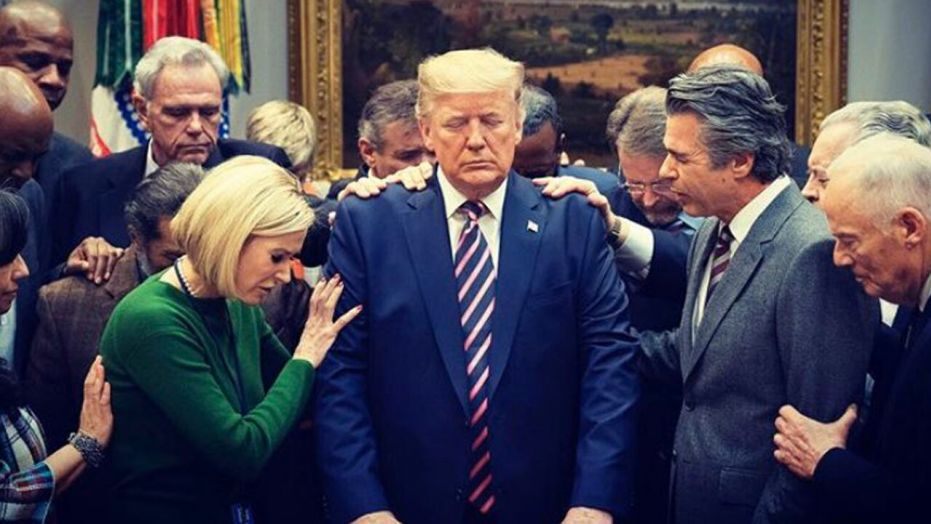
WASHINGTON — Despite the president’s three marriages, a scandal with adult film actress, Stormy Daniels and sexual assault allegations, evangelical Christians continue to support their unchristlike leader. The election of Donald Trump left people scratching their heads as to why his evangelical fan base continues to support him.
In 2016, the Pew Research Center reported that President Trump received 81% of the white, evangelical Christian vote. In the 2018 midterm election, Republicans received 75% of the evangelical vote.
“People went to the polls not seeking a pastor-in-chief,” Tim Goeglein, vice president of external and government relations for Focus on the Family, said in a phone interview. “They were seeking a person who could sometimes be a bodyguard,” for the issues evangelical Christians are most passionate about, Goeglein said.
Goeglein said one of the reasons why Trump was overwhelmingly successful during the 2016 campaign was because he released the names of some of the Supreme Court nominees he might consider if elected. “That had never been done in American history by a president of either party,” he said.
In February of 2016, Antonin Scalia, one of the most “consequential conservative (Supreme Court justices) of the last century” died. People wanted to know if the vacancy would be filled by another consevative in the “Scalia mold.” “When people went to the polls … they were also thinking about the vacancy on the Supreme Court,” Goeglein said.
“Trump’s handling of that vacant seat became, in essence, kind of the unifying rally cry for most evangelicals,” Timothy Head, executive director for the Faith and Freedom Coalition, said in a phone interview. “It wound up being enormously reassuring and consolidating for tons of evangelicals.”
Head thinks Trump’s “clearest and most profound” accomplishment in his three years of being in office is the amount of judicial appointments and confirmations. He’s appointed just over 200 federal judges, including, district-court judges, appellate judges, and two Supreme Court justices.
Head said another reason why Trump was successful in 2016 was because he took clear positions about issues evangelicals care about, like abortion and religious liberty. “He likes to say ‘promises made, promises kept,’” Head said. A lot of evangelicals like how Trump is doing what he said he was going to do during the campaign. He’s kept a lot of those promises in three years, despite the resistance from Congress and unfavorable media coverage, Head said.
While Trump was clear on his policy positions, he also chose one of the most high profile evangelicals in politics, Goeglein said. Mike Pence was a member of Congress, member of the leadership of the House of Representatives and a governor. “President Trump choosing Vice President Pence sent a very strong signal to the conservative base,” he said.
Others aren’t as thrilled that President Trump is fulfilling the requests of his evangelical fan base. Maggie Garrett, vice president for public policy for Americans United for Separation of Church and State, said, in a phone interview, the Trump administration has been pushing policies that use religion to discriminate against and undermine the rights of others. Currently, the group is co-running a coalition that opposes private school vouchers because they “primarily fund religious education with public money,” the Americans United website said.
The organization is also working to protect the Johnson Amendment. The amendment is a provision in the tax code that says non-profit organizations, including churches, can’t endorse political candidates. “When President Trump realized that meant that churches couldn’t endorse him, he decided that he would get rid of it.”
The group has been outspoken about Trump’s unofficial evangelical advisory board. “In the beginning of his presidency, they were boasting about the unprecedented influence they had on policy, personnel, judges, they would have meetings with him frequently,” Garret said. “A lot of his policies, including some of his anti-trans policies, came out of their meetings.”
The organization has called on the board to disband. In 2018, they sent an official letter to the White House, citing the group for not complying with federal regulations. “It is clear that the President’s Evangelical Advisory Board is doing substantive work with the Trump Administration behind closed doors—without any sunlight for the public,” the statement said.
“It is very clear the access he is giving to his base of supporters, white, evangelical, conservative Christians, is significantly greater than he gives to others,” Garrett said.
In contrast to the Trump administration, Obama had an advisory council on Faith-Based and Neighborhood Partnerships that were diverse by religion.“It wasn’t just Christians, there were Jewish groups, Muslim groups, secular groups. It was also diverse politically. There were people on both sides of the aisle,” Garrett said.
Ultimately, Trump continues to be successful among evangelical Chirstians because he champions their issues. Trump is the messenger and there is this “centripetal compulsion” to only focus on the messenger, “but there is really little effort to understand the audience,” Head said.
“They think that they can cover the messenger (in a) different way the audience will dissipate. The reality is that the audience is the one that the messenger understands that this is what the audience cares about,” he said.
“All they think about is the messenger. If they can disprove the messenger, the audience will act accordingly, and that’s not the case,” Head said.

 Advanced Reporting Times, Spring 2020