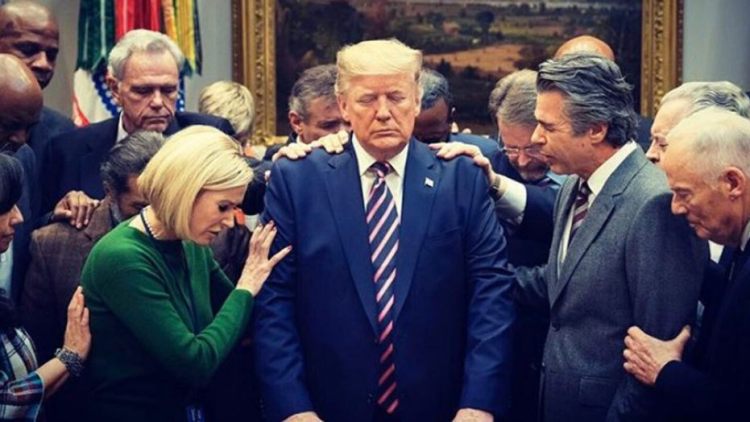
Why evangelical Christians continue to support Trump

By Gabrielle Bremer

WASHINGTON –Despite the president’s three marriages, a scandal with adult film actress, Stormy Daniels and sexual assault allegations, evangelical Christians continue to support President Donald Trump. The confirmation of Brett Kavanaugh and the appointment of over 200 federal judges, his stance on abortion and his vice president choice, Mike Pence, contributed to his election win in 2016 and his continued success among evangelical voters.

In 2016, the Pew Research Center reported that Trump received 81% of the white, evangelical Christian vote. In the 2018 midterm election, Republicans received 75% of the evangelical vote.

“They’re a little tired of all of the policies, and being forgotten in the forgotten parts of America,” Anthony Cozzello, pastor at Revolution Community Church in Logansport, Indiana, said in a phone interview. Cozzello has been involved in ministry for 17 years and a lead pastor for 10. Cozzello, a political moderate, compared Trump to an ice breaker boat that that sails ahead of other boats to break up the ice in the Arctic Sea. “He just says whatever he’s thinking, there’s not much political correctness, and it’s breaking things up,” he said. “It’s changing the climate politically, and I think that’s what a lot of people wanted.”

Trump was overwhelmingly successful among Christians because “people went to the polls not seeking a pastor-in-chief,” Tim Goeglein, vice president of external and government relations for Focus on the Family, said in a phone interview. “They were seeking a person who could sometimes be a bodyguard,” for the issues evangelical Christians are most passionate about, Goeglein said.

Timothy Head, executive director at Faith and Freedom Coalition, said Trump was successful in 2016 because he took clear positions about issues evangelicals care about, like abortion and religious liberty. “He likes to say, ‘promises made, promises kept,’” Head said. A lot of evangelicals like how Trump is doing what he said he was going to do during the campaign. He’s kept a lot of those promises in three years, despite the resistance from Congress and unfavorable media coverage, Head said.

Goeglein said one of the reasons why Trump was overwhelmingly successful during the 2016 campaign was because he released the names of some of the Supreme Court nominees he might consider if elected. “That had never been done in American history by a president of either party,” he said. The short list was mostly made up of conservative judges who evangelical Christians hoped would overturn Roe v. Wade and promote religious freedom, according to CNN.

In February of 2016, Antonin Scalia, one of the most “consequential conservative (Supreme Court justices) of the last century” died. People wanted to know if the vacancy would be filled by another conservative in the “Scalia mold.” “When people went to the polls … they were also thinking about the vacancy on the Supreme Court,” Goeglein said.

“Trump’s handling of that vacant seat became, in essence, kind of the unifying rally cry for most evangelicals,” Timothy Head, executive director for the Faith and Freedom Coalition, said in a phone interview.  “It wound up being enormously reassuring and consolidating for tons of evangelicals.”

Head thinks Trump’s “clearest and most profound” accomplishment in his three years of being in office is the number of judicial appointments and confirmations. He’s appointed just over 200 federal judges, including district-court judges, appellate judges, and two Supreme Court justices.

While Trump was clear on his policy positions, he also chose one of the most high-profile evangelicals in politics, Goeglein said. Mike Pence, a leader for the religious right and advocate for anti-LGBTQ and anti-abortion policies, was the first vice president to attend the March for Life rally in 2016. “President Trump choosing Vice President Pence sent a very strong signal to the conservative base,” he said.

Trump was also the first sitting president to attend the March for Life rally in January. “To be part of the March for Life is a pretty bold move to speak towards what he believes is correct with that policy,” Cozzello said.

Maggie Garrett, vice president for public policy for Americans United for Separation of Church and State, said in a phone interview, the Trump administration has been pushing policies that use religion to discriminate against and undermine the rights of others. Currently, the group is co-running a coalition that opposes private school vouchers because they “primarily fund religious education with public money,” the Americans United website said.

The organization is also working to protect the Johnson Amendment. The amendment is a provision in the tax code that says non-profit organizations, including churches, can’t endorse political candidates. “When President Trump realized that meant that churches couldn’t endorse him, he decided that he would get rid of it,” Garrett said.  

In May of 2017, Trump signed an executive order that would repeal the amendment. However, only Congress can repeal the amendment. “The Order does not exempt religious organization from the restrictions on political campaign activity applicable to all tax-exempt organizations,” attorneys with the Department of Justice said in an article by Americans United. Currently, houses of worship can still preach about political and social issues, but they cannot endorse or oppose political candidates.

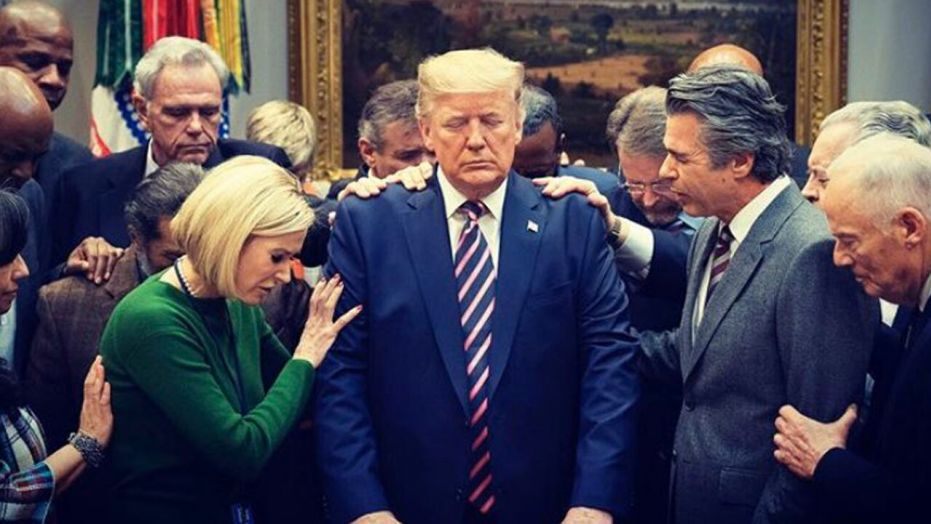
Americans United has also been outspoken about Trump’s unofficial evangelical advisory board. “In the beginning of his presidency, they were boasting about the unprecedented influence they had on policy, personnel, judges, they would have meetings with him frequently,” Garret said. “A lot of his policies, including some of his anti-trans policies, came out of their meetings.” Religion News Service said evangelicals have discussed a wide range of issues in the board’s meetings, including abortion, transgender rights and international religious freedom. 

The organization has called on the board to disband. In 2018, they sent an official letter to the White House, citing the group for not complying with the Federal Advisory Committee Act, a law that requires the committees who meet with the executive branch to be transparent about their meetings. “It is clear that the President’s Evangelical Advisory Board is doing substantive work with the Trump Administration behind closed doors—without any sunlight for the public,” the statement said.

“It is very clear the access he is giving to his base of supporters, white, evangelical, conservative Christians, is significantly greater than he gives to others,” Garrett said.

In contrast to the Trump administration, Obama had an advisory council on Faith-Based and Neighborhood Partnerships that were diverse by religion. “It wasn’t just Christians, there were Jewish groups, Muslim groups, secular groups. It was also diverse politically. There were people on both sides of the aisle,” Garrett said.

Ultimately, Trump continues to be successful among evangelical Christians because he champions their issues. According to a Pew Research Center study, 94% of white evangelical Protestants believe it’s somewhat or very important for the president to stand up for people with the same religious beliefs. The same study shows 76% of evangelicals believe it is somewhat or very important for the president to share the same beliefs as them. Trump is the messenger and there is this “centripetal compulsion” to only focus on the messenger, “but there is really little effort to understand the audience,” Head said.

“Those (evangelical Christians) that I know are extremely generous and want to make a difference in the here and now,” Cozzello said. “I don’t know what it is that gives them that out of touch persona in the media, but I don’t see that as truth, especially when it comes to wanting to make an impact in the world for good.”

“They (the media) think that they can cover the messenger (in a) different way the audience will dissipate. The reality is that the audience is the one that the messenger understands that this is what the audience cares about,” he said. “All they think about is the messenger. If they can disprove the messenger, the audience will act accordingly, and that’s not the case.”

“God used immoral leaders in the Old Testament of the Bible. Leaders that maybe spewed off things they shouldn’t say or did things they shouldn’t do, but God still used them to make a difference in the nation,” Cozzello said.
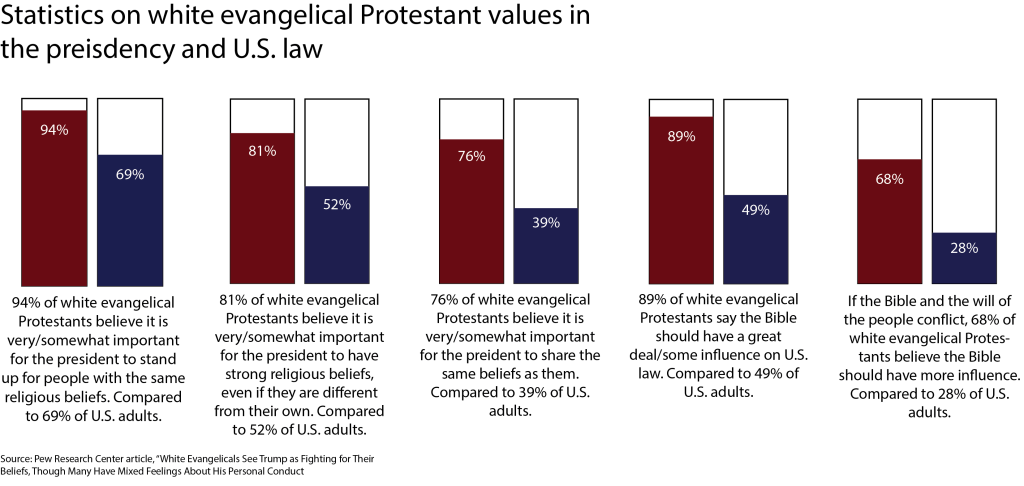

Graphic by Gabrielle Bremer

Final: University Mental Health Workers Face New Issues from Students in addition to Remote Counseling

Picture1

An empty lecture hall. Photo courtesy of Pexels.

In January, American University junior Yi Lin was told she had to fly from her semester abroad in Beijing back to the United States as soon as possible because of the coronavirus outbreak.


In March, the university president Sylvia Burwell announced that online classes will continue through the rest of the spring semester to prevent the spread of the virus and students living on campus have 11 days to leave campus. 


“Since the coronavirus, I feel like my mental health has extremely degraded,” Lin said, who is now residing in her family home in Pennsylvania. 


Lin is among millions of college students who are now doing online class and have gone back to their permanent addresses. In addition to transitioning into online classes, students are also experiencing changes in their sleeping or eating patterns and worsening mental health conditions, according to The Centers for Diseases Control and Prevention (CDC).


Universities like American, East Carolina University, and University of California Los Angeles have moved their mental health support services to telework which includes zoom meetings and phone calls between students and counselors. 


“We have done trainings on legal, ethical, and best practice considerations for offering telehealth” said assistant director of the UCLA Counseling and Psychological Services Deborah Green. “We are able to keep the clinic running similarly as before, just not in the office.”


Some students like Michelle Giron, a junior at East Carolina University, said they found the transition into remote counseling to be helpful. 


“She will call me once a week,” Giron said about her counselor. “I like that better than maybe having an appointment once a month.” 


In addition to more time with her counselor, Giron said she has also not noticed a difference in the quality of her sessions. Less human interaction with telehealth has also encouraged some students to seek out mental-health services for the first time as students may feel intimidated with in-person counseling. 


“I would recommend the mental health services in schools to residents and they would say they don’t feel comfortable going and now they might not know that ECU is offering services online,” said Giron who is also a resident advisor. 


Others, however, say that telehealth arises issues with privacy and accessibility. Some students do not have a private place to have their therapy sessions and may not have access to stable internet and devices, according to director of JED campus and wellness initiatives Diana Cusumano.


“For some students, being home isn’t the safest place,” Cusumano said. “Whether their family isn’t supportive or they live with toxic personalities.”


Students like Lin say that being home is not only a disruption to their regular routine at school but also difficult because of strained relationships with family. 


“I have to hide a lot from them,” Lin said. “I’m uncomfortable and I feel like I’m walking on eggshells.”


Lin said that with her routine back at school, she at least had some space to breathe. The sudden loss of independence is a factor that causes students to feel even more isolated from their school community which may lead to more of a reason for students to keep to their own but eventually would want to talk more if that’s how they’re feeling, said Cusumano.


“People are kind of drained,” Cusumano said. “There is a sudden loss of what life usually is.”


Students who feel drained from the transition to online learning may be suffering from “Zoom fatigue,” where video chats lead us to be exhausted because it requires a lot more energy than in-person meetings. Lin is among those with “Zoom fatigue” who said that she doesn’t have the mental capacity to have everything online and not being able to have her regular class experience.


“The idea of being stuck in a space,” Lin said. “a.k.a my room, has made it hard getting up in the mornings.”


Not having enough space has been an issue that colleges like UCLA have considered into their telehealth efforts, and problem solving with students along the way as individual issues come up have been helpful in making mental health services as helpful as possible, Green said.


“Maybe go for a walk,” Giron said, listing the ideas clinicians under her care have given to students who have issues with privacy for their therapy sessions. “Go to the bathroom or a car during our phone calls.”


Telehealth also creates a heavy reliance on technology, according to Green, which not all students have equal quality of. Lack of access to technology also hinders students from being able to connect with support services from universities, and many students have living situations that do not have stable internet connection and devices. 


“In households where there is no good internet connection, students might put themselves at risk trying to find a place that does have it,” Giron said. 


Mental health support providers like JED have offered solutions to technological problems with counseling. Video call meetings will be changed into phone calls if it is easier for students and some schools are putting together funding to help students with wi-fi and technology, according to Cusumano. 


Students like Lin also struggle with focusing on school when things like her and her loved ones’ health and the future are more pressing than her classes. Green said she has received similar concerns in UCLA’s counseling clinic. 


“Our job is not just being a student,” Lin said. “We are also human beings who are thinking about what is going to happen to society after all this.”


Students’ capability to learn effectively is also obviously disrupted because of the anxiety of the pandemic, but it also poses new challenges for those who have never learned online before. Time management becomes even more important since students only have their own selves to hold themselves accountable, according to Giron. 


“Now that everything’s online,” Giron said, “all of a sudden it’s all up to me.”


Professors who are accommodating towards students’ needs also help with coping with schoolwork in the midst of the pandemic, Giron said whose professor’s decision to make a final optional really helped with her ability to juggle her classes. Multiple universities like American and East Carolina University have also allowed for pass/fail options for students this semester while still allowing the courses to count toward major or minor requirements. 


“It was really helpful because how do you study for a final in a pandemic?” Giron said.


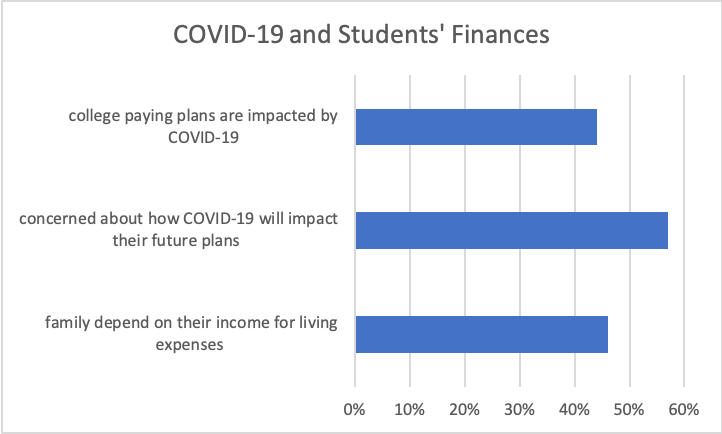
Students like Lin and Giron who are now in their residential addresses find themselves in situations with more responsibility than before like taking care of family members and helping out with family finances. With issues like job loss and cancelled opportunities like internships and jobs, students now face financial problems in being able to support themselves and their dependents.

Picture

The impact of coronavirus and students’ finances. Data from Junior Achievement by Citizens Bank/Citizens One.

“I know financial circumstances have made people I know unable to continue the next semester or they are barely getting by,” Lin said.


Organizations like JED prioritizes sharing free resources that more people will be able to access on remote learning for faculty and staff as well as student newsletters about finding peace among all the current chaos, according to Cusumano.


Finance-related issues like food insecurity also lead to increased levels of anxiety and depressive symptoms, and while there is a general feeling of anxiety and panic with everyone, it can be even harder for those with pre-existing mental health conditions, according to Cusumano. With students being away from campus, previous resources like free food pantries and meal plans are now inaccessible. This led to students requesting refunds from their universities on tuition and meal plans but are met with no compensation. 


“There is a lot of panic on food and finances as well,” Cusumano said. “Whether it’s with those who can’t afford to buy food or maybe just when you go to the supermarket and you can’t find what you normally need.”


Students are always encouraged to reach out if they need anything and there are free resources available, said Cusumano, referring to multiple schools like American who are providing a 24-hour crisis intervention helpline from any location


Mental health conditions of people in general are expected to worsen as the situation of the coronavirus escalates and news coverage continues, according to the CDC. This is expected for mental health support providers as well who may feel a little burnt out from all the work they are doing, Cusumano said. 


In times where providers feel burnt out, they are encouraged to go back to their “why?” of getting into this field of work and think about the people that you are helping. This is also a time where support providers are more in touch with each other than ever, which helps to remind us that we are not alone, according to Cusumano.


With the prevalence of the virus, the CDC recommends parents to keep a schedule to create a routine for their children and to also limit their family’s exposure to news coverage in order to prevent children’s misinterpretation and additional fear about the situation


Mental health support providers are aware of all the problems that come with going remote and are still working out the kinks of telehealth but are trying their best as they go along, Green said. Taking care of yourselves and knowing that you are not alone are the most important things to remind yourself of, according to Cusumano.


“Allow yourself some grace and give yourself permission to feel how you feel,” Cusumano said. “You can only as much as what you do right now.”


Grocery Stores and Food Supply During the COVID-19 Pandemic

Anxiety is increasing amongst grocery store workers as supermarkets remain open during this uncertain time. As a result, many grocery stores are transitioning to online delivery or curbside pickup services.

IMG_3941
Taken by Molly Greenstone

A police officer stood outside the Whole Foods in West Orange, New Jersey managing the inflow and outflow of customers while ensuring customers were six feet apart. I asked the officer, Mark Rosenburg, how long he had been standing outside.

“It’s been about four hours, but thankfully pretty soon the guy with the afternoon shift will come to replace me,” he said. “It’s strange you know, usually on a Wednesday morning I’d be driving around trying to monitor traffic control, but here we are.” A customer exited and Rosenburg let me enter the store. Inside I saw masked consumers and gloved workers continuously stocking shelves. 

Although it appeared the store was taking preventative measures, three days after I entered the store nj.com reported that two employees at the same Whole Foods location in West Orange have tested positive for the coronavirus. A company spokeswoman said the diagnosed employees are in quarantine and additional steps have been taken to sanitize the store. The store remains opened.

“We’ve taken serious measures to ensure our customers and workers are staying safe at this time,” the manager of the West Orange Whole Foods, Matthew Fowler, said in an interview. “Since those cases, we are trying to stay in line with the CDC guidelines. That’s why we are now being stricter, wiping down all carts left in the parking lot, and monitoring spacing guidelines throughout the store.”

It’s no secret people across the country and around the world are staying inside their homes to practice social distancing due to the coronavirus. Although individuals are encouraged to decrease the spread of the virus and remain home, many continue to fulfill basic household needs such as buying groceries. Because grocery stores are considered an essential business the guidelines and habits of consumers have shifted within the past month and a half.

Grocery workers all over the country have continued to report to work, with many describing long shifts and extra workloads to keep up with the high demand. 

“I haven’t felt safe going into work, but I’ve got bills to pay and rent. I can’t afford to not show up to work,” said a Whole Foods employee in an interview who preferred to stay anonymous. “I’ve been in contact with so many people, putting my health at risk. It sucks.”

Whole Foods employees across the country have banded together to demand better conditions during this outbreak. Whole Worker, a Whole Foods labor organization, went on a national strike on March 31 in an effort to protest the Amazon-owned grocery store chain. The organization posted a statement on Twitter advocating for workplace safety and benefits including hazard pay and sick pay for employees who may be sick but haven’t been tested for the coronavirus.

“As this situation has progressed, our fundamental needs as workers have become more urgent,” Whole Workers said in the Twitter statement. “COVID-19 poses a very real threat to the safety of our workforce and our customers. We cannot wait for politicians, institutions or our own management to step in to protect us.” 

The labor organization encouraged all Whole Foods workers to call out sick for the day. Despite the efforts of the protest, Whole Foods reported that store services continued across the country without interruption or any operational impact.

Despite the protest of Whole Workers, Whole Foods continues to operate and remain open during this outbreak. In an effort to combat the spread of the virus, Whole Foods is temporarily converting some stores to online grocery delivery service only. 

By converting some stores, Whole Foods can decrease face-to-face interactions, keep workers safe and sustain the demand for online grocery shopping.

“With the new world of social distancing and stay-at-home orders in place for most of the country, customers have generated unprecedented demand for grocery delivery,” Whole Foods said in a statement. “As we navigate the challenges associated with COVID-19, we continue to find ways to increase delivery availability while navigating safety measures and social distancing.”

According to the CDC, it is recommended people order food and other items online for delivery or curbside pickup. As a result, online delivery services such as Amazon Fresh and Instacart have increased in popularity. 

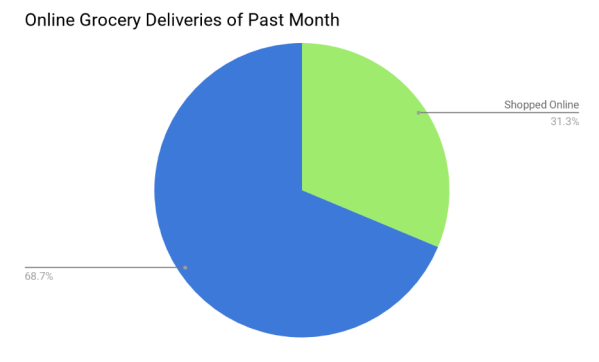
New research found that 31% of U.S. households have used online grocery delivery and pickup services over the past month. The report, which is based on a survey of more than 1,600 U.S. adults, found that 26% of these surveyors said this was their first time using an online grocery service. 

Screen Shot 2020-04-27 at 12.08.18 PM

The market value of online grocery shopping doubled from $12 billion in 2016 to $26 billion in 2018, suggesting consumers would continue to follow a trend of buying food online. According to predictions made by Business Insider analysts, online grocery shopping will continue to surge in 2020. But the consumer outreach will depend on the length of the quarantine restrictions.

As shoppers look to make fewer trips into stores, on-demand grocery shopping for delivery and curbside pickup has become increasingly popular. However, these delivery services are struggling to fulfill orders due to the high demand. 

Instacart advises customers to check delivery times frequently and select a replacement in case their preferred items run out of stock. Yet in some cases, it still seems difficult for an average shopper to place delivery and receive their virtual order.

“I placed an order on Instacart for a delivery dropoff between 1-3 pm, but my groceries didn’t come until 6:00 pm. It’s not like I had anywhere else to be, but still, I used Instacart before coronavirus and considered myself a very loyal customer. They were three hours late and forgot to include some of the things on my list,” said Alice Stein, an avid online grocery shopper. 

Companies like Instacart are trying to provide their service in an efficient way, but as these online services grow in popularity they are now forced to keep up with non-stop orders coming in. Although customers like Stein are finding the quality of the service dissatisfying, Instacart has set out to hire 300,000 new employees to pick and deliver groceries. Similarly, Amazon Fresh is also hiring 175,000 new delivery and operations personnel. 

Because some of Stein’s groceries were missing she also feared that the U.S. was in the midst of a food shortage. However, Madison Calkins, a Resource Mobilization Associate at the International Fund for Agricultural Development, said in an interview that Americans should not be concerned with a food shortage at this time.

“Right now the issue is not a lack of supply and we are not facing a food shortage. The issue is the people who are transporting our produce as we speak,” she said. “If you’re wondering why you don’t see tomatoes, cucumbers, or other produce it’s a matter of our agricultural system and delivery service. This is a good time to reflect on who works in these supply chains. Americans shouldn’t be afraid and think we are going to run out of food.”

When grocery stores and online delivery services are out of popular items that are typically in stock, it is likely this item will be restocked within a day or two. The U.S. continues to produce enough food to meet demand because of the several million season agricultural workers. 

“At this time we should be thinking of our agricultural farmers. Let’s hope farmworkers are able to follow effective social distancing guidelines, are wearing protective gloves and masks, and are able to get the medical care they need without fear of lost wages,” Calkins said. 

Coronavirus is Hitting America’s Homeless Population Hard, Without Even Infecting Them

Emma Dion // April 26, 2020 // Revised May 1, 2020

A resident of Calvary Women’s Services is staying active while maintaining
social distancing standards set by the CDC.
Credit: Jeannette O’Connor

WASHINGTON – Government officials across the United States are urging Americans to follow stay-at-home orders as the coronavirus outbreak continues to grow. But for many, that private home doesn’t exist.

Californian Tony Otto lives out of his car. The aspiring film artist has been experiencing homelessness for nearly four years now, ever since a divorce settlement left him with little. He has a job disinfecting a local bank twice a day, as well as a real estate office in Ojai, but says he is “vastly underemployed right now, it’s like 20 hours a week.”

Otto has Crohn’s disease, which puts him at a higher risk for severe illness if he contracts COVID-19, the disease caused by the novel coronavirus. Even so, Otto says that he is better off than many others who are experiencing homelessness.

California has the largest population of homeless people in the country. According to the World Economic Forum, California’s homeless population soared 16% last year to over 150,000.

In Otto’s hometown Ojai, a wealthy city just north of Los Angeles, homelessness is rare. Otto says there are only a few people living on the streets. One of them has caught his attention in recent weeks. 

This person frequents many of the businesses in Ojai that are still open- drug stores, grocery stores and gas stations- asking for help. Otto says he often sees the man eating and drinking out of public trash cans around town.

“I noticed this individual begin to appear ill, exhibiting symptoms of this illness SARS-COVID-19. Most notably a serious cough. And signs of fever. This was alarming. However, what I witnessed in response to this was even more alarming,” Otto explained over the phone.

Otto decided to call emergency services to help the man. They arrived in minutes, he says, wearing full protective gear. Otto says he was surprised to see that the healthcare workers never tested the homeless man and allowed him to walk away after answering some questions. 

In the days following the incident, Otto says that the individual continued to mingle about near grocery stores in Ojai, asking for change, food and cigarettes. Otto speculates that since fewer people are going out to go shopping amid stay-at-home orders, homeless people all over the country that rely on panhandling are receiving less help. 

When it comes to those in need in Ojai, there aren’t many resources as it is, says Otto. “As soon as I became homeless, I tried to find help. There’s nothing.” 

Otto says that in the Ojai community, wealthy locals are more likely to push the homeless out of sight than to lend a helping hand. “There’s a lot of wealthy people in this town,” says Otto, “and from what I understand, knowing political people, they’re like ‘we don’t really them here, we don’t want to be a magnet for them. We want to be a magnet for tourists.’”

Many of California’s homeless residents end up at encampments, where living conditions have created a petri dish-like setting for this virus to thrive, according to Otto. 

“They don’t want to see death and disease and poverty, so it gets pushed into the corner. Right near Hollywood, right near downtown L.A, when you’re driving on the 101, you can see homeless encampments right there in plain view on the hillsides, right below those big houses. Like tents, tarps, and you know, just piles of debris. And nobody ever helps those people.” 

In an effort to remove California’s homeless population from public streets during the coronavirus outbreak, Governor Gavin Newsom has partnered with the federal government to create Project Roomkey, which has provided California’s homeless population with hotel rooms to isolate in. These efforts have been met with some backlash from locals, including in the L.A. area. 

Otto says that in the past few days, he hasn’t seen the homeless person panhandling in his usual spot. He hopes that the individual is quarantined in one of the hotel rooms in the Ojai area, because “literally there’s nowhere to go, unless you are lucky enough to get one of those hotel rooms.”

Across the country in Washington DC, officials are working hard to ensure that the homeless population has enough resources. DC Mayor Muriel Bowser has stated at several press conferences that she intends to prioritize the capitol’s most vulnerable populations.

On April 28, Mayor Bowser opened The Brooks, DC’s newest short-term family housing facility. “At a time when we face unprecedented challenges, The Brooks reminds us that our most vulnerable residents of the District deserve the safety and security of a home when they fall on hard times,” said Mayor Bowser, according to a recent press release. “Particularly during this public health emergency, we will continue to support our families and provide them with wrap-around services they need to transition into permanent housing. We’re all in this together.”

Like California, hundreds of hotel rooms in the District are being rented out to the city’s homeless population. Individuals are being encouraged to self-isolate in a hotel room if they have tested positive for the virus, if they are waiting for test results, or if they have been exposed to the virus.  

The United States Interagency Council on Homelessness reported that there were over 6,500 people experiencing homelessness in DC as of January 2019. According to Department of Human Services data, as of April 30, 286 homeless individuals are occupying hotel rooms in DC.

“All of the District’s low-barrier shelters, family shelters, and shelters serving youth remain open 24-hours. Residents who do not have a safe space to stay should call the DC shelter hotline at 202-399-7093 or 311 any time of the day or night. For adults without minors in their care, the hotline will direct you to a shelter that has availability,” DC Department of Human Services Director Laura Zeilinger said in a video released by Mayor Bowser in late March.  

Shelters across the District are keeping their doors open to those in need, but space is filling up fast. Ever since the coronavirus began taking a toll on the economy and unemployment numbers began to climb, emergency shelters in DC have seen an increased need for resources such as food. 

Ken Forsythe, the Communications and Marketing Manager at DC’s Salvation Army, says that many people who have come to the Salvation Army facilities in the past month are first timers. 

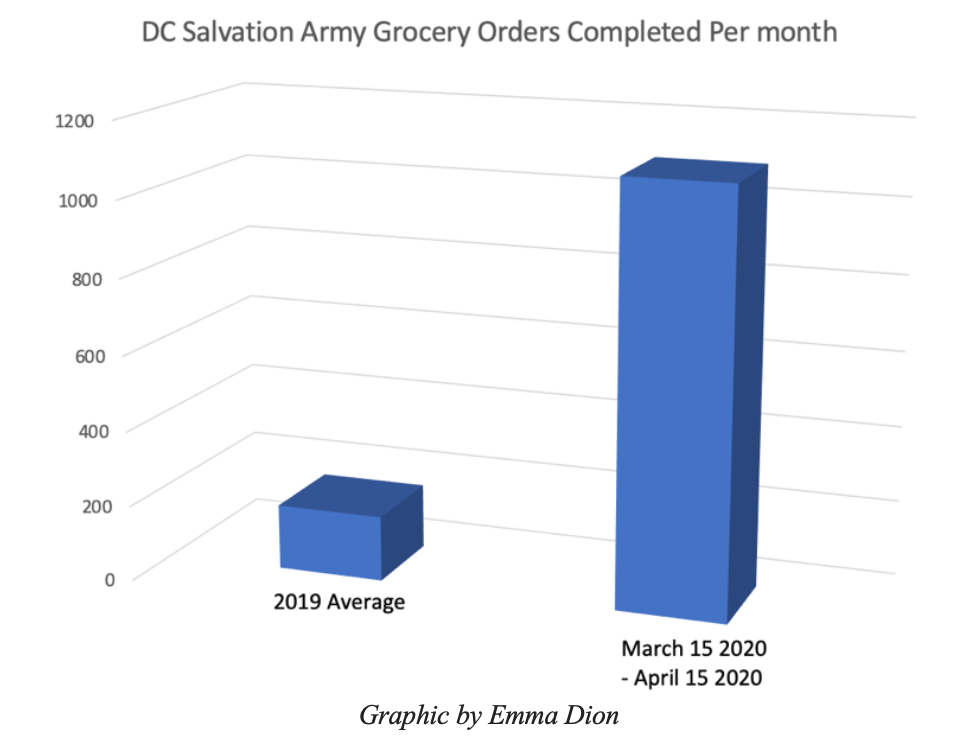
According to Forsythe, the Salvation Army filled 2,066 grocery orders throughout their fiscal year for 2019. But in the past four weeks, the organization has filled over 1,100. Although they are seeing a major spike in need, the Salvation Army has still been able to compensate for everyone who has reached out for help so far.

“With the influx of new faces that we’ve seen, that need has really meant that we need more in the way of financial resources to continue meeting the community’s needs. And you know, that’s one of the bigger issues that we’re confronting right now,” Forsythe said over the phone.

The lack of financial support is also a considerable concern for Sasha Bruce Youthwork, DC’s leading provider of homeless youth services, says Founder and Director Deborah Shore, who says that “it’s hard to see around the corner here.” 

The organization recently had to postpone its 45th Anniversary Benefit to End Youth Homelessness so it could concentrate on the debilitating impacts of COVID-19 on the area’s homeless youth. 

Shore says that Sasha Bruce Youthwork will lose a significant amount of money from ticket sales they would have earned from the Benefit. She says she’s concerned about the organization’s long-term budget, since they are already paying staff extra to continue working inside the youth housing facilities.

To compensate for the lost funding, Sasha Bruce Youthwork has been encouraging donors to make a contribution to their Homeless Youth Rapid Response Fund, which is helping the organization to pay staff, as well as to purchase cleaning supplies and PPE for their facilities.

Shore says that one of the biggest challenges that the organization is facing in the wake of the coronavirus outbreak is the digital divide impacting the homeless youth who are transitioning to online classes.

Sasha Bruce Youthwork staff are helping their young residents to get hooked up and connected, which has not been easy. “The digital divide is very real,” says Shore, “having the connectivity is so critical.” 

Another challenge that has hit Sasha Bruce Youthwork particularly hard has been keeping the residents of the homeless facilities to stay in place, minimizing their exposure to the coronavirus. 

“That took a few weeks because for a lot of the young people, there were myths that it wasn’t going to affect them,” says Shore, adding that with better connectivity to the internet, the job has been made easier.

Shore says that there has been significant anxiety amongst staff members at Sasha Bruce who worry that young residents may be asymptomatic carriers of the virus without knowing it. Shore worries that if some of the youth living at Sasha Bruce were carriers but weren’t showing symptoms of COVID-19, they would not get access to testing. 

“It’s insane to me that we know kids who have been exposed, but they don’t get tested unless they have symptoms, even though we know that people are the most contagious before they have symptoms,” says Shore. But her organization is not alone. Shore says this type of situation is happening all over the country, because “we just don’t have enough tests.” 

In order to ensure that homeless facilities don’t become susceptible to the spread of COVID-19, they’re ramping up cleaning efforts across the board. 

Like most of the homeless shelters across the District, Calvary Women’s Services CEO Kristine Thompson says her organization has been following guidelines laid out by the CDC. Calvary Women’s Services is also stepping up efforts to provide mental health support for its female residents and their children.

“We all know from our personal experiences that being isolated and social distancing is really challenging and so we’re trying to be mindful of that for the women that we serve, who may have experienced domestic violence or other health or mental health issues, this is really a challenging time,” Thompson said in a phone interview.

Many of the women who live in Calvary Women’s Services housing facilities are victims of domestic violence. With stay-at-home orders in place, the organization has seen an uptick of women and families in need of a place to stay. Currently, they only have the housing capacity for 95 women at a time. 

According to Thompson, the economic fallout from the coronavirus has been a large hit to the women at the facility who were on a path towards stable housing, but now are facing unemployment all over again. 

One of Thompson’s clients had a job in which she could work 40 hours a week plus overtime. After the coronavirus outbreak began, she was furloughed. 


“She really talked about that as a gut punch, as a moment when all of the things that she’d been working towards, all the money she’d been saving, now felt like it was really coming to a halt, her plans to move to housing now are delayed,” says Thompson.

“It has been really challenging, certainly for the women that we work with, to know that they’ll have to restart when this is over, find new employments and begin that path toward moving out of homelessness all over again.”

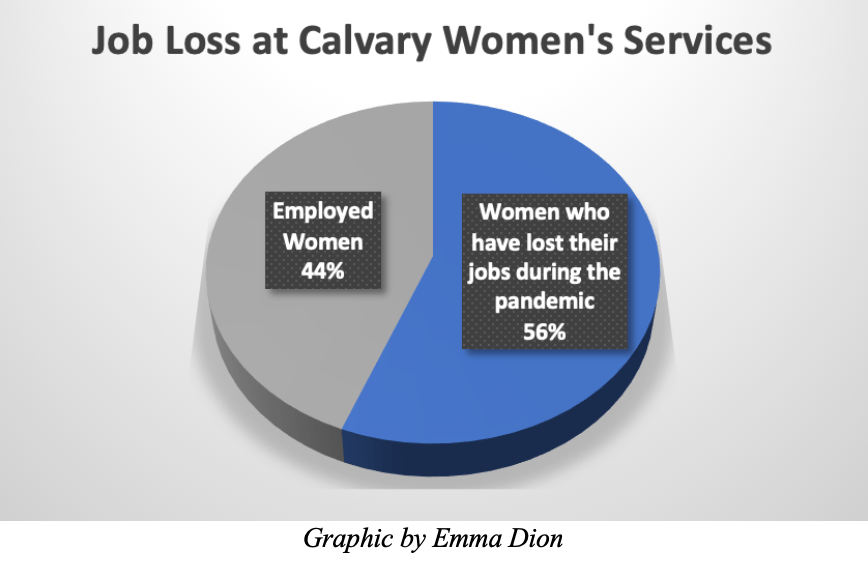
Of the women who were working before the coronavirus outbreak began, 56 percent have lost their jobs, according to Thompson. Many of them were working in retail or food and beverage fields. The women who are still working are employed in janitorial roles, or are healthcare workers, serving on the front lines of the fight against COVID-19. 

When asked whether or not they thought Mayor Muriel Bowser was doing a good job to support DC’s homeless population, Forsythe, Shore and Thompson each said that they have no way to measure the impact of the government’s response to the outbreak. 

Mayor Bowser’s office has begun releasing data about COVID-19’s impact on DC’s homeless population. As of April 30, 2020, 177 individuals in homeless shelters have tested positive for COVID-19. Nine individuals experiencing homelessness in the District have lost their lives due to COVID-19. 

Looking to the future, Bowser is already brainstorming what DC can do, post-pandemic, to fix these deep-seated problems with vulnerable populations. Bowser addressed the situation head on at a recent press conference, stating “when we get to the other side, we need to focus, and continue to focus on generations worth of economic, housing, educational disparities that have led to these very tremendous disparities that this pandemic is putting a spotlight on.”

Homeless people around the country, including Otto, don’t have time to wait for a solution from local governments. Otto says he’s looking to find more work right now to keep him afloat during the pandemic. He says he’s interested in becoming a marijuana delivery driver for the time being.

“Deliveries have gone way up, so I mean I could do a delivery job. And I’ve applied. In town they have three dispensaries, so I applied for one of the jobs,” says Otto. 

In times of monumental crisis, society has historically relied on nonprofit services for aid. The Salvation Army, Calvary Women’s Services and Sasha Bruce Youthwork each have been around for some time, surviving through past recessions and times of uncertainty. 

“It’s very challenging, but I am deeply grateful for the staff and young people who are out there, keeping our doors open, and making sure that we don’t have people in the street alone,” says Shore, “the longevity of the organization helps me to feel confident that we’ll be able to find partners and helpers who will make sure we’re okay in the end.” 

Shore says that through hard times, contingency planning is something the nonprofit world does best. According to both Thompson and Forsythe, organizations in the DC area are constantly working together to ensure everyone who needs assistance has access to it. 

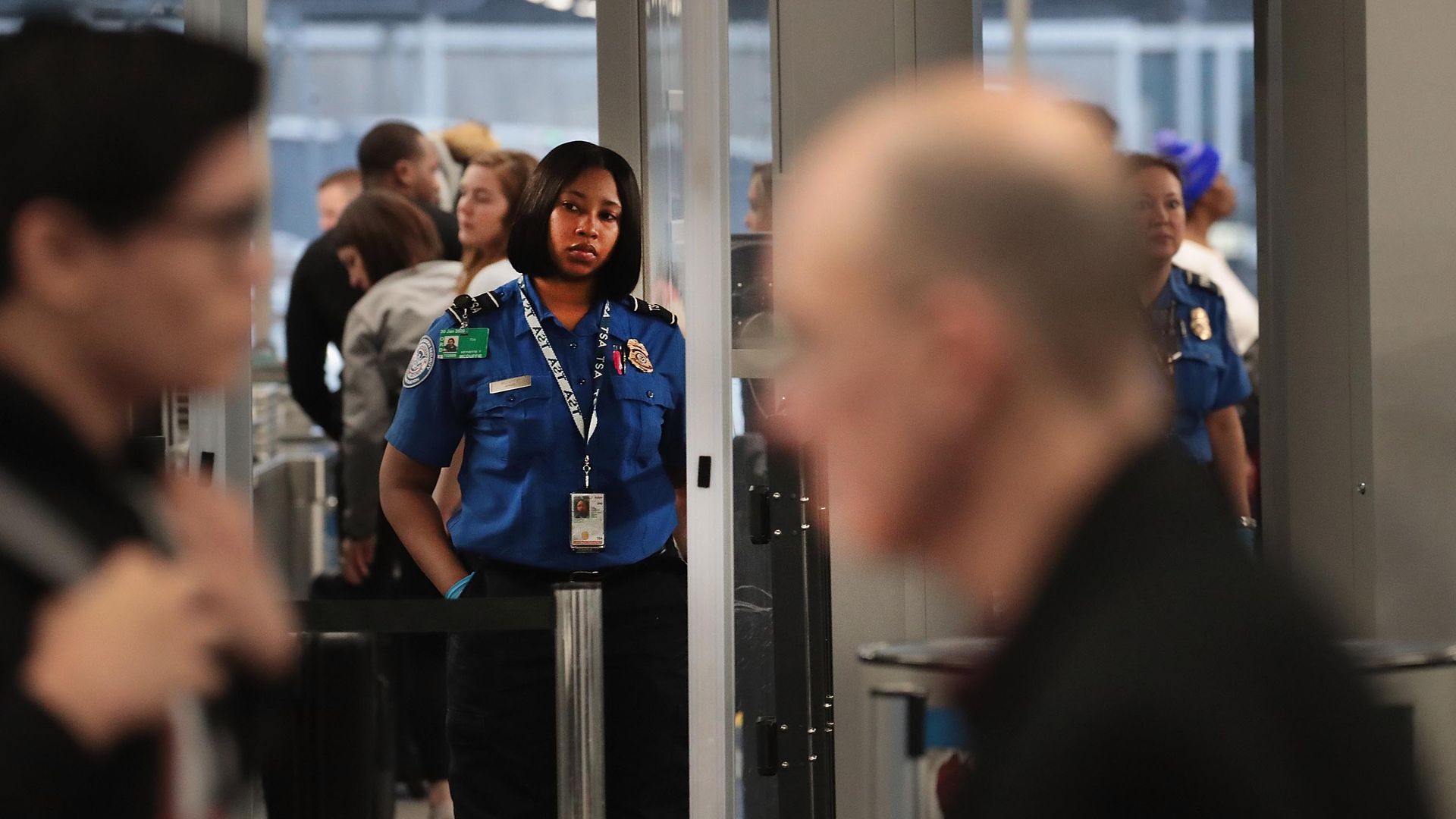
COME FLY WITH ME, COVID19! : The silent and risky life of a TSA worker in the pandemic era.

By Teni Oduntan. Edited on May 3rd

TSA asks employees to move to airports suffering from mass ...

“I have never felt so vulnerable in my life.”

WASHINGTON DC– Although the news has given a warning to the public to control their mobility and physical contact from others, 54-year old Amandla Johnson still finds herself arriving at work every morning. As a Transportation Security Administration (TSA) agent at Dulles International Airport, Johnson is one of thousands of airport employees that are exposed to the 2.7 million passengers that pass through American airports daily, and all the risks comes with them. 

Buzz on the virus began to circulate in late January, when a total of 9976 cases of Corona-Virus, also known as Covid-19 were reported in at least 21 countries. This included the first confirmed case of the 2019-nCoV infection in the United States, which was reported on January 20, 2020.

Fast-forward one and half months to March, and the 54-year-old agent is still going to work as her job deemed her an ‘essential worker’. “ At first, I didn’t take this whole thing seriously.” explained Johnson, “I thought it was going to be like the flu season, in one month and out, the next month.” She says with a joking smile on her face. She felt as though going to work would be normal.

The only difference is that Johnson’s once bustling workspace, filled with people from all walks of life, became a shadow of itself as the number of travelers reduced by more than 45%, within the month of January. Despite international air traffic taking precautions to reduce exposure, in countries with a high number of cases such as Italy and England, America seemed to be lagging behind.

Despite the notes and public service announcements for the public to be more cautious, the airport workers did not notice a difference in work conditions.

“They did not provide us with any gloves or masks. It was quite ironic that the passengers had masks, but we didn’t. It felt like we were exposed to the world,” said Johnson “I have never felt so vulnerable in my life.”

According to Transportation Security Administration, out of the 512 virus cases reported as of March, 456 of them were TSA agents, accounting for 87.9% of the total cases in the country. “I felt like I was in the belly of the beast, and that’s why so many airport workers [contracted] the virus,” expressed Johnson.  

“It’s quite Ironic that the Passengers had masks and we didn’t. “- Amandla Johnson

Things only seemed to worsen as this phenomena not only plagued Virginia but also Georgia. Fifty-five year old Georgia native and current TSA agent, Yinka Idowu has worked in the aviation industry for more than twenty years at Hartsfield-Jackson Atlanta international airport. He said has never seen this many of his colleagues stop coming to work until now.

According to the Federal Aviation Administration (FAA), since the start of the pandemic, the number of airport workers being fired has increased by nearly 40%, leaving numerous workers vulnerable and without income. Meanwhile, the remaining workers are left without airport provided amenities to protect themselves from the virus, which has resulted in drastic consequences. According to the Transport Security Administration, out of the 14 cases said to have been contracted at the airport, thirteen of them were TSA workers. Before the “mass firing” as Idowu prefers to call it, there was a ‘wall of obscurity’ between the TSA workers and the people in the FAA. Idowu explains that the process of firing was taken as a gradual one instead of an immediate pink slip.

“At first, they told us that they were willing to approve extended vacation times. This enabled workers to stay at home for more days than usually given, excluding the 14-day virus-mandated isolation period given to workers suspected of having the virus, ” Idowu expressed, “Then the narrative changed from ‘offering’ to recommending that certain people take time off. Later shifting to telling those agents not to come back.”

According to the Union of Federal Government Employees, the TSA workers are at a very disadvantaged position. “These are very strange times that we live in,” states Andrew Huddleston, the Director of Communications at the Union’s TSA division. “The agents are being left with a dilemma where they have to choose between their health or their livelihoods and it should not be that way.”

Huddleston then elaborates, saying that there are many factors in which the dilemma entails, which might cause an airport worker to hesitate before taking these offered extended off-days. “Some of these workers are living paycheck to paycheck, and due to the long hours, have shown that this is their primary or main source of income,” said Huddleston. Although the job leaves them vulnerable to contracting the virus, it does not stop the need for these agents to provide their families. 

“The government offers social distancing, but a lot of people, specifically government workers, do not have the privilege to practice social distancing.” explains Huddleston “People need money to pay bills, people need money to buy groceries, but that is not possible if the on-ground workers (like the TSA agents) are practicing social distancing away from work. They cannot work from home.” 

Despite the closure of borders around the country and the halt in air-traffic, Dulles airport has remained open in case of ‘emergency travel’. Despite the vast reduction in workers, the FAA directors did not mandate safety measures for the Airport workers until the pandemic worsened, meaning that the TSA workers were left at risk. “We did not expect the pandemic to reach the heights that it has reached,” explained Lorraine Herson- Jones, a manager for Airport Compliance and Management Analysis. in providing a safer working environment. “The airport is cleaned and disinfected twice a day.” and the TSA workers were mandated with an air conversion mask as well as their already mandated gloves, in order to prevent contact as well as spreading the disease. According to the FAA, the Transportation Security Administration screened just 87,534 travelers across the country on March 26th, the smallest number ever recorded in recent history. That was down from 2.21 million on the same day a year before, an extraordinary drop of more than 95 percent. 

Airlines and TSA report 96% drop in air travel as COVID-19

The Airports Authority is limiting each Mobile Lounge to 50 passengers or less. At peak times, some passengers may be held on their aircraft for a short time, which allows them to remain seated rather than standing. 

Passengers then continue through the U.S. Customs and Immigration process.

Passengers who have connecting flights should notify their airline representative after clearing CDC screening.

The airport continues to work closely with our federal officials to make this process as quick and smooth as possible. “We appreciate everyone’s patience and understanding during this time” says Lorraine Herston-Jones, Manager of Airport Compliance at the FAA. “We understand the ambiguity of the situation, but and are working closely with the airports to ensure the prevention in increase of cases.”

Despite the implications, TSA workers are still going to work.“It is definitely a risky job” says Johnson. “ However, since travel has stopped, we do have contact with much less people, reducing the risk of infection. It is not as risky as, say, a medical professional’s job, but it still carries heavy risk,” expressed Idowu “Despite the risk,TSA agents manage to make it to work everyday.”

Final: Behind the Scenes of Local Government During Coronavirus

By Terrence Kane

Representative Perry Warren (D-31st) works from home during the coronavirus outbreak. (Source: Office of Representative Warren)
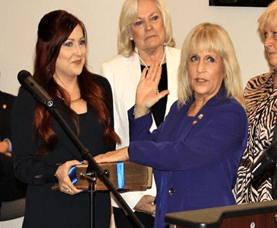
Diane Ellis-Marseglia is sworn in as chair of the Bucks County Board of Commissioners. (Source: Bucks Local News)

NEWTOWN, PA – It was late on a Sunday night when State Representative Perry Warren called me for a conversation on how Pennsylvania’s state government was handling the coronavirus outbreak. There was exasperation in his voice, and he spoke with a sense of urgency that seemed uncommon for a weekend night.

He called while he was out on one of his regular nightly walks, one of the few moments that he takes for himself. But even this solitary moment is not without work, it gives him time to return the calls that may not be pressing enough to handle during the week.

“For me, as a representative, I have been working non-stop, seven days a week,” Warren said over the phone. This work goes far beyond working with his fellow elected representative to enact emergency legislation, which dominated his work week. It also includes keeping in contact with many of his constituents and helping them deal with emerging problems during the outbreak; tasks which occupy most of his nights and weekends.

Warren was just one of several local government officials interviewed for this article who make up the frontline in the battle against the coronavirus. He spoke to how the state government was working to pass bills specifically aimed at generating relief among his constituents, such as allowing virtual marriage licenses and expanding access to unemployment benefits.

“I sat at my computer Friday night from about 6 to a little after midnight and just hammered out responses to probably a hundred emails,” he said in the interview. Despite plowing through nearly a hundred emails, it only made a dent in his current workload. He described the work as “not catching up but making some progress on the emails.”

Representative Warren is a Democrat representing Pennsylvania’s 31st district in the state House of Representatives since 2017. He is just one of more than two hundred elected state legislators in Pennsylvania who have found themselves working overtime to manage the coronavirus outbreak. Despite this, it is unlikely you will see him, or any of his colleagues or counterparts on the major cable news channels.

While major news companies have taken to interviewing talking heads and federal officials with significant name recognition. Giving airtime to senators and congresspeople who, while also working diligently to keep emergency funding to the states, are scarcely on the frontline in the same way as our local elected officials.

As a result, major news organization have left uncovered a vast wealth of state and local officials who have a true understanding of what it means to be on the frontlines of legislating a medical crisis. While it was often difficult to contact federal elected officials for interviews pertaining to this story, local officials and their staff were happily accommodating in finding a time to speak with me.

Local and state elected officials are on the frontlines of handling the implications of the coronavirus outbreak and have demonstrated their forward thinking on solving this crisis. These officials were able to take stronger, more concrete steps to addressing the outbreak than their national counterparts, and they did so much sooner.

For instance, while the U.S. House of Representatives still has yet to work out a safe and efficient way to vote on legislation, the Pennsylvania state legislature had solved that problem more than a month ago. Warren said, “The house of representatives met in person on Monday, March 16th and I drove out to Harrisburg. We caucused and did meetings by conference call…alone in my office, and with each member alone in their office.” Staff and team members were either told not to come in, or to maintain the social distancing guidelines.

Among the emergency legislation that the State House passed during this in person session was a bill that would allow for the House to move forward with remote voting. Warren noted that “we had to vote that in person because there was no provision for voting remotely. So, you can’t vote remotely to vote remotely.” This means that most state representatives no long have to return regularly to the state capital to cast their votes on legislation.

“The speaker and the party leaders are actually still on the floor of the house, but I can give my vote to the democratic whip who then casts my vote for me on the floor,” Warren said in the interview explaining the new process by which the State House will be approving legislation.

As work for state representatives ramps up in the context of the outbreak, so has the work of the staff that keeps their offices moving smoothly. While most of these employees have not seen the content of their work change substantially, working from home has definitely generate creative solutions to some typical problems.

Ryan Levitz, a former reporter for several small paper across the Midwest, works in Representative Warren’s office on the constituent relations team. Levitz has been with the Bucks County office for more than a decade, first coming to work for Warren’s predecessor and staying on after Warren’s election in 2016.

In some ways, there was a sort of fateful coincidence to the fact that a disease like coronavirus had not historically breached the U.S. at these level until 2020. “I won’t say this came at the right time, because there is never a right time for it, but it came at a better time than ten years ago,” Levitz said in the interview.

He explained how the technological developments over the past decade had given the adequate tools to government officials, and the country at large, to deal with such a widespread disruption to daily life. Without tools like videoconferencing, and other developments in the realm of telecommunications, government work likely would have grinded to a halt. “If this would have happened ten years ago, I don’t know if everything would be as well functioning,” Levitz said in the interview.

However, Levitz went on to describe how technological advancement has been completely without drawbacks. “A lot of documents we can email now, and can submit through email,” he said, “but some of the constituents in their mid-80s and up still aren’t on email so we can’t email them.” Levitz also noted how many people, himself included, no longer own printers which makes filling out and mailing documents significantly more challenging.

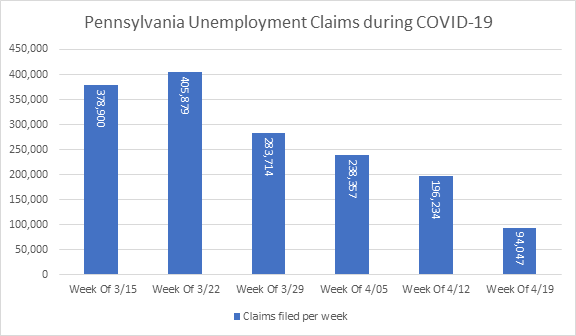
Fortunately, this was something that the Pennsylvania state government had anticipated and planned for according to Levitz. “Most of the deadlines for the state have been pushed back so I can just say can we revisit this in a month,” he said in the interview. That month is a much-needed cushion for state offices overrun with forms and documents, particularly those related to small business relief and unemployment benefits. Unemployment benefit applications have surpassed historical averages by as much as ten times, according to Warren’s office.

Despite the fact that the state government of Pennsylvania is working in overdrive to manage to coronavirus situations on the ground, it still pales in comparison to the massive burden undertaken by local elected officials. Local officials such as Mayor and County Commissioners are generally leveled the more challenging engaging actively in their communities to keep their constituents safe.

Local officials often have heavier and more diverse workloads to begin with as they are responsible for managing practically every part of daily life in their communities. Commissioners have a wide range of responsibilities that range from infrastructure management to healthcare, from law enforcement to unemployment. That explains why Diane Ellis-Marseglia, the chair of Bucks County’s Board of Commissioners, oversees almost three thousand workers along with her fellow two commissioners.

“Just under the commissioners falls the jail, the county nursing home, the department of health, 20 parks; 130 bridges; children and youth, which is 200 social workers who do abuse and neglect investigations; drug and alcohol commission, the entire mental health and disability programs that are run in Bucks County. We run the elections, and we supervise nine other elected officials,” Ellis-Marseglia said in the interview. The incredibly assorted workload that these local officials must shoulder means that they are fighting the coronavirus outbreak on practically every front.

According to Anna Payne, executive assistant to Commissioner Ellis-Marseglia and member of the Middletown Board of Supervisors, local officials have adapted well to the post-virus working conditions. “I think the biggest difference, obviously, is there is no face to face interaction,” she said in a phone interview. “But, like, even at county and municipal level it seems like everybody is easily transitioning into virtual communications.”

Payne explained how moving public meetings to virtual spaces were one of the bigger adjustments local official needed to make. “We’re not meeting in person but we are still trying to allow folks to participate by calling in and asking questions,” she said in the interview.

For local officials like Payne, it is not only important to make these meetings easily accessible, but also easy to participate in. “That was kind of an adjustment,” Payne said in the interview, “I think that is probably the biggest adjustment, trying to figure out how to get your public meeting to be virtual but also be inclusive, so everybody can participate and not just watch it on T.V.” The coronavirus outbreak has affected local officials on numerous fronts, including constituent relations beyond public meetings.

“The covid thing has touched a lot of areas,” Ellis-Marseglia said in the interview, “The jail, we had to get people out of the jail. We wanted to reduce the population of people who didn’t really have to be there because that was important because covid was gonna get in there.” Jails have been among the hardest hit sections of society, along with nursing homes. Ellis-Marseglia and her fellow Commissioners took early steps to reduce the spread of the disease among these vulnerable populations.

“We have a nursing home. My mother is in that nursing home. She’s been there for seven years,” Ellis-Marseglis said in the interview. She described how the board took early steps to protect nursing home residents, and how they continue to offer advice to nursing home and the community in general. “We needed to try and stop visits in the nursing home, I think March 10th, before anything else happened. And because the board of health is under us, we have 30 people working probably 18 hours a day, and a doctor, advising the entire community on what they should be doing,” Ellis-Marseglia said in the interview.

However, the commissioners’ jobs go well beyond simply overseeing the dispensing of advice. “We’re real hands on in this,” Ellis-Marseglia said in the interview, “We’ve had to make sure every hospital, every nursing home, the ambulance, the police, everybody has PPE (personal protective equipment).” A task easier said than done, as the nation is suffering from a widespread shortage of PPE. Ellis-Marseglia said it often comes down to making sure PPE goes to the people who need it most, leaving other to make due with what is left over.

Finally, Ellis-Marseglia explained how the local response needed to go beyond practical implications to consider legal and societal consequences. Ellis-Marseglia said that “because we answer the phones at 9-1-1, something people don’t think about, but it was a pretty big controversy that do you release the names to the police when they go to a house, or an ambulance squad, that we know that person has Covid-19 or is that a violation of someone’s privacy.” It fell on local officials, like Ellis-Marseglia and her fellow commissioners to develop a plan of action to protect the health of first-responders and the privacy of their constituents.

Ellis-Marseglia explained that it has been a rapidly evolving process. “At the beggining we wouldn’t do anything unless you asked and we would tell them,” she said in the interview, “Then we finally got a code, for example 4-2. If there is a person with covid at that house, we’ll say there’s a 4-2, without the officer asking.”

“So that’s a pretty big deal because it could be a HIPPA violation,” Ellis-Marseglia said citing a federal law designed to protect personal health information from public disclosure. “There are a lot of decisions on that,” she said.

In this unprecedented coronavirus epidemic, it is crucial that every level of government be on top of responses to every problem that arises. But those who will face those issues first and need to be innovators in developing solutions will be local officials. Regardless of whether they receive their due publicity from the press, it is important we all remember just how important local government truly is in times of trouble.

Source: https://www.uc.pa.gov/COVID-19/Pages/UC-Claim-Statistics.aspx

Quarantine Gives the Environment some TLC, too: But for How Long?

369516AB-924E-4181-B851-BF946B3A46AE
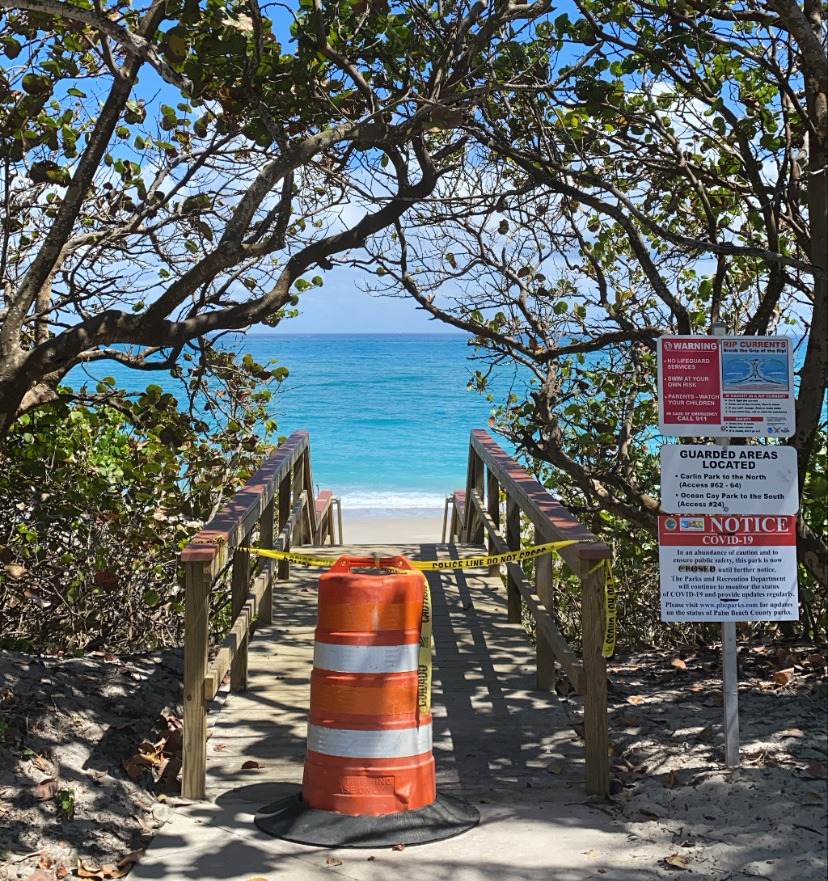
All Florida beaches closed in the wake of Spring Break to prevent the spread of COVID-19. Here, a beach entry in Jupiter, Florida on March 22 (photo by Adv. Reporting Times’ Ashlyn Peter).

By Ashlyn Peter // May 4, 2020

For almost 10 years, Dr. Julie Hopper watched as her colleagues sailed out to the Pacific ocean each month to collect important scientific data on changes in microbial patterns. The data plays a huge role in determining what kind of funding and policies are needed to protect marine biodiversity, and this study had a lot of it.

But that might not be enough for the study to continue. The study received its funding because it sampled on a regular basis for a long period of time; the coronavirus shutdown in March and April ruined that consistency.

“That is a hole in a scientific study—it’s a gap,” Dr. Hopper, a teaching fellow in the Department of Biological Sciences at the University of Southern California, said in a phone interview. “And there’s not supposed to be gaps.”

MISSING RESEARCH

COVID-19 has forced a change in our daily habits and the need to seek out the good when we can during these uncertain times. But as more stories emerge of a healing environment due to the sudden lack of human activity outdoors, scientists worry if this short-term benefit can outweigh the cost of ceased research.

“We’re not in the position to make those predictions because there’s so much unknown right now,” Benjamin Studt, the public outreach supervisor for the Palm Beach County, FL Department of Environmental Resources Management, said in a phone interview. “There is really no telling what could happen.”

As the U.S. classifies what kind of work is and is not necessary during quarantine, scientists worry that they cannot record a momentous time in the nation’s history. “This is the dilemma: a lot of our research work has now been termed a ‘non-essential research activity,’” Dr. Song Liang, an associate professor in the Department of Environmental and Global Health and Emerging Pathogens Institute at the University of Florida, said in a phone interview. “We’re certainly going to lose some unique opportunity to collect data during this time period.”

Some wildlife studies, like the one Dr. Hopper’s colleagues led, are in serious jeopardy of being de-funded as the economy suffers from COVID-19. “Scientific money and funds are hard to come across and now they’ve wasted time and personnel because they had to stop, it was mandated,” Dr. Hopper said. “To me, what actually kind of outweighs any positives on the ocean right now is moreso the negative, the pause, on scientific studies.”

Dr. Hopper believes that any mammals in their mating season would benefit from the decrease in noise pollution, but she says that any surge in offspring would likely only last one generation.

As disconcerting as it is to miss out on valuable ocean wildlife data, marine mammals actually benefit from the absence of research boats: the problem is figuring out which of the two is more important in the long run.

“The manatee population in south Florida has certainly benefited from a decrease in boat traffic,” Studt said. But similar to air pollution, this change may only last until people regain access to life outside the home. “I think benefits to manatees are probably temporary because we live in a boating community and once those boat ramps open up people are going to be back on the water,” Studt said.

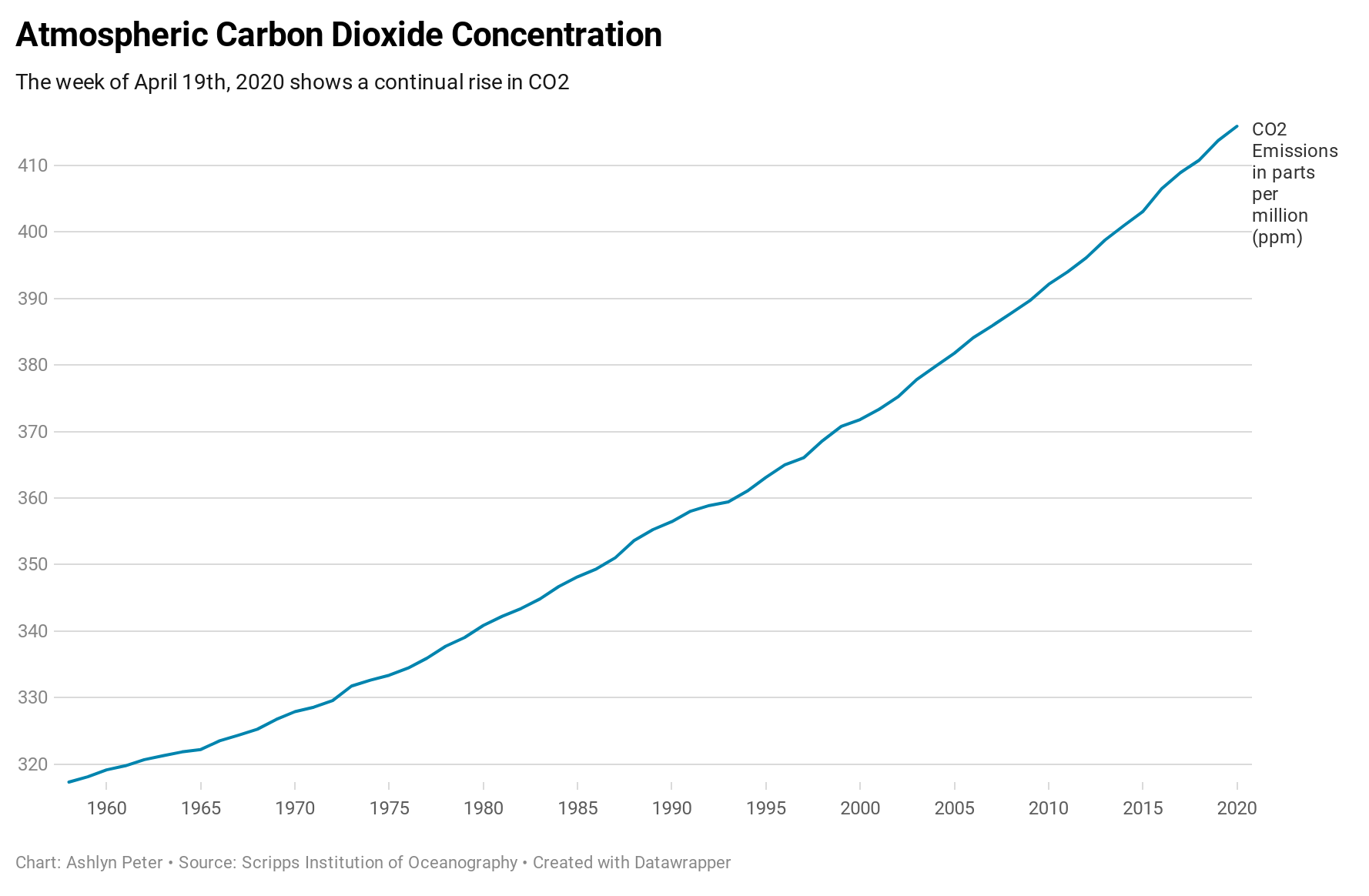
The same tug of war between short-term benefits and long-term consequences exists with air quality. One thing’s for sure, Studt said: with less people driving around, data isn’t needed to know that there will at least be a short-term reduction in air pollution due to the decrease in expended fossil fuels. Still, transportation accounts for the largest carbon dioxide (CO2) contribution in the U.S., so one month of mass quarantine can’t contribute to a long-term solution to air pollution.

i2ato-atmospheric-carbon-dioxide-concentration

MASSIVE SOCIETAL SHIFT

Short-term changes in the environment do not have to be a blip, though. To scientists, a return to business as usual isn’t a given; as interesting as this period of mass isolation is, they’re actually more anxious to know how we move forward from it. Could humans sustain this short-term change in the environment?

Studt is optimistic that we could: as we’ve been forced to stay indoors, many of us have re-discovered our need for nature. “My hope going forward is that people really realize the value of those connections with nature,” Studt said. “We can just hope that the realization hits home and helps us change our habits.”

As most of the public experiences working from home for the first time, some experts wonder whether people will want to continue doing so after stay-at-home orders are lifted. If so, there is potential for real structural change in our relationship with the environment.

“Are people going to be far less interested in traveling through air travel and will people just be happy working at home,” Ronald Amundson, a professor in the Department of Environmental Science, Policy, and Management at UC Berkeley, asked in a phone interview. “If that’s the case, it’s going to implement a long-term trend in behavior that’s different than the trajectory we’ve been on.”

The question of whether to return to “normal” as we know it has major implications for our environment, as climate change continues to worsen. Permanently changing how and where we do our work would require a massive concerted effort, but many experts have argued that the environment requires an institutional overhaul for years.

“That’s going to be an enormous societal challenge,” Amundson said. “Changes on our behavior will start to shift what we perceive to be the goals of modern life and what kinds of aspirations we should have.”

COVID-19 AS A DIVERSION OR A CAUSE FOR CHANGE

As important as it is to develop environmental policies, Dr. Hopper said it’s also necessary to fight those in place right now. While the country enters into mass isolation for the foreseeable future, the government is deregulating emission levels for companies that emit high amounts of pollution. “Air pollution increases your susceptibility to respiratory diseases,” Hopper said. Since COVID-19 attacks the lungs, “It’s the worst time to deregulate emissions.”

COVID-19 has proved the perfect diversion for the proposals or implementation of these rollbacks, as stories of the illness’ human toll continue to mount. “The focus is on the pandemic,” Dr. Liang said. “Environmental research is just not the priority for now.”

This rollback on emission policies could also deepen the existing healthcare divide for people from low-income and minority communities. The neighborhoods surrounding coal power plants are often majority low-income, which puts an increased strain on an already at-risk population during this pandemic.

Still, scientists are encouraged by the public’s renewed embrace of nature. “It will be interesting how we as a society come out of this,” Amundson said. “This could be a flashing point that scientists and policymakers have been looking for that could be an opportunity to have a conversation and develop policies that help to facilitate behavioral changes that can be sticky enough for people to adopt in large enough numbers.”

Dr. Hopper is encouraged by the news that most gardening websites have experienced backlogs since early March. Learning to care for a milkweed plant or two can be enough to generate a larger concern for nature: it’s an easy habit shift that could lead to future policy changes.

“There’s not much else to do, so I do have high hopes that people are becoming more aware of their natural surroundings and are more interested,” Hopper said. “Maybe even if it’s just a short period of time, people will think, ‘Wow, this is amazing. What can we do to keep it?’”

While Hopper and others agree that better government legislation is necessary for a healthier environment, they also believe that it’s going to take a strong public push to get there. COVID-19 will create a gap in research meant to find solutions to climate change, but perhaps it is also providing a necessary pause for people to reacquaint themselves with nature and the need to protect it.

“At the end of it, it’s really up to us to figure out what happens going forward,” Studt said. “This is a moment for us to take stock of not just ourselves but our interactions with where we live.”

Essential yet Illegal: The Medical Cannabis Industry Persists Despite COVID-19

rick-proctor-PGc9Vid8O24-unsplash
Dried leaves and flowers from the cannabis plant are used to make marijuana. Marijuana contains THC and CBD, two components that aid in relief from numerous physical and mental health conditions. Photo by: Rick Proctor/Unsplash

After a serious car accident that almost took her life in 2006, Amy Mellen quickly became dependent on a slew of pain medication prescribed by her doctor. When the opiates and nerve medication she was taking caused her to black out while driving on the highway, she knew that she needed to find an alternative.

After researching the medical cannabis program in her home state of Oregon, she began recovery through medical marijuana by smoking for the first time in 2014. Things began to turn around quickly when she discovered full extract cannabis oil in spring 2015. According to Mellen, within six months of ingesting the oil, she was off all prescribed medication except one. She dropped over 100 pounds in less than a year, reversed Type 2 Diabetes and no longer had to take 40 pills and supplements every day.

“Medical cannabis gave me a 180-degree turnaround,” she said in an interview.

In uncertain times presented by the coronavirus pandemic, Mellen, who now resides in Waldorf, Maryland, is thankful to maintain a sense of normalcy when it comes to accessing the medicine she counts on for her wellbeing. Her local dispensary is considered an “essential business” and is maintaining normal operations.

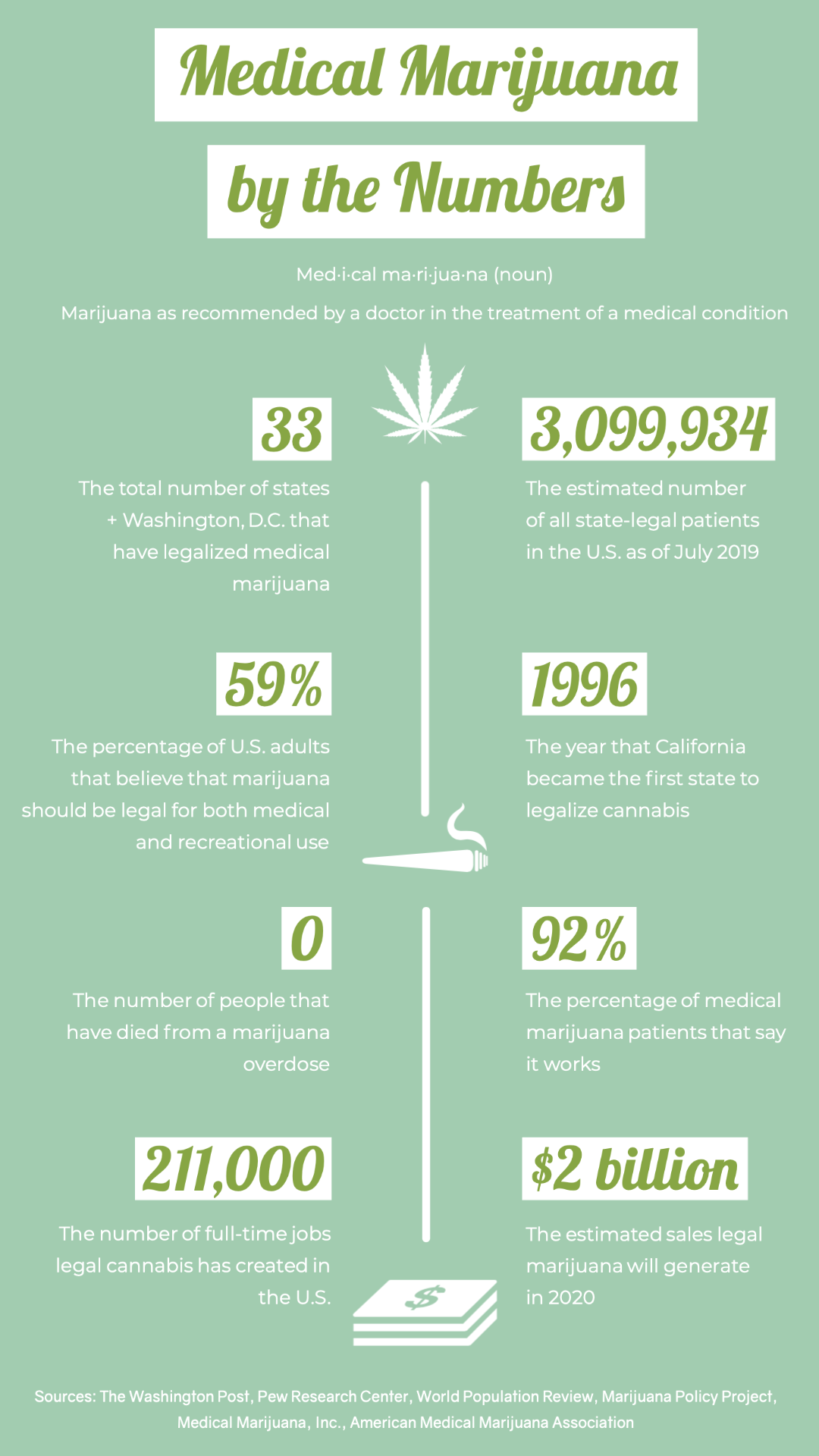
Mellen is one of over three million Americans across 33 states who depend on medical cannabis to treat a wide-ranging list of health conditions, according to data from Marijuana Policy Project.

While marijuana continues to be researched and tested, health professionals have found that two components of the drug have wide-reaching medical benefits – THC and CBD. THC is the main mind-altering compound in marijuana that makes users feel a euphoric “high” whereas CBD is non-psychoactive compound and considerably less controversial of the two.

Both cannabinoids – derived from the cannabis plant – are effective in treating chronic pain, which is the most common use for medical marijuana in the United States. It’s shown to work – in a 2017 survey of 2,897 Californian patients, 92% of respondents agreed that cannabis works better to treat their condition than a non-opioid medication.

My Post-3

Adam Ostrow, a retired physician who lives in Gaithersburg, Maryland was largely bedridden before using medical marijuana. He says that taking CBD and low dose THC products on a daily basis has been “completely transformative” in treating chronic pain.

“Medical cannabis is absolutely essential to me functioning,” Ostrow said in a phone interview. “I need it to get out of bed, to walk around the house and to do any kind of physical activity. Without it I’m in excruciating pain and not functional at all.”

Naturally, when states began issuing stay-at-home orders and patients feared losing access to their medicine that they so desperately rely on, the legal cannabis industry saw record sales. To the relief of the millions of Americans that count on medical marijuana for their day-to-day functioning, dispensaries were deemed essential in most states where the businesses are legal –an incredible feat for an industry that has been challenged and demonized for decades.

“To me, this is a recognition that [cannabis] is an essential part of my life,” Ostrow said. “It’s just like any other kind of medicine that I take.”

An ever-evolving industry, the legal marijuana business is making state-by-state changes to adapt to new challenges presented by the outbreak.

Haven, a medical cannabis dispensary in Brandywine, Maryland, is remaining open for normal business hours but enforcing a curbside pickup only rule. According to the manager of Haven, who asked to remain anonymous, all transactions must take place outside of the dispensary in order for patients and staff members to adhere to social distancing guidelines. Haven is also encouraging patients to place orders online prior to arrival. As for operations inside of the building, staff members are constantly disinfecting surfaces and moving around the space less than they normally would.

Haven’s manager says patients seem to be satisfied with the dispensary’s services given the unprecedented changes in operation.

“Patients have been patient, understanding and appreciative, so we have been very lucky,” she said in a phone interview. “I’m not sure if that’s the case with dispensaries all throughout Maryland, but our customers have been great and supportive.”

Despite dispensaries like Haven being declared life-sustaining businesses in the midst of strict stay-at-home orders, they are not eligible to receive relief funds from the federal government.

Under the massive $2 trillion CARES Act, small businesses who participate in the Paycheck Protection Program can receive loans to cover payroll, health care benefits, rent, and other expenses necessary in order to stay afloat amid COVID-19’s lifespan. Because marijuana distribution and sales are still illegal under federal law, dispensaries will have to support themselves through the crisis without government assistance.

“We’re fortunate to have a lot of support from patients and it hasn’t been necessary to change hours or do any reduction in sales force, so I’ve been able to continue keeping all of the employees that want to continue working, employed,” Haven’s manager said.

Not only are cannabis businesses ineligible for aid, but so are the companies that work directly or indirectly with such businesses – like some accounting services and law firms. Major banks and credit card companies are hesitant to work with dispensaries due to fears of federal drug charges and money laundering claims, so dispensaries must operate as cash-only businesses. The coronavirus can live on porous surfaces like dollar bills for up to 24 hours.

Along with enforcing the use of gloves and masks, Haven has been setting up stations where employees can disinfect areas with rubbing alcohol before and after handling cash, according to the manager.

Patients and dispensary owners believe that the financial barriers faced by businesses speak to a larger issue of the government’s outdated stance on cannabis.

Cannabis is considered a Schedule I drug under the Controlled Substances Act. The Drug Enforcement Administration classifies it alongside drugs like heroin and LSD as a substance with “high potential for abuse” and “no currently accepted medical use in treatment in the United States.” The schedule system sets the groundwork for the federal regulation of a substance. While there are disparities within states, Schedule I and II drugs receive the strictest regulations.

Americans for Safe Access (ASA) is a Washington, D.C.-based advocacy group with the goal of ensuring safe and legal access to cannabis for therapeutic use and research. Despite the fact that ASA is an advocacy group and does not deal with marijuana in any physical form, Interim Director Debbie Churgai says that she’s unsure if her organization will be eligible to receive federal aid.

“This whole issue highlights why [federal] legalization does need to occur,” Churgai said in a phone interview. “There’s inequality in terms of what is happening in the states – whether they’re keeping dispensaries open, whether they’re keeping cultivation sites open, whether they’re allowing delivery or not. It’s different per state, and it shouldn’t be that way. We should all have equal access to this medicine.”

Dispensaries in the nation’s capital that serve over 6,000 registered patients have been adjusting to the outbreak in unprecedented ways. On April 14, Mayor Muriel Bowser and the D.C. Department of Health announced an emergency rule allowing dispensaries to offer delivery and curbside pickup options. Patients enrolled in the District’s medical program or a similar program in another state may make use of pickup or delivery services through Aug. 12.

“This patient-centric, emergency rulemaking is necessary to protect the health, safety, and welfare of District residents, and is similar to what other states are putting in place to continue access to medical marijuana,” the city said in a press release.

The emergency rule includes stipulations. A driver cannot make more than 10 deliveries in a single run, vehicles cannot be marked with marijuana-related advertisements or imagery, and an order cannot exceed the 30-day limit of 4 ounces.

Patients and activists are pushing for states to make additional changes regarding their medical programs throughout the duration of the pandemic, such as implementing a temporary freeze on the expiration of medical cards and increasing the amount a patient can purchase each month.

Congresswoman Eleanor Holmes Norton (D-D.C.) is calling on the government to repeal the rider than prohibits Washington, D.C. from commercializing recreational marijuana, which would generate much-needed tax revenue as the city faces an economic crisis. Because the District is defined as a territory and not a state in the CARES Act, it is receiving $500 million, whereas all other states, including those with smaller populations than D.C., are promised $1.25 billion.

“At this moment of unparalleled need, D.C. should be able to collect tax revenue from all available sources, like every other jurisdiction, including from recreational marijuana, which is believed to be widely used in the District,” the congresswoman said in a press release.

While money plays a crucial part in the conversation surrounding marijuana, activists and dispensary owners say that their main focus is to ensure that patients have access to their medicine both during the pandemic and after it subsides.

Along with more curbside and delivery options, cannabis advocates would like to see changes in the caregiver policy. Caregivers are designated individuals who assist in purchasing and transporting medical cannabis to a patient who would have trouble accessing it on their own. Allowing caregivers to serve multiple patients as opposed to just one – which is currently the law in some states – would ease the burden on patients who don’t have easy access to their dispensary.

Patients would like to see increased telehealth options for new and renewing medical cannabis cards. Through virtual appointments, patients can visit their doctor from the comfort of their home, saving both time and transportation costs.

Rather than take away the delivery and telehealth options that are currently benefitting disabled and elderly medical marijuana users, ASA hopes that states will look into upholding these regulations after COVID-19 runs its course.

“There were patients that had mobility issues or were homebound before coronavirus came along. We want to make sure that patients like that are always kept in mind and helped,” Churgai said. “We are hoping that some of these regulations continue on.”

Despite the challenges presented by the pandemic and the work that still needs to be done, Mellen says that she and her fellow patients are “extremely grateful” that numerous states have included dispensaries within their list of essential businesses.

“[States] are saying that our medical cannabis patients have just as much of a right to their medicine as anybody that walks into a CVS, a Walgreens or any other pharmacy,” she said. “This speaks volumes for our industry and our community.”

The evolution of evangelical Christian support for Trump

By Gabrielle Bremer

Photo by Joyce Boghosian

WASHINGTON — Despite the president’s three marriages, a scandal with adult film actress, Stormy Daniels and sexual assault allegations, evangelical Christians continue to support their unchristlike leader. The election of Donald Trump left people scratching their heads as to why his evangelical fan base continues to support him. 

In 2016, the Pew Research Center reported that President Trump received 81% of the white, evangelical Christian vote. In the 2018 midterm election, Republicans received 75% of the evangelical vote

“People went to the polls not seeking a pastor-in-chief,” Tim Goeglein, vice president of external and government relations for Focus on the Family, said in a phone interview. “They were seeking a person who could sometimes be a bodyguard,” for the issues evangelical Christians are most passionate about, Goeglein said. 

Goeglein said one of the reasons why Trump was overwhelmingly successful during the 2016 campaign was because he released the names of some of the Supreme Court nominees he might consider if elected. “That had never been done in American history by a president of either party,” he said. 

In February of 2016, Antonin Scalia, one of the most “consequential conservative (Supreme Court justices) of the last century” died. People wanted to know if the vacancy would be filled by another consevative in the “Scalia mold.” “When people went to the polls … they were also thinking about the vacancy on the Supreme Court,” Goeglein said. 

“Trump’s handling of that vacant seat became, in essence, kind of the unifying rally cry for most evangelicals,” Timothy Head, executive director for the Faith and Freedom Coalition, said in a phone interview.  “It wound up being enormously reassuring and consolidating for tons of evangelicals.” 

Head thinks Trump’s “clearest and most profound” accomplishment in his three years of being in office is the amount of judicial appointments and confirmations. He’s appointed just over 200 federal judges, including, district-court judges, appellate judges, and two Supreme Court justices.

Head said another reason why Trump was successful in 2016 was because he took clear positions about issues evangelicals care about, like abortion and religious liberty. “He likes to say ‘promises made, promises kept,’” Head said. A lot of evangelicals like how Trump is doing what he said he was going to do during the campaign. He’s kept a lot of those promises in three years, despite the resistance from Congress and unfavorable media coverage, Head said. 

While Trump was clear on his policy positions, he also chose one of the most high profile evangelicals in politics, Goeglein said. Mike Pence was a member of Congress, member of the leadership of the House of Representatives and a governor. “President Trump choosing Vice President Pence sent a very strong signal to the conservative base,” he said. 

Others aren’t as thrilled that President Trump is fulfilling the requests of his evangelical fan base. Maggie Garrett, vice president for public policy for Americans United for Separation of Church and State, said, in a phone interview, the Trump administration has been pushing policies that use religion to discriminate against and undermine the rights of others. Currently, the group is co-running a coalition that opposes private school vouchers because they “primarily fund religious education with public money,” the Americans United website said. 

The organization is also working to protect the Johnson Amendment. The amendment is a provision in the tax code that says non-profit organizations, including churches, can’t endorse political candidates. “When President Trump realized that meant that churches couldn’t endorse him, he decided that he would get rid of it.” 

The group has been outspoken about Trump’s unofficial evangelical advisory board. “In the beginning of his presidency, they were boasting about the unprecedented influence they had on policy, personnel, judges, they would have meetings with him frequently,” Garret said. “A lot of his policies, including some of his anti-trans policies, came out of their meetings.”

The organization has called on the board to disband. In 2018, they sent an official letter to the White House, citing the group for not complying with federal regulations. “It is clear that the President’s Evangelical Advisory Board is doing substantive work with the Trump Administration behind closed doors—without any sunlight for the public,” the statement said. 

“It is very clear the access he is giving to his base of supporters, white, evangelical, conservative Christians, is significantly greater than he gives to others,” Garrett said. 

In contrast to the Trump administration, Obama had an advisory council on Faith-Based and Neighborhood Partnerships that were diverse by religion.“It wasn’t just Christians, there were Jewish groups, Muslim groups, secular groups. It was also diverse politically. There were people on both sides of the aisle,” Garrett said. 

Ultimately, Trump continues to be successful among evangelical Chirstians because he champions their issues. Trump is the messenger and there is this “centripetal compulsion” to only focus on the messenger, “but there is really little effort to understand the audience,” Head said. 

“They think that they can cover the messenger (in a) different way the audience will dissipate. The reality is that the audience is the one that the messenger understands that this is what the audience cares about,” he said. 

“All they think about is the messenger. If they can disprove the messenger, the audience will act accordingly, and that’s not the case,” Head said.

Graphic by Gabrielle Bremer

When all sides of the music industry work together, big things happen


These are just some of the music streaming apps that will be impacted by the Music Modernization Act. The MMA will create a database for streaming apps to distribute royalties better and give federal copyright protects to songs released before 1972. (Photo by Alexandra Kerecman)

By Alexandra Kerecman

WASHINGTON – Almost two years ago, President Donald Trump, with Kid Rock by his side, signed an unanimous bill into law that will bring dramatic change to the music industry when it goes into effect in 2021. However, not many people outside the music industry have heard of the Orrin G. Hatch-Bob Goodlatte Music Modernization Act.

The Music Modernization Act, passed in 2018, requires that a government-funded commission be created to deal with licensing and royalties, gives federal copyright protection for songs release before 1972 and allows for music producers to collect royalties if a recording artist declares that they were a key part to the song recording.

“The MMA is a bunch of different things that were all put together in one bill,” said Todd Dupler, the managing director of advocacy and public policy for the Recording Academy, in an interview. “There are elements of that bill that have been out there for years. In fact, a version of the law that deals with the Mechanical Licensing Collective had been proposed 10 years prior, going back to 2006.”

The first part of the Music Modernization Act is called the music-licensing modernization. This section will allow for artists to receive more royalties from digital streaming services, like Spotify and Apple Music, that they might not have before due to inefficient record-keeping of who owns the copyrights to songs.

The Mechanical Licensing Collective is comprised of songwriters, music publishers, and other people involved in the industry. Ralph Peer’s company Peermusic, a global music publishing group, is one of 16 organizations on the collective’s board of directors. This group will give blanket licenses to services like Spotify and advocate for fairer compensation for all parties involved.

The new act replaces individual licenses with ones that allow for a streaming platform to play all compositions from a music publisher that the streaming platforms have an agreement with. This type of license would replace the outdated mechanical license where a streaming service most have one for every song they have. For instance, if Spotify had about 10,000 songs from the same music publisher, they would need 10,000 mechanical licenses from that publisher for each individual song.

“Peermusic, which is a fairly large independent, probably has over 100,000 different songs that are used on streaming services,” said Ralph Peer, the Chair and CEO of Peermusic, in an interview. “You are in six figures for the number of licenses a smaller publisher has and seven figures as soon as you get to the majors.”

According to John Simson, an entertainment lawyer and former executive director of SoundExchange, an organization that helped distribute royalty payments from streaming services to music publishers, the average amount made off a physical or digital purchase of a song is 91 cents, but the average amount made per stream ranges from three-thousandths to six-thousandths of a cent depending on the streaming service.

The Music Modernization Act requires music publishers, streaming services and the United States Copyright Royalty Board to work together to create a new amount that is agreed upon by all parties.

The second part of the Mechanical Licensing Commission is to create a database using information from music publishers and songwriters to identify where royalties made from streaming services would go to. While the amount made from streaming a song is around three-thousandths of a cent, there are thousands of songs that do not have anyone listed as an owner but are still making money that is sitting unclaimed. This database hopes to get the unclaimed money into the hands of a song’s owner and make royalties available to all songwriters and publishers faster.

However, there are some songs that have widely known owners but are being declared as unclaimed, so these songwriters and publishing companies are not getting royalty payments from streaming services. Streaming services claim it is too hard to keep proper track of licensing paperwork at the moment, which causes for the licenses of some songs to fall through the cracks. The most prominent example of this is Eminem’s publisher suing Spotify because Spotify used Eminem’s songs without the proper licensing and did not pay royalties because the streaming service did not know who the proper owners of the songs.

This lawsuit may even reach the Supreme Court because Eminem’s publishers are claiming that the Mechanical Licensing Commission part of the Music Modernization Act is unconstitutional and prohibits the right to sue. There is a provision in the Music Modernization Act that bans publishers or songwriters from filing a lawsuit against streaming services for unclaimed royalties after January 1, 2018. While this case is still in litigation, a federal judge in Nashville denied that the lawsuit should be moved to New York to make it easier for Spotify to defend itself.

However, Simpson believes this lawsuit will probably not make it far.

“For you to tell somebody that they are not allowed to sue is probably problematic, but if the way you do it is to say look we are changing elements of the statutory license that is required by Congress and Congress has the authority to change the terms of the statute,” said Simson in an interview. “The MMA did this.”

The second part of the Music Modernization Act extends federal copyright protections to songs that were released before 1972. Songs released before 1972 were not given protection on the federal level, so artists had to depend on the copyright laws of the state they lived in to protect their songs. The money made from these streams may help artists who can no longer tour due to age.

Due to the recent COVID-19 quarantine, the Music Modernization Act may help these older artists get more money from this act due to an increase in the streaming of catalog music as the quarantine continues. Catalog music is any piece of music that has not been released in the past 18 months.

“A lot of catalog music is being played right now as people are at home in quarantine,” Dupler said. “People are kind of looking for comfort music and they go back to the oldies. This is music that artists should be paid for.”

The last part of the Music Modernization Act is a rare inclusion that allows music producers or engineers to collect royalties from songs if they are given permission by a recording artist or music publisher. While this practice has been in place for some time, this is the first time it has been written into law.

“It codifies a practice that has been in place for years, but producers and engineers have never been acknowledged or recognized in copyright law,” Dupler said. “This gives them something in the law that recognizes them for the work that they do. Even that alone is a very important and powerful thing.”

The biggest take away from the Music Modernization Act is the ability to see what the music industry can accomplish when music publishers and streaming services work together. This act passed in unanimously in Congress with the help of both sides of a fractured industry coming together to make the industry a better place.

“This (act) takes away an important source of friction between the publishers or composer’s biggest clients and these large firms that are big enough to trample us at any time they want,” Peer said. “To take that friction away is a very good thing for all of the music community.”

It is rare for the music industry and streaming services to work together due to the notion of how much a songwriter or publisher should get paid from having a song streamed. While the average amount of receiving about a three-thousandths of stream does not seem a lot, the Music Modernization Act has opened a forum of communication between streaming services and other players to the industry to make it a somewhat even playing field.

“I think the biggest triumph of the MMA is that it shows what we can do when everybody in the music industry works together,” Dupler said.

“The act is an important step forward to changing the licensing of compositions for on-demand streaming services to mirror business practices and make it fairer for everyone involved,” Simson said.

Getting different sides of the music industry to work together taught the power of unity when trying to pass legislation. The unanimous passage of the Music Modernization Act may inspire factions of the music industry to work together again to pursue more positive legislation.

“It did not happen easily to get a unanimous vote, but I think it has a couple of lessons,” Dupler said. “One, we are better when we all work together; and two, that creators have a voice. When creators realize they have a voice and we can advocate on their behalf, that is when a lot of things can happen.”

“Things like this (the MMA) take a while for new laws to get into place, but things like this are pretty promising,” Andy Valenti, a guitarist and singer for the DC indie soul band  Oh He Dead, said in an interview. “The music industry, in general, needs serious innovation right now because people cannot rely on live shows. The Music Modernization Act helps entertainers and performers to find ways to make more money while putting their art online.”

A graph explaining the different sections of the Music Modernization Act (by Alexandra Kerecman)
Design a site like this with WordPress.com
Get started