Retribution or Rehabilitation? The Dilemma Facing Schools

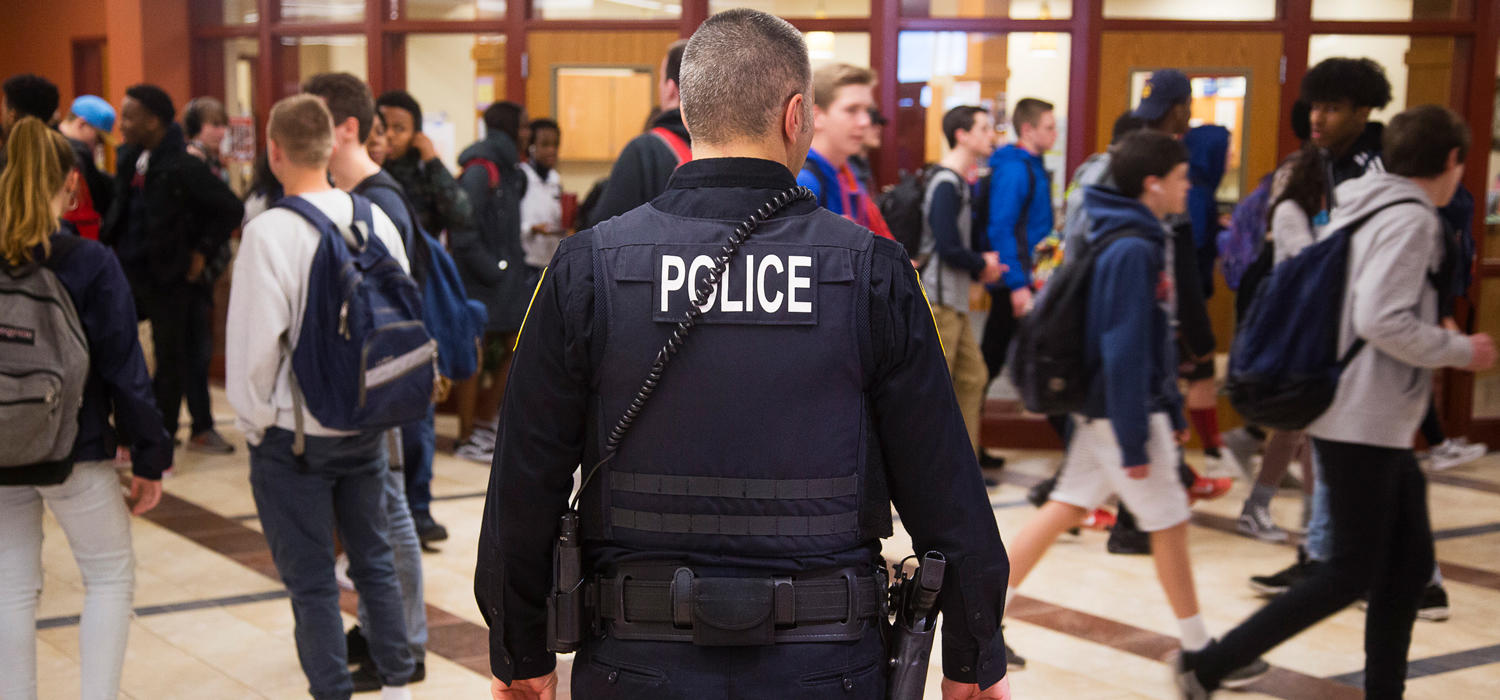
School resource officer Alfred Giusto stands in South Portland High on Friday, March 2, 2018
Photo by Carl D. Walsh/Portland Press Herald via Getty Images.

On her first day as a public school teacher, Hailly Korman walked into her Los Angelas classroom to find there were only enough desks in the room to seat half of the students on her roster. She hurried to the principal’s office to find enough desks to seat her whole class before her students arrived. 

Don’t worry, Korman remembers the principal saying. By week two, half of those kids will be gone. 

Korman, now an expert on correctional education, justice-involved youth, and school discipline, watched that year for the first time as students fell victim to a discipline system that was meant to keep students safe, but nonetheless left them isolated, pushed them to act out, or removed them from school altogether. 

Most students are not even aware of existing mandatory suspension or expulsion laws, which vary from state to state, until they commit an offense — wittingly or unwittingly. According to Korman, when a student commits an offense included in a mandatory suspension or expulsion law, there is a disturbing shift from teachers making individualized behavioral decisions to a legalistic process of protocol and regulation that can leave students stranded.

Fortunate students have parents or advocates who help them either to bypass the punishment or forge a new path completely. Others, most often disabled students or students of color, do not have this support and are left to fend for themselves.  

“History has shown that having really hard and fast rules has always managed to be wielded against the most vulnerable,” said Korman. “As much as we’d like to say that there is no discretion here, people with means, people with power, people with money always find their way out.”

A putative approach to school discipline is used with all students, but it is disproportionately used against students of color and students with disabilities who have the least support. 

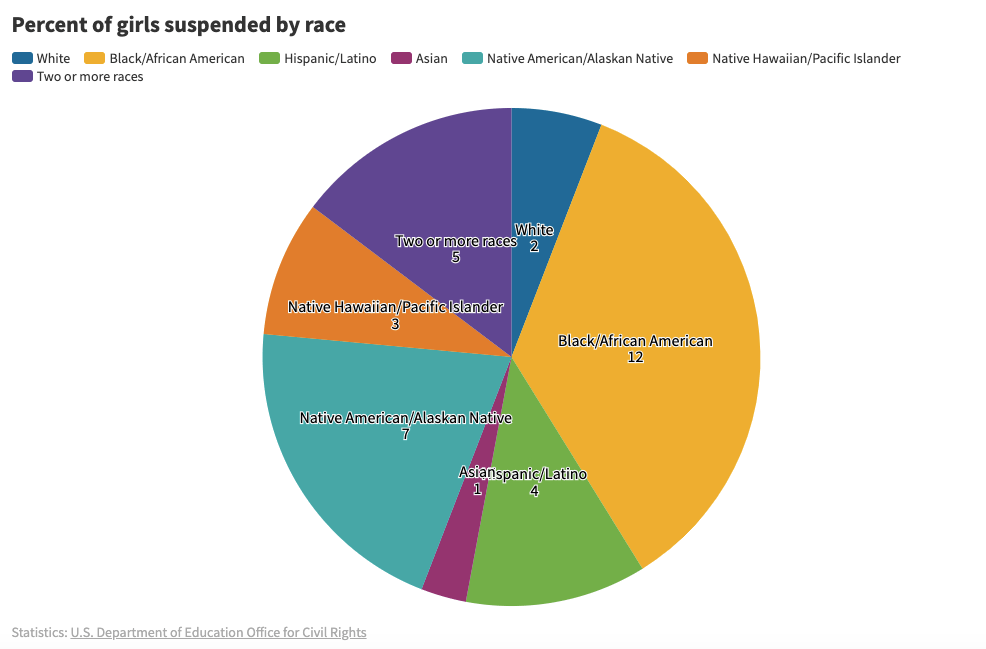
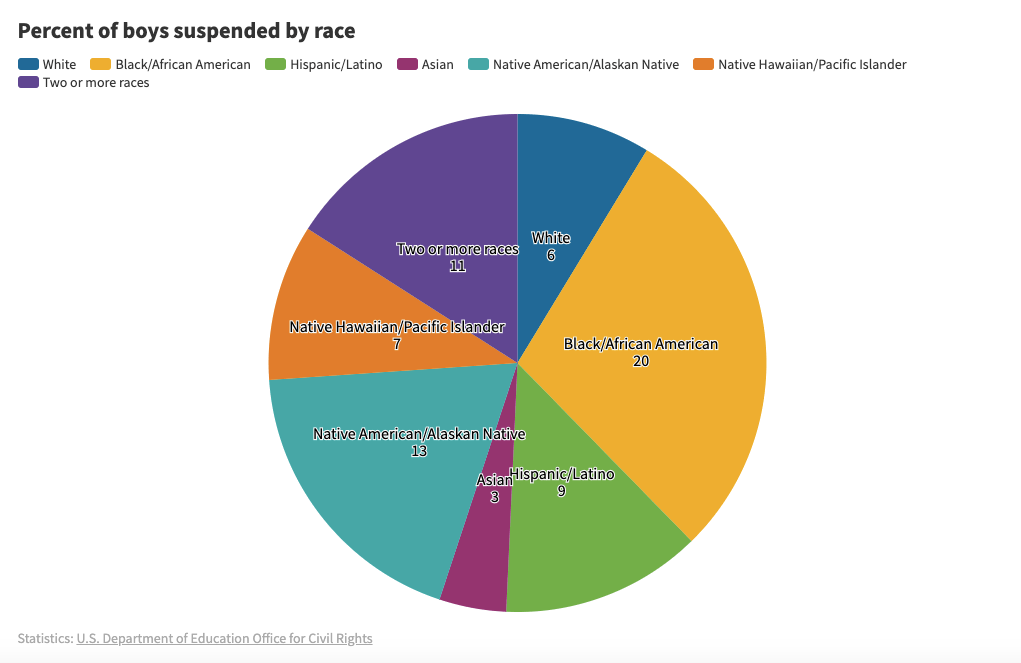
According to the Department of Education’s Office for Civil Rights, black boys are three times more likely to be suspended than white boys, black girls are six times more likely to be suspended than white girls, and students with disabilities are more than twice as likely to be suspended as their non-disabled peers.

“We have created a chilling environment within the school system.” said Shay Bilchik, founder and Director Emeritus of the Center for Juvenile Justice Reform at Georgetown University. “It’s pushing kids out.”

The U.S. Department of Education’s Office for Civil Rights also has reported that white students are more likely to face suspension or expulsion for provable offenses, such as smoking or vandalism, while black students are more likely to face consequence for subjective offenses, such as disrespect. 

As schools grapple with excessive and disproportionate punishment, educators, federal regulators, and members of the juvenile justice system are increasingly looking to try a new approach which focuses on reconciliation as opposed to punishment, restorative justice. This model requires offenders to take accountability and meet with those impacted by their actions, and together they decide a way to fix what was wronged. Instead of punishment, schools hold a restorative meeting and attempt to cooperatively sort out the issue and improve school culture.

When instituted properly, including specialized faculty training and multi-teared implementation systems to address different levels of transgressions, restorative justice practices are showing some positive results. Suspension rates are dropping, while GPAs, attendance, reading proficiency, and graduation rates all rise. Students and faculty alike report a significant improvement in school culture.

The rise and application of discipline 

Even though overall juvenile crime rates are plummeting — the juvenile incarceration rate dropped more than 74 percent between 1996 and 2018 — the number of school disciplinary suspensions are skyrocketing. Out-of-school suspensions have increased by about 10 percent since 2000, and suspensions have more than doubled since the 1970s according to the Southern Poverty Law Center.

Most of these suspensions are a result of zero-tolerance policies, which burgeoned in the 1990s starting with the passage of the Gun-Free Schools Act in 1994. The political rhetoric of the time was primarily focused on crime — gang violence, superpredators, and losing the war on drugs. In an effort to deter violence in schools, the federal government mandated in the Gun-Free Schools Act that any student caught on campus with a weapon was required to be suspended or expelled for one year. 

The Gun Free Schools Act allowed for states to develop a case-by-case review process for discipline infractions, which has been widely criticized for its use in non-threatening situations. Students have been held to the suspension mandate for broad interpretations of what constitutes a “weapon.” In Ohio, a 10-year-old boy was suspended for making a gun with his fingers. In Delaware, a 6-year-old boy was suspended for bringing a fork from the Cub Scouts to class. In Maryland, a 7-year-old boy was suspended for chewing a Pop-Tart into the shape of a gun.

Subsequently, almost all states and about two-thirds of school districts developed policies that mandate expulsions for certain infractions,  such as using or selling controlled substances, sexual assault, threats, or “any felonious behavior.” 

Individual school districts also began to implement new rules based on the broken windows theory — that cracking down on small offenses would discourage serious ones in the future, and would make students feel more safe. This meant that schools were now suspending and expelling students for behavior that previously didn’t warrant it, such as skipping class, insubordination, or being rude to teachers. 

According to the American Psychological Association, harsher disciplinary rules do not contribute to an overall safer learning environment. At schools with lower suspension and expulsion rates, academic achievement rises consistently every year, particularly for black students. 

“Teenagers misbehave,” said Korman. “The process of adolescence is stepping over boundaries to find out which ones are firm and which ones aren’t. It is the responsibility of adults and communities to give young people safe ways to transgress without catastrophe.”

An increasing amount of school administrators now rely on the police to handle disciplinary action in the form of School Resource Officers (SROs). According to the Bureau of Justice Statistics, more schools than ever are hiring SROs to handle behavioral problems.

“As we’ve seen the dramatic rise of police in schools, things have become more police problems than they have school problems,” said Jonathan Scharrer, an expert on addressing racial disparities in the criminal justice system and the Director of the Restorative Justice Project at the University of Wisconsin Law School. “Things have really just transformed from what had historically been handled within schools to getting deferred to police, and become criminal justice responses.”

SROs turn students over to the juvenile justice system even in the case of minor and first offenses, making it easier for students to get a juvenile record and harsher punishment.

“We have a system that’s based on retribution,” said Scharrer. Retribution, Scharrer said, focuses on punishing the accused and does not address any underlying issues. “There’s no response to what’s happened. Instead it permeates and spreads the amount of harm that has occurred.”

When students are forced into the “system,” they are twice as likely to drop out, and over three times more likely to be arrested.  

“When we don’t have that appropriate response, we have a very high risk of throwing that child’s life away,” said Bilchik.
The solution isn’t a guarantee

How restorative practices are implemented in schools may dictate their success or failure. 

“With any kind of process like this, you gotta do a lot of pre-work,” said Howard Zehr, the founder of modern restorative justice. “You’ve got to talk with people, you’ve got to find out what their concerns are, and help them do a risk benefit analysis and so forth.”

When instituted in the justice system, restorative practices are facilitated by lawyers, psychologists, and experts in restorative justice. In schools, Korman said, it is more often facilitated by educators or counselors without proper training. 

“A new behavior program is certainly no harder to do than a new math or reading program,” said Korman, noting that one of the most glaring issues with implementing restorative practices is a lack of teacher capacity. “It does require, though, the investment of building the skills of your teachers. With something around behavior management, typically we’re less inclined to make the investment of time and dollars because we underestimate the dedication of what it takes to do it well.”

Restorative justice specialists like Zehr say that without properly trained faculty, schools will institute programs that do not actually subscribe to the theories that make restorative justice successful in other systems or at the community level. 

“One of the problems now is that restorative justice is so popular, everybody’s calling everything restorative justice,” said Zehr. “And so many times you just don’t know whether the program that’s being labeled restorative justice is really restorative justice at all.”

Zehr notes that in the criminal justice world, restorative justice is a voluntary program and consent of the victim is paramount. If it is a mandatory program in schools, this gives the victim no choice but to participate. The experience can be traumatic for the victim, said Zehr, and any outcome could be the result of pressure as opposed to true healing.

Justice-involved youth advocates fear that restorative justice won’t address fundamental issues or needs that may impact a child’s behavior. 

“If a child is going off track and is beginning to act out in delinquent ways, it’s usually because there’s things happening in their life that are going off track,” said Bilchik. “For some kids it could be enough all by itself. But I think for others with more complex needs, the response needs to be even more than just the restorative response.”

Some worry that because restorative justice cannot address the underlying causes of bad behavior, it would be a misapplication to consider it a comprehensive strategy to address the high rates of students being pushed into the justice system due to infractions at school, known as the school-to-prison pipeline. 

“Restorative justice is not going to meet their [underlying] needs,” said Korman. “Restorative justice does not give you a job, it does not give you a stable home, its does not keep your family safe. Restorative justice on its own is insufficient.”

Restorative practices in schools have not yet been proven to lower arrest and recidivism rates for students. This has provoked additional backlash against its legitimacy. Experts argue that the practice is about more than recidivism, and shouldn’t be graded on that alone. 

“A lot of things that we hope to accomplish are not measures that the system cares at all about,” said Zehr. “They honestly don’t care about victim’s satisfaction, or those kind of things. Reducing recidivism is absolutely not the goal. It’s a benefit. A side effect. But in my view, it is absolutely not a primary goal of restorative justice.”

Critics call restorative justice a lax response to bad behavior which could lead to disastrous effects. 

Secretary of Education Betsy DeVos and White House officials have both said that Obama-era restorative justice guidance led to more lenient consequences, and therefore made schools more dangerous, pointing to the shooting at Marjory Stoneman Douglas High School as a costly example. The Broward County school district, of which Marjory Stoneman Douglas is a part, was one of the first to implement restorative discipline practices. Nikolas Cruz, who carried out one of the worst school shootings in U.S. history, was often reported for violent and disruptive behavior according to school administrators, but was never expelled. While it’s not clear if Cruz participated in the restorative program, some blame the school’s alleged leniency for allowing a shooter to slip through the cracks. 

Restitution

There is a growing consensus that implementing restorative justice versus punitive justice practices in schools should not be an either/or approach. Advocates say there is a way to preserve the learning time of a class and protect and engage the students who misbehave equitably. 

Schools who are doing this well have established clear restorative guidelines to improve school culture and build relationships while simultaneously training teachers in replacement discipline strategies and behavior management techniques. At the same time, they’ve backstopped this new approach by establishing strict guidelines for discretionary suspension or expulsion when necessary. 

“We have a system design in which school leaders are allowed, maybe encouraged, to abdicate responsibility for students learning the moment they are outside the door, even though there is no one on the other end to pick up the responsibility,” said Korman. “There is no such thing as ‘going too far’ when trying to keep kids in school. That’s an ambitious principle, but I think we’re up to the task.”

College Students Piled in Responsibilities Amidst Online Learning During Coronavirus

Picture1

An empty university lecture hall. Photo courtesy of Pexels.

On January 28, American University junior Yi Lin was told she had to fly from her semester abroad in Beijing back to the United States as soon as possible because of the coronavirus outbreak.


In an email sent out on March 12, the university president Sylvia Burwell announced that online classes will continue through the rest of the spring semester to prevent the spread of the virus and students living on campus have 11 days to leave campus.


“Since the coronavirus, I feel like my mental health has extremely degraded,” Lin said, who is now residing in her family home in Pennsylvania.


Lin is among millions of college students who are now doing online class and have gone back to their permanent addresses. In addition to transitioning into online classes, students are also experiencing changes in their sleeping or eating patterns and worsening mental health conditions, according to The Centers for Diseases Control and Prevention (CDC).


Universities like American, East Carolina University, and University of California Los Angeles have moved their mental health support services to telework which includes zoom meetings and phone calls between students and counselors.


“We have done trainings on legal, ethical, and best practice considerations for offering telehealth” said assistant director of the UCLA Counseling and Psychological Services Deborah Green. “We are able to keep the clinic running similarly as before, just not in the office.”


Some students like Michelle Giron, a junior at East Carolina University, said they found the transition into remote counseling to be helpful.


“She will call me once a week,” Giron said about her counselor. “I like that better than maybe having an appointment once a month.”


In addition to more time with her counselor, Giron said she has also not noticed a difference in the quality of her sessions. Less human interaction with telehealth has also encouraged some students to seek out mental health services for the first time as students may feel intimidated with in-person counseling.


“I would recommend the mental health services in schools to residents and they would say they don’t feel comfortable going and now they might not know that ECU is offering services online,” said Giron who is also a resident advisor.


Others, however, say that telehealth arises issues with privacy and accessibility. Some students do not have a private place to have their therapy sessions and may not have access to stable internet and devices, according to director of JED campus and wellness initiatives Diana Cusumano.


“For some students, being home isn’t the safest place,” Cusumano said.


Students like Lin say that being home is not only a disruption to their regular routine at school but also difficult because of strained relationships with family. Students who have to go back home may also find themselves having to live with a family who isn’t supportive or those that have toxic personalities, according to Cusumano.


“I have to hide a lot from them,” Lin said. “I’m uncomfortable and I feel like I’m walking on eggshells.”


Lin said that with her routine back at school, she at least had some space to breathe. The sudden loss of independence is a factor that causes students to feel even more isolated from their school community which may lead to more of a reason for students to keep to their own but eventually would want to talk more if that’s how they’re feeling, said Cusumano.


“People are kind of drained,” Cusumano said. “There is a sudden loss what life usually is.”


Students who feel drained from the transition to online learning may be suffering from “Zoom fatigue,” where video chats lead us to be exhausted because it requires a lot more energy than in-person meetings. Lin is among those with “Zoom fatigue” who says that she doesn’t have the mental capacity to have everything online and not being able to have her regular class experience.


“The idea of being stuck in a space,” Lin said. “a.k.a. my room, has made it hard getting up in the mornings.”


Not having enough space has been an issue that colleges like UCLA have considered into their telehealth efforts, and problem solving with students along the way as individual issues come up have been helpful in making mental health services as helpful as possible, Green said.


“Maybe go for a walk,” Green said, listing the ideas clinicians under her care have given to students who have issues with privacy for their therapy sessions. “Go to the bathroom or a car during our phone calls.”


Telehealth also creates a heavy reliance on technology, according to Green, which not all students have equal quality of. Lack of access to technology also hinders students from being able to connect with support services from universities, and many students have living situations that do not have stable internet connection and devices.


“In households where there is no good internet connection, students might put themselves at risk trying to find a place that does have it,” Giron said.


Mental health support providers like JED have offered solutions to technological problems with counseling. Video call meetings will be changed into phone calls if it is easier for students and some schools are putting together funding to help students with wi-fi and technology, according to Cusumano.


Students like Lin also struggle with focusing on school when things like her and her loved ones’ health and the future are more pressing than her classes. Green said she has received similar concerns in UCLA’s counseling clinic.


“Our job is not just being a student,” Lin said. “We are also human beings who are thinking about what is going to happen to society after all this.”


Students’ capability to learn effectively is disrupted because of the anxiety of the pandemic, but it also poses new challenges for those who have never learned online before. Time management becomes even more important since students only have their own selves to hold themselves accountable for schoolwork, according to Giron.


“Now that everything’s online,” Giron said, “all of a sudden it’s all up to me.”


Professors who are accommodating towards students’ needs also help with coping with schoolwork in the midst of the pandemic, Giron said whose professor’s decision to make a final optional really helped with her ability to juggle her classes. Multiple universities like American and ECU have also allowed for pass/fail options for students this semesterwhile still allowing the courses to count towards major or minor requirements.


“It was really helpful because how do you study for a final in a pandemic?” Giron said.


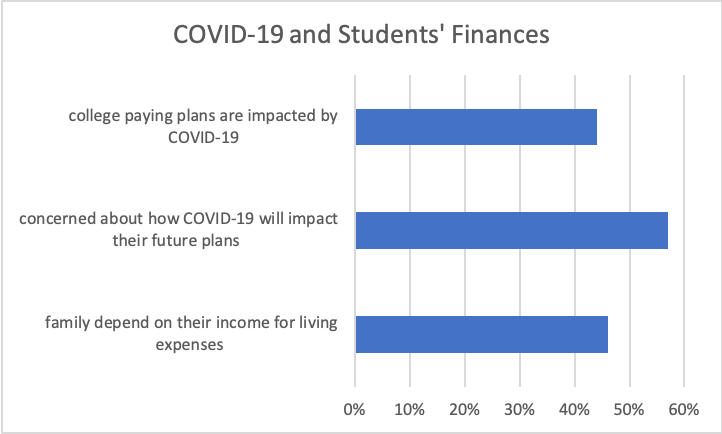
Students like Lin who are now in their residential addresses find themselves in situations with more responsibility than before like taking care of family members and helping out with family finances. With issues like job loss and cancelled opportunities like internships and jobs, students now face financial problems in being able to support themselves and their dependents.


Picture

The impact of coronavirus and students’ finances. Data from Junior Achievement by Citizens Bank/Citizens One.

“I know financial circumstances have made people I know unable to continue the next semester or they are barely getting by,” Lin said.


Organizations like JED prioritizes sharing free resources that more people will be able to access on remote learning for faculty and staff as well as student newsletters about finding peace among all the current chaos, according to Cusumano


Finance-related issues like food insecurity also lead to increased levels of anxiety and depressive symptoms, and while there is a general feeling of anxiety and panic with everyone, it can be even harder for those with pre-existing mental health conditions, according to Cusumano. With students being away from campus, previous resources like free food pantries and meal plans are now inaccessible. This led to students requesting refunds from their universities on tuition and meal plans but are met with no compensation.


“There is a lot of panic on food and finances as well,” Cusumano said. “Whether it’s with those who can’t afford to buy food or maybe just when you go to the supermarket and you can’t find what you normally need.”


Students are always encouraged to reach out if they need anything and there are free resources available, said Cusumano, referring to multiple schools like American who are providing a 24-hour crisis intervention helpline from any location.


Mental health conditions of people in general are expected to worsen as the situation of the coronavirus escalates and news coverage continues, according to the CDC. This is expected for mental health support providers as well who may feel a little burnt out from all the work they are doing, Cusumano said.


In times where providers feel burnt out, they are encouraged to go back to their “why?” of getting into this field of work and think about the people that you are helping. This is also a time where support providers are more in touch with each other than ever, which helps to remind us that we are not alone, according to Cusumano.


With the prevalence of the virus, the CDC recommends parents to keep a schedule to create a routine for their children and to also limit their family’s exposure to news coverage in order to prevent children’s misinterpretation and additional fear about the situation.


Mental health support providers are aware of all the problems that come with going remote and are still working out the kinks of telehealth but are trying their best as they go along, Green said. Taking care of yourselves and knowing that you are not alone are the most important things to remind yourself of, according to Cusumano.


“Allow yourself some grace and give yourself permission to feel how you feel,” Cusumano said. “You can only as much as what you do right now.”


Is Telehealth the Future? 

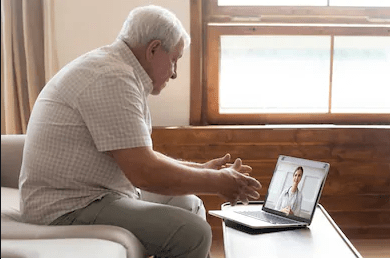
Man using telehealth services.  Source: J. Fikes, Stock Images

By: Theo Smith // May 1, 2020 

For Jessa Bohem, a speech and language pathologist for Fairfax County Public Schools, in-person care is essential. Bohem was undergoing fertility treatments but has delayed the process due to the COVID-19 outbreak. 

“We have invested so much time and money into these treatments,” said Bohem. “My biological clock is ticking and the longer I wait to get treatment, the higher the risks associated with any future pregnancies.” 

Since researchers still don’t understand the effects of the virus on pregnancy, the American Society for Reproductive Medicine (ASRM), a multidisciplinary organization dedicated to the advancement of science and practice of reproductive medicine, issued guidelines advising health professionals to avoid treatment cycles during this uncertain time. 

“Of course I understand the safety concerns but putting this treatment on hold until a vaccine is found could take up to two years,” said Bohem. “Two years from now everything could be different and at that point there is a possibility that I wouldn’t be able to have children at all.” 

In the past few months, the use of telehealth by health care professionals has increased exponentially and has provided patients with access to health information by video conferencing, remote treatment and virtual appointments. Telehealth is a relatively new part of the health care system and is being pushed onto the public sooner than many expected. 

 According to the World Health Organization (WHO), telehealth is the use of electronic information and telecommunication technologies to support long-distance clinical health care, patient and professional health education, and public health administration. 

 “Telehealth is an exciting development because of the possibility to reach more patients but it’s something that we as health care professionals should be skeptical about in some ways,” said Anna Charalambous, a Navy nurse currently stationed in Baton Rouge, Louisiana treating COVID-19 patients. 

According to the Wall Street Journal, almost 80% of hospitals in the U.S. have some type of telehealth service available but not all staff members have been trained on how to use the technology appropriately. 

Although telehealth offers doctors a solution to seeing patients during COVID-19, it is also negatively affecting health economics. Hospital workers who are not working with COVID-19 patients are losing their jobs, this includes out-patient care, maternity wards, and more.

“A big part of the hospital industry is out-patient care,” said Charalambous. “Not only do hospitals make a lot of money from offering out-patient care but it also employs hundreds of health care professionals.” 

 According to Kaiser Health News, many hospitals are facing mass cancellations of nonessential surgeries. This is typically the biggest moneymaker for hospitals and now they are dealing with increasing expenses due to an overflow of COVID-19 patients.

 Since the start of the pandemic, health officials have been urging the public to use telehealth services when possible, in order to limit the spread of disease. However, for patients with chronic conditions, the use of telehealth has added additional road-blocks to receiving accurate and appropriate health services. 

 “Because of the crisis, health care for people with chronic conditions has been interrupted and for many people that just can’t happen,” said Charalambous. “We know from data that these are the same set of people who are extremely vulnerable to COVID-19 and if they can’t get access to their normal treatments, they are going to be even more vulnerable to the virus.” 

 There are significant concerns about how patients will halt non-emergency treatments and how their health will be affected during the COVID-19 pandemic. 

 “I have chronic hives and depend on in-person treatment,” said DC resident, Christina Howerton. “My condition may not be life threatening but it has extreme effects on my health and my ability to function on a day-to-day basis.” 

 For patients with chronic conditions, like Howerton, the stay-at-home orders in response to COVID-19, shut down in-person appointments and treatments. Many of these patients fear their health will be negatively affected during the pandemic and they will lack access to care. 

 “Everything has been super chaotic,” said Howerton. “There has been a lack of communication between patients and doctors, this has caused a lot of fear about the future of health care.” 

 For many people living with a chronic condition, telehealth services may not offer them the care they need in order to live a healthy life. However, for other patients and many health care professionals, telehealth offers major benefits and has proven to be useful during the COVID-19 crisis. 

 American University senior, Amanda Warshaw, is immunocompromised and has been experiencing increasing fear about COVID-19. Like many others during this uncertain time, Warshaw wanted to reduce her risk of exposure and stay at home as much as possible. 

“Last week, I had a video call with my doctor because I needed to get my monthly check-up but I didn’t want to risk going in person,” said Warshaw. “I thought it was a really great tool because the appointment felt the same way it does in person, but I was still able to practice social distancing.” 

In order to limit her exposure, she used telehealth services to communicate with her doctor and stay up-to-date on the latest information about the virus. 

“I feel safer using online health services during coronavirus because I don’t want to put myself or my family at risk by going into the doctor’s office,” said Warshaw. “I don’t see a downside to telehealth because I still have the ability to talk to my doctor online and express any concerns.”  

Many telehealth advocates argue that during COVID-19 they have successfully filled the gaps in the health care system and connected patients with appropriate services. While many doctors are temporarily shutting down their offices, the increased use of virtual appointments has helped widen the scope of telehealth services and make it more mainstream. 

 One concern for many patient advocates surrounds the quality of care when using telehealth. For the past decade, the patient community has been pushing legislation to protect health care quality in the U.S. Some of these groups are expressing concerns about how high-quality care will be administered through digital health services. 

Still, many health professionals don’t think the quality of care will be affected as long as there is education and awareness about how to use these services appropriately. 

“I think patients will still receive high-quality health care through digital services,” said Charalambous. “Doctors will actually have more time to make virtual appointments personalized and give patients additional time to talk through possible health concerns.”

One of the many reasons that hospitals and health care professionals have been hesitant about investing in telehealth is because of how it might negatively affect older patients, who may not be well-versed in technology. The concern is that increased use of digital services would prohibit older individuals from receiving care and the possibility that health related costs might increase. 

However, according to the American Association of Retired Persons (AARP), the nation’s largest nonprofit organization dedicated to educating Americans over 50 about health services, Medicare will now cover telehealth services for routine follow-up visits. This helps ease the financial burden of health care and address concerns about the use of telehealth. 

 There is little doubt that the COVID-19 crisis has brought telehealth to the forefront of medicine and treatment. This pandemic is causing significant concerns globally and has drastically changed lives for people around the world. 

While social distancing is an effective way to limit the spread of disease, it is also forcing health care professionals to use telehealth services, whether they are prepared to or not. Until a vaccine is found, the future of health care is in the hands of telehealth providers. At this point in time, it is important that the public is educated and aware of telehealth services and how to use them correctly.

Screen Shot 2020-04-26 at 2.21.39 PM.png

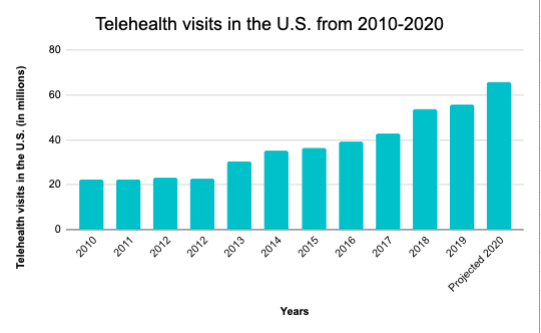
Figure 1: Number of telehealth visits (in millions) in the U.S.  Data Source: American Hospital Association

Art Therapy and the Shift Online in the Wake of the Coronavirus

By Isabella Goodman

Credit: Gorodenkoff/Adobe Stock

Before New York City shut down due to the coronavirus, a normal week for Elenore Simotas included working as an intern at The Bridge, a mental health and substance abuse treatment center where she held multiple group art therapy sessions a day, led individual sessions and did documentation for her own caseload. 

Because of the lockdown, she’s learning to navigate the transition from community driven and hands-on sessions to zoom calls. Now, art therapists around the country are tasked with providing meaningful sessions online that produce the same benefits under circumstances they’ve never had to deal with before.

Telehealth, or an online health-related session, is not generally used in art therapy, so art therapists are in a uniquely challenging position to try and provide mental health support to their clients during this pandemic.

“Telehealth isn’t normally used with my population because a lot of them don’t have access to phones and the technology is more challenging,” Simotas said in an interview. Not all the clients have reliable internet service or phones that could support the technology, she said.

“It took a whole extra effort of just navigating like, ‘how do we get people to understand what Zoom is and how do we get them on the computer?’”

Art therapy is a form of therapy that uses creative processes to help heal clients through the process of making art and it helps engage their minds. It’s used with many different populations, from veterans to senior citizens. It’s been used for PTSD, eating disorders, depression, and other mental health-related issues.

With the move online, Simotas also saw the opportunity to help more than just her immediate community. She reworked her website, which was originally just a platform to share her own art, and added an extensive page featuring different lesson plans as well as the option to meet over zoom to go over the directives. She’s currently in her final year of the art therapy graduate program at Antioch University. Because she doesn’t have a license as an art therapist yet, it’s considered art as therapy, not art therapy. 

“I made these curriculums already for my groups at work and I was like why don’t I just tweak these a little bit and make them available for other people,” Simotas said.

Though many art therapists are choosing to go completely online, some still have the option of continuing in-person therapy since they’re considered essential workers.

The classification for essential workers differs from state to state, but in Washington D.C., for example, Mayor Muriel Bower issued an order classifying mental health providers as essential. 

Clara Keane, who works at the American Art Therapy Association, said in an interview that the organization is trying to provide support with the transition to telehealth as well as those who are having to continue to work in person.

Alison Maples at Embrace Change Therapy in Royal Oak, MI. is continuing to see clients in-person but at an extremely limited capacity. The rest of her caseload has moved online.

“Ninety-nine percent of the clients are online,” Maples said in an interview. “I do have a couple of clients that are in domestic violence situations or clients that are in the LGBTQ community but haven’t come out to their family yet so they don’t feel comfortable being in the house where someone could hear them or people that live alone and this one hour a week is the only human contact they’ve had in a month.” 

She’s aware of the risk that comes with meeting in-person and she’s made that clear to her clients as well but is taking all the precautions she can to keep herself and her clients healthy.

“Some still have to go to work in conditions that are not so safe,” Keane said. “If someone’s working in a psychiatric unit, for example, it might be really hard for their residents to follow social distancing guidelines, and if they have to do an art therapy group, they have to be really careful about being hygienic with the art supplies.”

Simotas is not alone in trying to navigate the shift online. It’s something that art therapists across the country are trying to figure out as well while some are learning what it means to be an essential worker.

For art therapists solely doing telehealth, the change was complicated and for many, unprecedented. Art therapists have turned to VSee, Zoom, Google Hangouts, BlueJeans, Prose and others, to varying success.

“Art therapists were a little behind the telehealth bandwagon, because of the hesitance around art supplies and the idea that you can’t be there with them as they make the art,” Keane said.

For Alison Cunningham-Goldberg of Linda Garcia Rose & Associates in New York City, the first goal was to check on the safety of her clients.

 “When I first started working remotely, I was very focused on triaging – checking in on people, especially those with depression or anxiety, just to give them some grounding skills,” Cunningham-Goldberg said in an interview. “It was almost like social work.” 

Elaina Whittenhall runs the practice Creativity Transforms Therapy out of Austinand began reaching out to her clients at the beginning of April, she said in an interview. Good detail She sent out art kits that would help with coping. The kits differed from client to client, but most featured coloring sheets, watercolors and model magic, as well as a sheet with general tips for coping.

Art therapists realize that not everyone has the same materials available to them. They’ve had had to be resourceful in what they use, whether it’s just a pen and a notebook or an origami project made from a sheet of paper.

In some ways, going online has been a success. Art therapists have had to be collaborative and adaptive but they’re still finding meaningful ways to connect with their clients.

Clarissa Greguska, an art therapist based out of Los Angeles,said that the move online doesn’t necessarily change things because of the already established relationship.

“Regardless of what format were meeting in, there’s still a relationship between us,” Greguska said. “Research shows that the most effective therapy happens when you have a good rapport with your client.”

Simotas has found that the quarantine is eliminating some of the stresses that come with in-person group sessions. She said that a lot of the work she did pre-coronavirus was about maintaining the group space – managing poor boundaries or interruptions. With Zoom, she’s able to mute everyone while they’re creating the art and there’s no way to physically act out.

The transition to telehealth has its challenges, some that affect everyone working from home, and others that are more unique to art therapy.

On top of dealing with the original issues that their clients came to them with, art-therapists are now having to navigate how to help with coronavirus-related stress.

Maples said this is something she and other art therapists are having to face themselves.

“I’m a person too, so I’ve been tired and foggy, a lot of this stuff is weighing heavier on me than it normally would,” Maples said. “And then you get two full weeks of every session or every other session being COVID COVID COVID, it’s been very draining on me as a person.” 

Now that things have settled somewhat, Maples says that she’s been able to get back to helping her clients through issues they were working on before the coronavirus.

It’s also been potentially affecting the relationship with her patients, with technology glitches and poor connection becoming a roadblock in the sessions.

Other art therapists agreed, saying that the computer or phone can’t pick up body language the same way and that it’s harder to get to a vulnerable place when the screen keeps freezing. 

Some of Whittenhall’s clients are acutely affected by the coronavirus. She has clients that work in the media and can’t avoid the 24-hour news cycles, as well as college students who are unsure of the workforce they’re about to enter into or forced back into homes where they feel unsafe.

Others are losing clients and seeing reduced turnout in group sessions.

“I had one client say ‘I’m on screens absolutely all day with work and meetings,’ she just didn’t want to be on one more screen and she didn’t really want to do the phone so for her, it wasn’t really a replacement for therapy in person,” Cunningham-Goldberg said. 

One unexpected problem was the issue of privacy. With everyone working from home, it’s harder to maintain confidentiality with a partner, roommate, or kids in the other room.

“I had to be more intentional about privacy, like making sure my space and my technology is going to respect the client,” Greguska said. “I live with my partner and they’re working remotely so we’ve had to be creative about creating sound barriers but it’s a lot of work to make sure that the privacy is going to be kept.”

There’s also the issue of privacy when it comes to the online platform used for telehealth. Art therapists are having to find HIPPA compliant platforms, but with the mass move to telehealth, some platforms weren’t built for all the traffic and others, like zoom, have previously raised privacy concerns.  Because of the coronavirus, the Department of Health and Human Services is relaxing some of the guidelines on what platforms mental health providers can use.

Apart from the issues of running a session online and dealing with these platforms, art therapists are having to navigate trying to navigate licensing problems.

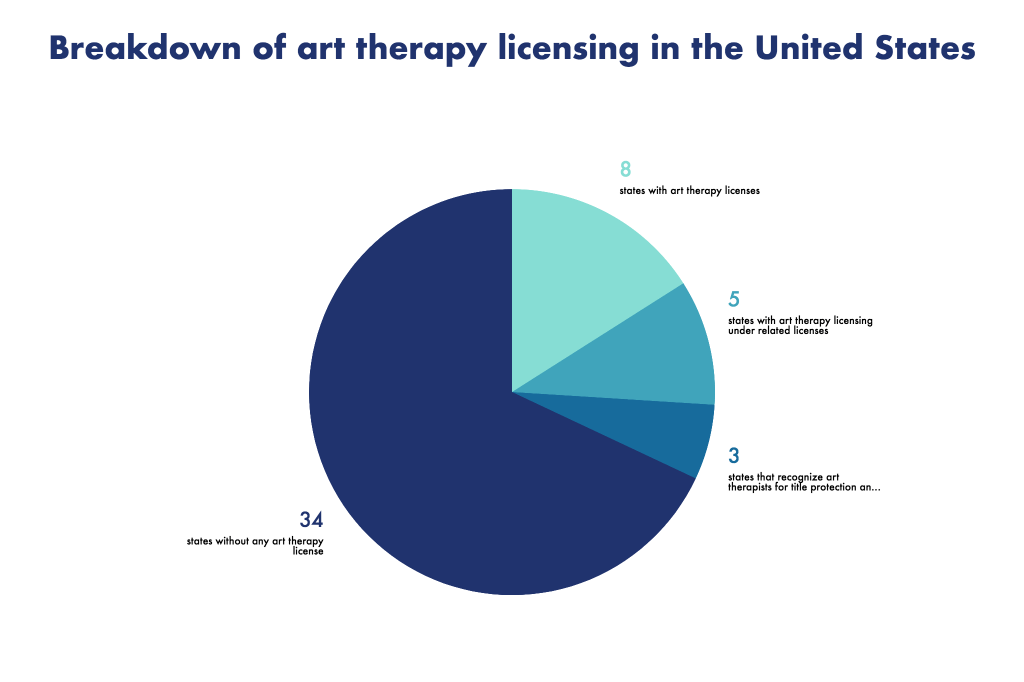
Before the coronavirus, licensing was one of the key issues facing art therapists. Currently, only 16 states have some sort of licensing for art therapists, whether that’s a full art therapy license, art therapy falling under a different license, or recognition for title protection services.

Some see licensing as a way to legitimize the small but growing field. It also makes things easier for clients in terms of insurance. With the move online, some have said that they’re worried about clients who move out state to be with their families – if their home state doesn’t have any art therapy licensing, it can be difficult to provide the help they need.

Now, the push for licensure has completely halted.

“Most advocacy issues that are not directly related to the coronavirus, public health, or crucial state issues have all been stopped,” Keane said. “We’ve had a lot of momentum in our licensure efforts, but it’s paused and we’re not going to be reaching out to lawmakers the way we normally would.”

Keane says that instead, the American Art Therapy Association will be focusing on the conversation around telehealth, mental health and about the benefits of the art-making process. She thinks that the pandemic could potentially change the way that states approach licensure, to eliminate some of the red tape.

This could mean that individuals without licenses, like Simotas could begin to call their work art therapy. Until then, she’ll continue to make lesson plans for art as therapy, in an effort to help people cope.

“I’ve always known that the need was there for art as therapy, just because it’s been so helpful in my life for reflecting,” Simotas said. “People have so much time and they don’t know what to do with it.”

Washington with COVID-19: When a global pandemic hits and your job is in your employer’s home

nanny with child
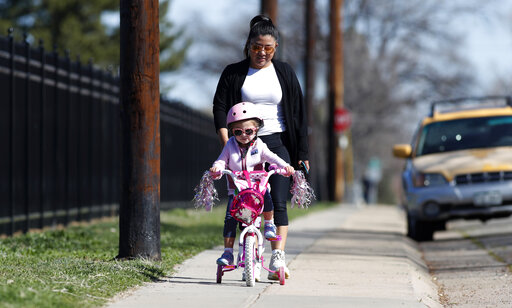
Three-year-old Velle Croft, front, learns to ride her bicycle with the help of her nanny, Karina Quintero, during the coronavirus outbreak early Friday, April 10, 2020, in Denver. The new coronavirus causes mild or moderate symptoms for most people, but for some, especially older adults and people with existing health problems, it can cause more severe illness or death. (AP Photo/David Zalubowski)

When the coronavirus pandemic hit Washington, D.C., Mason Ferguson, an American University student and part time nanny from Colorado, wasn’t sure what she would have to do.

She started nannying for Hilary Foster, a new working mother Washington, D.C., in January. She cared for Foster’s baby 30 hours per week while a full-time student at American University studying justice and law. 

“I wasn’t sure if my nannying job would still be on,” Ferguson said. She lived on campus, which got shut down after classes moved online in March, so her housing situation was uncertain too.

Many domestic workers — the name for a broad category of both essential and non-essential workers like nannies, house cleaners, home health care aides, au pairs, gardeners, and more — have faced similar or even greater uncertainty since the beginning of the coronavirus pandemic.

The Economic Policy Institute estimates that there are 2.2 million domestic workers around the country, many of whom are now out of work. Ferguson is one of the more than 200,000 nannies across the United States, according to EPI numbers.

They usually come from vulnerable positions in society — more than 50 percent live near or below the poverty line and more than 90 percent are women, disproportionately women of color and immigrants, according to EPI. 

Domestic employees are a class of workers who, from the beginning, have had very few workplace protections. Childcare workers are among the lowest paid occupations nationwide, with a median wage of less than $12 per hour

According to the National Domestic Workers Alliance, many domestic workers work with no labor protections whatsoever. A lot of domestic workers work without any sort of written or verbal contract. They get no paid sick leave or time off. 

Until recently, they could not access unemployment benefits, since they are considered independent contractors like rideshare drivers and freelance writers. Now, citizen or legal resident domestic workers can access these benefits, however a large portion of domestic workers are undocumented. 

According to EPI, at least one in five domestic workers nationwide are undocumented. In D.C. and other large cities, that rate is likely far higher, according to Rocío Ávila, state policy director for NDWA.

In some parts of the Washington region, like Langley Park, Maryland, as much as 70 percent of adults are not U.S. citizens.

Because of the unregulated and informal status of domestic work, it is almost impossible to say what portion might be undocumented workers, Ávila said. What is clear, she explained, is that domestic workers across the board, but especially undocumented domestic workers, are hurting badly right now. 

In a recently released survey of more than 16,000 domestic workers, NDWA said that 72 percent reported having no jobs for the week of April 6. Seventy percent say they don’t know if they’ll have a job again after the pandemic passes. 

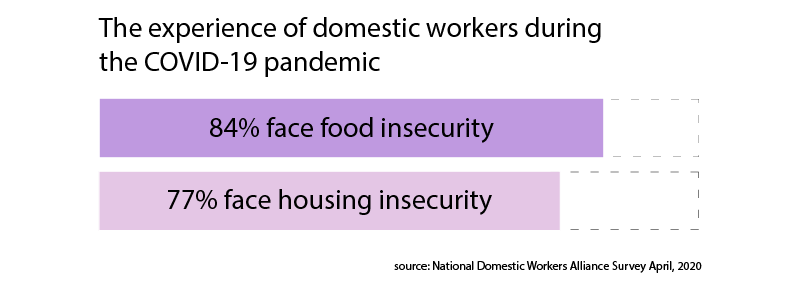
Nearly 80 percent of surveyed domestic workers are their household’s primary breadwinner, according to NDWA’s survey results. Most are now facing food and housing insecurity — 84 percent and 77 percent, respectively. 

domestic workers covid19 experiences ndwa survey.png

“I have already lost the majority of my cleaning jobs and am now having to face how I will pay my rent or even pay for food,” said Ingrid Vaca, a D.C. domestic worker and organizer with NDWA in a press release.

For Ferguson, the stakes weren’t that high. She would have been able to feed herself no matter what. However, the virus has still had a dramatic impact on the course of her life.

“I was really trying not to go back to Colorado,” Ferguson said. “My mom is a nurse and is working the frontlines right now and I really didn’t want to go back home for that reason.”

She was left with a difficult choice — she could either go back to Colorado or stay in D.C. by herself facing all the uncertainty of the weeks ahead alone.

Foster was away when outbreaks started occurring around the country.

“We were out of town on the very last bit of my maternity leave, when the whole COVID thing really started happening and the shutdowns became clear,” Foster said.

Her family was in a tricky position too. She and her husband had to start working their demanding jobs from home, something she said she was thankful they had the ability to do, but would nevertheless be difficult with a newborn.

Her other part-time nannies went to work full-time for other families during the pandemic. Luckily, Ferguson needed a place to stay and a way to keep earning money through the pandemic. 

“We were left with the option of having Mason work more hours, which has been really amazing,” Foster said. “And we’ve brought her in to be part of our quarantine family.” 

Many domestic workers have been put in a similar situation with their employers, faced with the choice to move in or lose work. 

For Foster and Ferguson, it worked out in a mutually beneficial way. Ferguson was able to stay in D.C., have people to stay with to not be completely isolated, keep earning money, and have room and board. Foster can keep working full-time and know her son has someone to interact with and is being cared for.

For many domestic workers this situation could simply never work out, according to Rocío Ávila, state policy director for the National Domestic Workers Alliance.

Many are parents themselves. Many have older or younger relatives to look after at home. 

Ferguson, in contrast, has her food and rent taken care of now that she is living full-time with the Fosters. She is earning more money than she did before, as she now works 40 instead of 30 hours per week and time-and-a-half if she works overtime. The coronavirus pandemic has still significantly changed her life and thrown plans off course, but she said she is lucky to not be burdened by rent and food costs on top of a loss of her job.

Had she lost her job, her status as a U.S. citizen would still give her advantages over many others in her field. Undocumented workers will receive no federal coronavirus relief assistance and little state or municipal assistance, according to Ávila.

The D.C. Council considered a package that included two programs with a total cost of $75 million to support people left behind by unemployment insurance. However, that part of the package did not pass, generating controversy among members of the council on a Zoom call.

While the Council did not pass the measures, they are providing some relief for undocumented workers through the public-private partnership organization Events DC.

The $18 million package distributed through Events DC will contain $5 million in relief funds for D.C.’s undocumented workers. 

While, Ávila was glad the council passed any relief measures for undocumented workers at all, she said $5 million was completely inadequate — 1/15th their original ask. With more than 20,000 undocumented workers in D.C. alone, this program would only provide a one-time payment of about $200, Ávila said.

NDWA and others are working to fill the gaps. 

The Northern Virginia Family Service, which runs a variety of programs from child care service to food pantries, is providing small grants to cover specific expenses like rent, groceries or other bills, said David Billotti, a spokesman for the century-old agency. 

People can fill out an application and provide documentation of their specific coronavirus-related need, and the agency will write a check for the full amount to the person or company they owe.

Billotti said they have seen applications for this and use of NVFS’s other services, especially its food pantry have skyrocketed since the pandemic began. He said their funds are limited, but they are happy to help with emergency payments, food and more.

NDWA has raised $4 million in its Coronavirus Care Fund, which will distribute $400 to 10,000 domestic workers, a number Ávila said was derived from the statistic that 40 percent of Americans cannot afford a $400 emergency.

However, we are currently in an emergency that is costing everyone far more than $400, she said. As most states go into their seventh week under stay-at-home orders issued by their governors, many have lost nearly two months worth of income while still paying rent and putting food on the table, or accruing debt from those expenses.

Foster said she has an idea of the struggle many domestic workers are going through, which is why she has continued to pay the bi-weekly cleaners who used to come to her house but can no longer work because of the virus.

However, many domestic workers have less scrupulous and ethically minded employers, who may not even be maintaining contact let alone payments, Ávila said.

“They’ve been super accommodating,” Ferguson said, explaining that she is now in finals week at school and is recovering from a hip surgery, which means she has to go to physical therapy twice a week. 

“I wanted to be very clear from the beginning that her health is the most important thing, so, of course, we’ll be flexible around that,” Foster said.

“I haven’t asked for any more time off, but I know if I were to that they would work with me,” Ferguson said, adding that the Fosters understand school is her first priority. 

“Because Mason is a full time student, we want to make sure that she has enough time for the most important thing, which is her studies,” Foster said.

Ferguson now has her own space in the basement apartment below Foster’s home. She shares meals and living space with the family as they batten down the hatches to weather the coronavirus pandemic.

“It’s sort of more intimate than I had imagined,” Foster said. “But she’s really wonderful and it makes me really happy that my son can have more people than just the two of us to interact with.”

“I’m extraordinarily lucky that we have childcare at this point, and it’s a fantastic person,” Foster said.

Coronavirus Freezes America, Economy and Rent

brown-leaf-tree-near-brown-wall-painting-161768
Source: “Brown Leaf Tree Near Brown Wall Painting”, Washington, D.C. Pexels.com

By: Matt Sacco

Washington, D.C. – Chase Thompson and his roommate Adam Woodward both have a degree in business administration. Back in February Adam had a steady job as an entry level worker at a Maryland business. In that same month Chase was still working at a local grocery store in his neighborhood.

“If you told me he would be unemployed and I would still have a job a few weeks ago, I would have said you’re crazy,” Chase said in an interview.

Chase’s morning usually starts around 6 a.m. He makes a quick breakfast, hops in the shower, puts on his mask and makes his way out of his apartment, making sure not to wake his slumbering roommate.

When he arrives at his place of work, he usually speaks briefly with his coworkers, maintaining an appropriate six foot distance whenever possible. When the doors officially open, Chase is at the front, using an app on his phone, or an old baseball pitch counter to track how many people are shopping at one time.

“My job is basically to sit there for nearly my entire shift and count how many people come through the door,” Chase said in an interview.

Bagging groceries during a pandemic was never Chase’s desire.

The 22 year old, graduated last year from Virginia Tech with a degree in business administration and moved to DC in hopes of finding a job in this sector.

In that time Chase struggled to find a job, he decided to start working at a nearby grocery store until a good position in his field opened up.

“I had a bunch of different odd jobs over the past years so I didn’t really have a problem working a few days a week. It was at least a source of income.”

A few days turned into five, sometimes six days a week since the pandemic started.

That source of income is one of the few remaining positions in America, and more generally across the world today.

However, even with a seemingly steady source of cash to pay rent and groceries, the future of the two roommate’s housing situation is up in the air.

Chase’s roommate has been without a source of revenue for the past few weeks after he was laid off by his employer.

“I have enough saved up right now, but I’m not sure how long that will all last.” Adam said in an interview.

“If I can’t keep making rent, then we’re both kind of screwed.”

With Coronavirus has come a broad sense of uncertainty. Not knowing when this virus will end, or when or if a vaccine becomes available, has crippled nearly the entire world economy.

“During the Great Recession we lost 8.7 million jobs in the whole thing. Now we’re losing that many every 10 days.” That’s according to an April 26 interview with Kevin Hasset on ABC’s This Weekend, an economic advisor for President Trump.

The Coronavirus pandemic has created a new normal for nearly every person in our world today. Social distancing has kept us six feet apart in an effort to quell this disease from spreading even farther than it has already.

In an effort to prevent mounting deaths, jobs in nearly every non-essential industry have been heavily impacted.

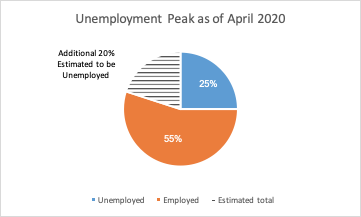
Data released by the bureau of labor statistics paints a picture of unemployment never seen before in the American economy.

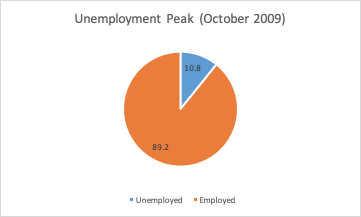
Data analysts from the Bureau of Labor Statistics reveal the accelerating nature of the current recession, in comparison to recent economic downturns. About a decade ago, after the 2008 collapse of the subprime mortgage market, and eventual fall of banks across the country and world, we saw the US unemployment figure peak at 10% in October of 2009 according to the Labor Department.

With any recession, economists and government analysts tend to compare research against previous periods of economic misfortune, to help aid in recovery. However, no recession or depression in the past 50 years even scales to the level of unemployment being experienced by Americans today.

Chart 1

During the 2008-2009 recession, we saw unemployment rise to 10.8 percent. However, the rate at which jobs were lost during this period is incomparable to how companies today are hemorrhaging employees at an extraordinary pace.

The unemployment rate after the previous recession took nearly a year, until October 2009, to hit its peak.

While the federal government is still processing all of the initial jobless claims they have received in the past few weeks due to the fallout from Coronavirus and have not released an official unemployment figure, some publications are reporting Great Depression-era unemployment statistics.

Axios has reported, “The true number of people currently unemployed in the U.S. is likely between 32 million and 70 million, putting the unemployment rate somewhere between 20% and 45%.”

Chart 2
While the figure has been slowly declining in the past few weeks, the figures are still huge. In the week ending April 18, initial claims were estimated to be around 4,427,000.

While government officials have implored people to stay in their homes, many Americans have been forced into the same uncertain situation. For homeowners and renters alike, how long can you afford to pay rent or make payments on your mortgage without a source of revenue?

Protections for homeowners have already been implemented under Maryland’s state of emergency. Foreclosures cannot proceed during the pandemic, which Mary Hunter of the Housing Initiative Partnership in Prince George’s County says “will give homeowners a chance to access unemployment insurance and the stimulus checks. The idea is that it will give a moratorium on foreclosures until everyone can access those resources and hopefully start working again.”

Mary Hunter says the $1,200 stimulus checks provided by the federal government have not arrived quickly, “It’s been slow to arrive in people’s bank accounts, we are just starting to hear from clients that they’re receiving it right now. So it was a little stressful for four weeks and people had not received their stimulus pay.”

While homeowners have received some sort of aid, renters and landlords make up a great percentage of the DMV area and necessitate aid in order to stay afloat.

Matt Losak is the executive director of the Montgomery County Renters Alliance, an organization focused on advocating for renters’ rights and housing affordability.

Losak detailed what protections are necessary considering the DMV area has experienced an influx of renters in the city in just the past 10 years, especially in suburban areas like Montgomery County.

Losak said in an interview, “In 2008, 23% of the county was in rental housing, today it’s nearly 40%. If you look around Rockville, Silver Spring, every green space has an apartment building being built on it.”

“Rent housing became a temporary station on the way to owning, now it’s a way of life. Especially in non-traditional areas like Montgomery County.”

Losak testified before the Montgomery County Council on Tuesday, April 21, lobbying for rent increase freezes across the area.

A rent freeze does not mean a stoppage in landlords collecting rent, instead it is simply a measure to protect renters from landlords who attempt to increase payments during a public health crisis. Additionally, landlords cannot increase rents in a certain time frame after the public health emergency has ended, charge late fees to renters who do not make payments on time or evict any tenants.

Legislation titled the Covid-19 Renter Relief Act passed the Montgomery County Council on April 24, effectively capping increases of rent to 2.6% in Montgomery County and prohibiting landlords from upcharging in the 180 days following the emergency.

Losak says these protections are necessary to protect renters from exposure to the virus as “Any further efforts to destabilize renters, people living in rental housing, would go against the need of the public health emergency to keep people stable in their homes.”

Losak believes an increase in rent and housing instability will only amplify the spread of the virus, “We believe with all rents, any increase can prompt someone to leave their home.”

DC was one of the first metropolitan areas to introduce these rent precautions back in March, with subsequent rent freezes being implemented when the city council passed legislation on April 7.

Without these types of protections being offered by the greater DC and Maryland area, and factoring in no source of income or protections against increasing costs, people could be forced out of their homes and only exacerbate the spread of this virus.

Against the advice of multiple lobbying organizations, Losak says “We are seeing individual landlords going forward with raising rents.” In some cases these increases followed recommended County guidelines for appropriate rent increases which were not enforceable prior to new Montgomery County legislation.

Prior to the relief bill, Losak said, “We were seeing rents increase even more than that, 3%, 5%, and in some cases some gouging going on, with proposed rents of anywhere between 35% and 59%.”

While renters have been provided this relief, landlords who rely on rent payments as a source of income need some leeway and assistance as well.

Losak says “We understand that a landlord needs to get paid and run their apartment complex. Especially smaller landlords who rely on rent payments.”

“On the other hand renters also need to remain stable. So everyone has to sacrifice a little bit.”

Clinics Pushing for Abortion Pills Encounter Resistance During Pandemic

With many Americans not being able to access abortion facilities, clinics are turning to the use of medication to conduct an abortion while staying at home.

Statewide lockdowns during the COVID-19 pandemic have blocked access to abortion facilities across the country. As a result, and in the wake of anticipated court decisions that could further impact abortion rights, many women are seeking alternative methods to conduct an abortion.

“[COVID-19] is going to create a situation where it’s impossible for patients to access abortion care. Not only because states are deeming it unessential, but because they can’t literally get to a clinic under the conditions that we’re living,” said Stephanie Black, an abortion advocate and information ambassador at the pro-abortion advocate group, Plan C.

Plan C is offering education on how to conduct a safe self-managed home abortion as an alternative.

Due to the stay-at-home orders, many women can’t risk leaving their homes to access abortion services. Instead, they are turning to medication that they can receive from a clinic or doctor after a telemedicine appointment.

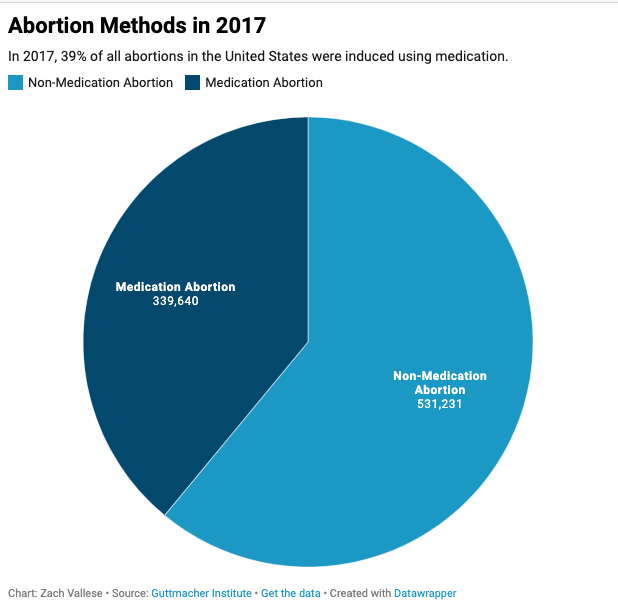
About one-third of abortions in the U.S. are conducted by using medication, according to data from the Guttmacher Institute. Screen Shot 2020-05-03 at 10.18.30 PM

Having an abortion using Misoprostol is considered to be an extremely safe method of abortion, according to research from the American College of Obstetricians and Gynecologists.

While abortion pills have been found to be safe, the Food and Drug Administration has made it challenging to access this medicine while communicating with a doctor remotely.

Currently, the FDA requires that abortion pills be acquired only by visiting an abortion provider. However, 89% of counties in the U.S. do not have an abortion clinic, according to data from the Guttmacher Institute.

Plan C has worked to create an easier way for women to access abortion services while at home. Euki, an app recommended by Plan C, provides step-by-step instructions on how to safely self-manage an abortion.

“I think it’s opened up an opportunity to say it’s incredibly safe to self-manage an abortion, and it’s safer than taking Tylenol,” Black said with information from NARAL Pro-Choice America.

Statewide lockdowns during pandemic

Many states have taken steps to prevent any abortion procedures during the coronavirus outbreak. As part of their emergency orders, states have classified abortion clinics as nonessential. Notably, Ohio, Alabama, Texas, Alaska and Iowa have all blocked abortion access in their states.

“No one is exempt from the governor’s executive order on medically unnecessary surgeries and procedures, including abortion providers. Those who violate the governor’s order will be met with the full force of the law,” said Texas Attorney General Ken Paxton in a statement.

Organizations like Planned Parenthood and the ACLU have been fighting these statewide restrictions in court.

“Forcing people to remain pregnant against their will is cruel and unsafe at any time, and all the more so during a pandemic,” said Julia Kaye, staff attorney at the ACLU Reproductive Freedom Project in a statement.

Other states like Oklahoma, Alabama and Tennessee attempted to prevent access to abortion in their states in their emergency orders. However, these attempts were blocked by federal judges.

As social distancing guidelines begin to loosen, Texas and other states have started to reduce restrictions on abortions by temporarily providing access to medication abortions.

Further pressure expected from a pending Supreme Court decision

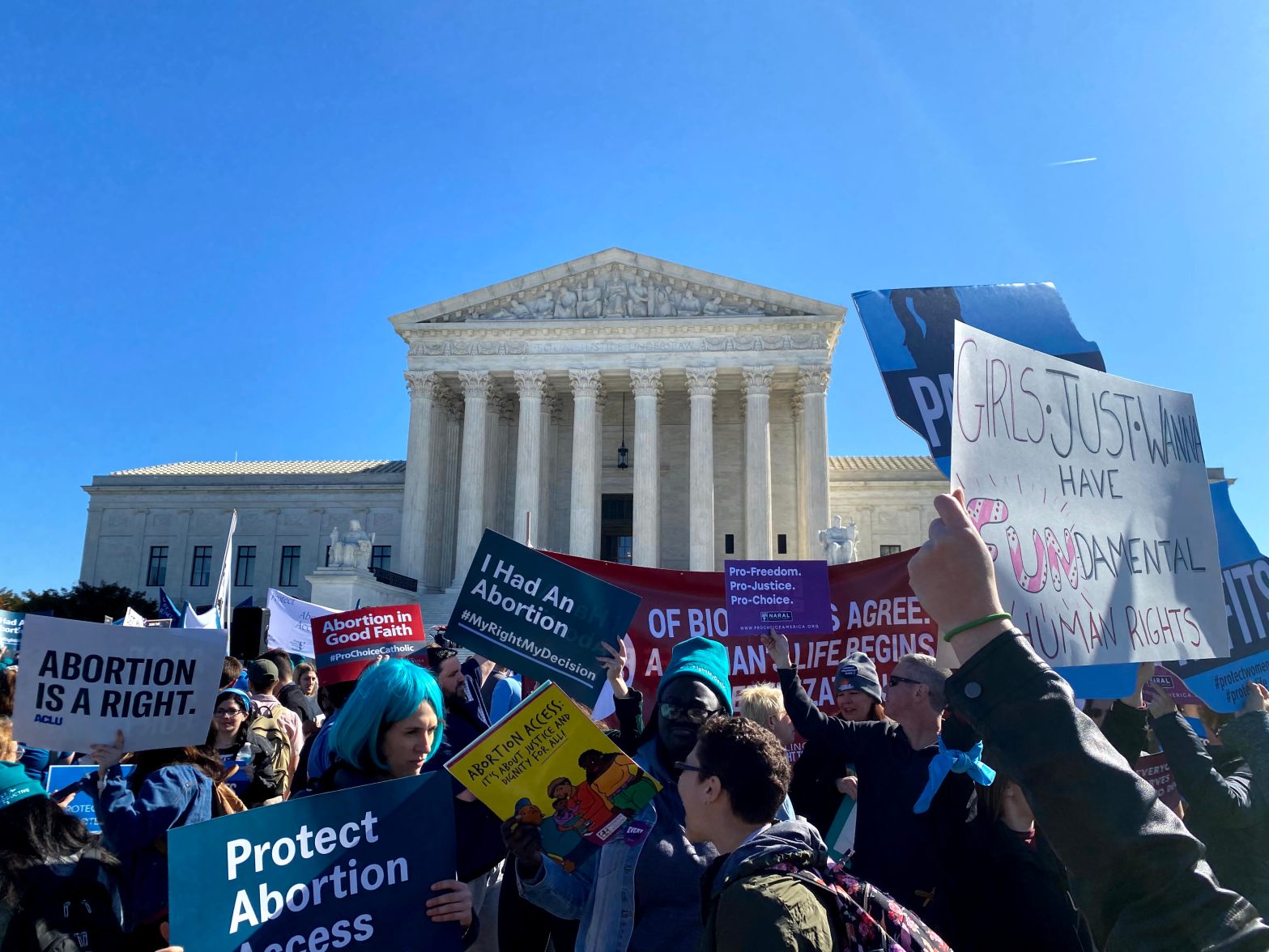
At the same time, the Supreme Court is expected to make a decision virtually in the next few weeks on a Louisiana case that is considered to be a major step in an effort to possibly overturn Roe v. Wade.

The case revolves around a Louisiana law that requires all physicians who are performing abortions to have admitting privileges at a hospital within 30 miles.

In Louisiana, this would leave only one doctor available to provide reproductive health services to the almost 10,000 women who choose to have abortions each year, according to data from the Louisiana Department of Health.

The case has encouraged activism from all over the country through protests and demonstrations. Many pro-abortion activists fear that this could lead to the legality of abortion access being restricted in some states.

“Abortion access is something that is always under fire when it honestly shouldn’t be,” says Joanna Morganelli. “I think this is a great instance of when the court can just decide when to ignore precedent and when not to ignore precedent.”


Joanna
Joanna Morganelli, 21, holds a sign at a rally outside of the Supreme Court. (Zach Vallese)

Morganelli, who graduated from Towson University in December, is currently working for NARAL Pro-Choice Maryland, an organization that provides emergency contraceptive services and care for those seeking an abortion.

She said that she believes young people in the country will continue to advocate for abortion rights even while it may not affect those living in a state with restrictions.

Some anti-abortion activists believe that the Louisiana case is an important step towards raising restrictions to abortion access.

“We say abortion hurts women and we believe that that is generally true, but we know for sure that in every abortion, a human being loses their life and they don’t have a voice in the legislative process,” said Terrisa Bukovinac. “So I feel compelled to be here and to be a voice for them.”

Terrisa
Terrisa Bukovinac outside the Supreme Court. When photographers approach the crowd for photos, Bukovinac makes sure her sign is front and center. (Zach Vallese)

Bukovinac is the founder of Pro-Life San Francisco, an anti-abortion organization for millennials in the Bay Area.

She identifies as a Democrat but does not conform to the typical stereotypes of anti-abortion activists. She says that she is a strong anti-abortion activist and believes that the Democratic party needs to do more to represent their anti-abortion constituents.

Other activists try to distance themselves from groups with whom they are typically affiliated.

“For me, this is really about bodily autonomy and our ability to make decisions that are right for us. And I think that nobody can know someone else’s life or a certain set of circumstances,” said Reverend Katey Zeh, CEO of the Religious Coalition for Reproductive Choice, an organization that combines religious values with pro-abortion advocacy.

Katey
Rev. Katey Zeh at a rally outside the Supreme Court. (Zach Vallese)

Zeh said that while political conservatives have used religion to support their agenda of being anti-abortion, she believes that her faith values align closer with those of women’s rights.

“We want people to know that these are sacred decisions and that they should be made by the people whose lives they impact,” Zeh said.

It is legal for states to make access to abortion more difficult after the Supreme Court decision in 1992 which determined that states were able to place an “undue burden” on a person trying to get an abortion. These burdens could include a 24 hour waiting period, obtaining informed consent or other kinds of restrictions.

D.C. could become a capital for abortion access

With the threat to abortion access becoming more limited in certain states, areas with safer abortion laws are expected to have an increase in traffic from those seeking an abortion.

“In a month or so, we’re going to see a major uptick of people coming to D.C. because they cannot access abortion in their own state,” Black said.

Having a late-term abortion can become very costly. The D.C. Abortion Fund is an organization that provides grants to pregnant people who can’t afford an abortion and is financed mostly from donations.

Many recipients of the D.C. Abortion Fund do not actually live in the district. Hundreds of women come to the area to receive an abortion because Washington’s laws make the district one of the few places in the country that will provide a late-term abortion. The D.C. Abortion Fund can cover anyone receiving an abortion in the Washington area, regardless of their state of origin.

Black also volunteers with the DMV Abortion Practical Support Network and Repojustice, two pro-abortion organizations located in the Washington, D.C. area. In these positions, she says she is already seeing evidence on how state restrictions are going to increase the number of people coming to the district to receive an abortion.

“It’s going to drive this huge bubble, this huge need and demand for services that’s going to completely overwhelm the DMV,” Black said.

With the anticipated increased traffic to the district, Black says it’s even more important now to look to alternative ways to perform an abortion such as self-managed abortion at home.

“Theoretically, abortion is legal in all 50 states. But if you can’t actually access abortion services, is it really a choice?” Black said.

VA Privatization: A real threat or a ‘red herring?’

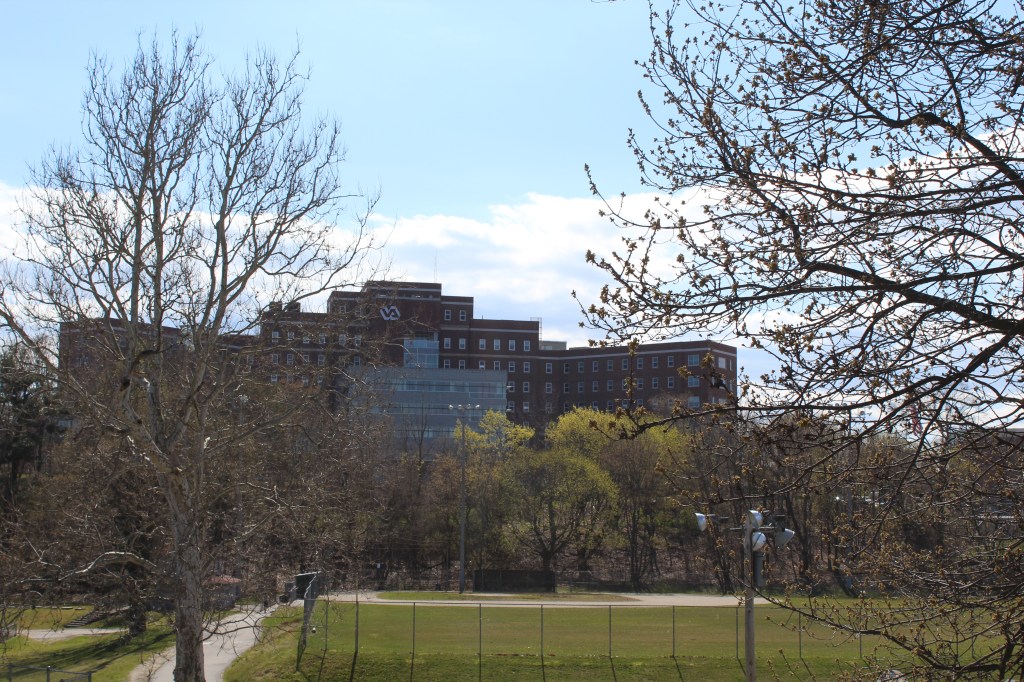
The Providence VA Medical Center is visible through the trees of Davis Park. Photo by Lindsay Russell.

by Lindsay Russell // May 3, 2020

PROVIDENCE – “You know those people who just hate everything, no matter what?” Master Sgt. David Silva asked. “Those are the people who don’t want to use the VA.”   

Silva, an Army veteran and an Army reservist for 35 years, has been receiving his medical care from the Department of Veterans Affairs medical centers since the 1980s. In the decades since, he has fallen from a roof, broken ribs and legs, gotten sick, and started monitoring his blood pressure. The medical staff at the VA, he says, has been there for all of it.

“I have one bad experience here,” he said, laughing. “On Thanksgiving morning in what had to be 2016, the grits in the cafeteria…were cold…And that is my only bad experience.”

Silva recounts his personal history with the VA as the department approaches the one-year anniversary of the implementation of the VA MISSION Act of 2018. The law, which went into effect in June 2019, expanded the number of veterans who are eligible to receive private healthcare, subsidized by the VA.

The pressure to cut down on wait times at VA centers was reignited after a 2014 scandal at a VA hospital in Phoenix, where wait times were being drastically underreported. A document initially hidden from federal regulators revealed that veterans had to wait an average of 115 days to see a primary care doctor. A report from the Office of the Inspector General found that the wait times contributed to the deaths of as many as 40 veterans.

The VA MISSION Act makes veterans eligible for private care if a veteran cannot get an appointment at a VA center within 20 days of requesting primary care or mental health care and 28 days of requesting specialty care, unless the veteran agrees to a later appointment.

Veterans are also eligible for private care based on the average drive time from their home to the closet VA medical center. Veterans who are more than a 30-minute drive are eligible for private primary care, and those who are more than a 60-minute drive are eligible for private specialty care.

According to a VA press release from the day the program launched, the program is meant to “empower veterans with increased access to community care.”

Although Silva has qualified for private care as a result of a 30-day wait time at the Providence VA Medical Center, he chose to wait until he could see a VA physician.

 “If I go to an outside provider, I don’t even know who that person would be… They can’t review all my records they have here at the VA,” he explained. “In my opinion, I think it’s a disservice [to me] because they don’t have all my information.”

For Silva, it was reasonable to wait a few extra days to see his doctors. For other patients, the priority is seeing a physician right away, and this program makes that possible.

“I like the care at the VA, for the most part,” said Tech. Sgt. William Stranahan of the Air National Guard. “I did have an experience where they sent me to an outside dermatologist because they couldn’t get me into the [Providence] VA in a reasonable amount of time.”

For veterans living outside the small state of Rhode Island, the drive-time eligibility requirements make it easier to fit doctor’s appointments into their schedules. In larger states and more rural areas, getting to a VA center isn’t so easy.

Coast Guard veteran Tommy Oates is a pharmacist at the White River Junction VA Medical Center in central Vermont, just across the Connecticut River from the New Hampshire border.

 “Up here being a rural facility, we are granting a lot of patients the ability to go see outside providers,” Oates said. “Because some of these patients are, you know, living up on the Canadian border. It’s a couple hour drive just to come to our facility.”   

But Oates explained that even under the VA MISSION Act, patients cannot have their private doctors send their prescriptions to a CVS Pharmacy, for example.

 “If somebody was in the Burlington area, that’s like a solid two-hour drive, maybe a little bit more, to our facility,” he said. “So, we would get the prescriptions… electronically prescribed. Then then we would mail it to the patient, and if it’s an emergency, we’ll UPS it to them.”

While the new stipulations in the VA MISSION Act are expanding veteran choice, some House Democrats worry about spending money meant to fund the VA on private care. Generally, Republicans tend to favor sending veterans to private doctors, while Democrats tend to favor investing in more VA doctors and facilities.

In June 2018, then-Rep. Tim Walz, the top Democrat on the House Veterans’ Affairs Committee at the time, issued a press release outlining his concerns about the VA MISSION Act.

“[Budget caps] means current programs investing in VA infrastructure, direct patient care, suicide prevention, medical research… could face cuts in funding in order to pay for care in the community under this new plan,” Walz said in the statement.

The political contention surrounding the creation of the new program prompted the VA to release a statement before the bill received a vote in Congress.

“There is no effort underway to privatize VA, and to suggest otherwise is completely false and a red herring designed to distract and avoid honest debate on the real issues surrounding Veterans’ health care,” the release said.

In March 2019, Rep. Mark Takano, chairman of the House Veterans’ Affairs Committee, spoke to the Washington Post about the new program. “They profess to be against privatization,” he said of the VA, “but by default, we will see privatization happen under our very noses.”

The VA serves approximately 9 million veterans at 1,255 facilities each year. Before the new regulations took effect, 600,000 veterans were eligible for community-based, private care. Under the new program, the VA has estimated that up to 3.7 million patients could become eligible.

The exact cost of the new program is still being determined. Congress allocated $15 billion for private care as part of the VA’s latest budget. Richard Stone, executive in charge of the Veterans Health Administration, told Congress in February 2020 that the VA was still collecting reimbursement claims from private facilities to determine the total number and cost of private referrals. But he estimated that approximately $1 billion was being spent on outside care each month, which would keep the program within its funding levels.

While the major veterans organizations have been long-opposed to the concept of privatization, both the American Legion and Veterans of Foreign Wars have offered their support for the VA MISSION Act.

Eighty percent of the VFW’s members use the VA for medical services, and the organization worked with Congress to help construct the bill.

“This bill honors the nation’s commitment to our veterans to provide them with the care they have earned,” VFW Commander-in-Chief Keith Harman said in a press release when the bill passed the House of Representatives in May 2018. “It will help improve services throughout the VA health system while utilizing private sector resources when needed, striking the right balance to make sure we provide veterans with the best care possible.”

John Parkhurst is a retired Navy hospital corpsman and an administrative officer at the Providence VA Medical Center. He has years of military healthcare experience and was deployed in 2005 as an adviser to an Iraqi hospital.

For Parkhurst, the stipulations in the VA MISSION Act make sense. He used dermatology as an example of specialist care that can be outsourced because there are limited appointments available at the Providence VA.

“When you start to look at the cost of this, it’s probably a lot cheaper to essentially buy those services out on the market than it would be to try and hire and have the staffing and the office and the equipment and everything else you need [to offer the services at the VA],” he said.

One of the arguments often leveled against privatization efforts is the idea that less funding will be left for investing in existing VA hospitals. But the Providence VA Medical Center, officials say, is not struggling in the wake of the expanded eligibility requirements.

Robert Capurso, a retired merchant marine reservist, is a project engineer on a construction project to expand the size of the emergency department at the VA hospital in Providence from 2,000 square feet to 20,000 square feet. The additional space will help the emergency staff see patients sooner than they already do.

“Our current wait times are below the area’s [private hospital] wait times…but we have a higher admission rate…meaning the VA is more willing to keep a patient rather than sending them home,” Capurso said. “So, I think it shows maybe a higher level of care.” 

The emergency department is expanding with future growth in mind. The new department could handle a 40 percent increase of the patient levels the hospital is currently seeing, Capurso explained.

I asked him if he felt that his department had all the resources to operate efficiently. “I do feel that. I feel it across the board, and it comes from Washington,” he responded. “The staff feels supported.”

“Yes,” Parkhurst answered when I asked him the same question. “Undoubtedly.”

“The resources are still here,” said Andrew Mills, a biomedical engineer at the Wilkes Barre VA Medical Center in northeastern Pennsylvania. “We’re not at a point where we can’t get things done because of funding.”

“People are proud to work at the VA,” Silva said.

Senate hears testimony on Social Security scams sweeping the nation’s cellphones.

WASHINGTON, D.C. —- Scam callers impersonating the Social Security Administration have caused $38 million in reported losses to Americans in 2019 alone, according to the Federal Trade Commission.

The Senate Special Committee on Aging’s 2020 Fraud Book, released today, says that seniors in particular are vulnerable to this scam due to increased rates of isolation. 

“The latest statistic shows that seniors are losing close to $3 billion per year to pernicious scams,” said Senator Susan Collins (R-ME), “and I think that’s the tip of the iceberg because many seniors who have been affected by this scam are either too embarrassed to report their loss or don’t even know who to turn to.”

Reports of the Social Security scam call have skyrocketed in the past few years. As recently as 2017, the scam barely registered on the Senate Special Committee on Aging’s list of the top reported scams. Last year, it jumped to number one. 

Ranking Member Bob Casey (D-PA) played a recording of the scam phone call that a member of his staff received last week. The message, which displayed the real SSA in the caller identification, said assets in the staffer’s name and social security number had been involved in a crime, and that their social security number would be suspended. If they do not receive a call back, the message said, the SSA would pursue legal action. 

“No one from our government will ever make these types of threats,” said Casey.

These threats, said scam call victim Machel Anderson, were enough to make her follow the directions of the scammers without questioning their identity.

“In hindsight, I realize there were many signs that I should have recognized indicating that I was being scammed,” said Anderson. “But the scammers had me so worked up. They told me that I had to be convincing or that I would end up getting arrested. They even sent me fake arrest warrants.” Anderson had over $154,000 stolen.

Both the Social Security Administration and law enforcement agencies have had a difficult time combatting the scams and prosecuting those involved. Collins cited initial hesitation to intervene from the Social Security Administration, as well as difficulty gathering real-time data and tracking calls. 

“At first we were not doing enough to combat these scams,” said Andrew Saul, Commissioner of the Social Security Administration. “That was shortsighted. The magnitude of this problem caught us off guard.”

Gail Ennis, Inspector General of the SSA, said that companies known as gateway carriers make these calls particularly difficult to combat. Gateway carriers make money by connecting millions of robocalls every day from foreign call centers to the personal phones of people in the United States. 

“The problem is with the gateway carriers, which frankly can operate out of your garage. They don’t need a lot of infrastructure, they don’t need a lot of people,” Said Ennis. “You can set up a few servers in your garage and be up and running and help transmit millions and millions of calls and introduce those calls from foreign call centers into the United States telecom system.”

Ennis said federal authorities filed lawsuits and requests for injunctions yesterday against five telecommunication companies that help scammers route calls to U.S. cell phones.

Witnesses also testified as to how the scam calls were affecting operations of the SSA. 

“The increased call volumes prevent our agency from being able to conduct legitimate business with those seeking our core services,” said Justin Groshon, Social Security field office manager and representative of the National Council of Social Security Management Association.

Feedback from field office managers states that employees conducting legitimate social security business have been met with suspicion, leading to repeated telephone calls and office visits, and delays in processing claims and other post-entitlement work, said Groshon.

According to a survey conducted for the Social Security Administration, over 97 percent of Social Security offices had received reports from the public about callers impersonating a social security employee. Of those, almost 70 percent reported that this was a daily occurrence, with 50 percent reporting as many as 15 of those calls per day. In some instances, this has increased call volumes to Social Security field offices between 400 and 1000 percent.

Witnesses from the Social Security Administration testified to the committee on their efforts to combat the scam phone calls, citing education and public outreach campaigns as the most effective strategy. 

The Social Security Administration has set up an online form to report these calls, allowing them to gather data on the scam in real time. In addition, Saul said that the Social Security Administration and has partnered with major telecom companies to identify, block, and report suspicious activity. The Social Security Administration has created a major case unit within the SSA Office of the Inspector General to better coordinate efforts with state and federal enforcement partners to pursue legal action against those making the calls.

Saul also pointed to a new partnership with financial institutions that will allow an institution to verify the identity of anyone applying for credit using their social security number. Further intervention at the bank, Anderson said, could have stopped her from losing her money.

Many of the witnesses agreed that the best strategy to reduce victims of the scam is to develop educational interventions for seniors to prevent both present and future scams.

“At the end of the day it’s still about educating and public awareness,” said Ennis, “because as I’ve said, these scammers are very creative and the minute we plug one hole, frankly, they will find another one.”

Nora Dowd Eisenhower, Executive Director of the Mayers Commission on Aging in Philadelphia, said that similar federally funded education programs are already in place, citing the Senior Medicare Fraud Patrols that are currently conducted in every state to get Medicare beneficiaries to scrutinize their medical bills. According to the Office of the Inspector General, expected recoveries to Medicare attributable to the project from 1997 through 2018 were over $100 million. 

Eisenhower said that this model could be replicated with a focus on Social Security scams. 

“The scam today is Social Security, which is a terrible thing, but next year it might be something else, and the following year something else again,” said Eisenhower. “We need to have a mechanism in place to educate people about those scams as they are changing, faster than the fraudsters can change them.”

“Combating these scams is going to take a coordinated, all-hands-on-deck effort and that’s what we’re committed to doing,” said Collins.

Fake Social Security Administration Calls Are Top Reported Scam

WASHINGTON – Social Security Administration (SSA) impersonation calls are the nation’s top reported scam, announced Senator Susan Collins (R-ME) at a Senate Aging Committee hearing on Jan. 29.

The Federal Trade Commission (FTC) reports that fake Social Security calls have resulted in $38 million in reported losses to Americans in 2019 alone. The scam typically involves an unsolicited robocall with a spoofed caller ID falsely displaying the SSA as the source of the call. The scammer then attempts to intimidate the victim into revealing personal information over the phone or transferring thousands of dollars in a swift manner, all the while asserting that the agency will impose severe fines or jail time if they do not comply.

The hearing, led by Chairwoman Collins and Ranking Member Bob Casey (D-PA), covered recent SSA efforts to stop the scams and what needs to be done on a federal level moving forward. The Internal Revenue Service (IRS) impersonation call had previously been the top scam for five consecutive years before the SSA scam took its place in 2019. According to Collins, intense public awareness efforts helped to mitigate the issue and led to the IRS call falling from number one to number seven on last year’s most reported list.

The majority of SSA scam victims are senior citizens. Collins suspects that the $38 million reported only scratches the surface of what was actually lost last year.

“Many seniors who have been affected by this scam are either too embarrassed to report their loss or don’t even know who to turn to,” she said. “The emotional and psychological toll for those who have lost hard-earned life savings are beyond measure.”

Someone who understands the emotional toll of falling victim to a scam is Utah resident Machel Andersen. On Dec. 6, Andersen received a series of calls from what appeared to be the SSA. The fraudsters, convincingly posing as government employees, claimed that her Social Security number had been used to set up multiple bank accounts associated with a drug cartel. The scammers threatened to take legal action if she did not follow their orders. Andersen was intimidated into sending over $154,000 to an “offshore account” overseas.

SSA officials testified before the Committee on preventative measures being implemented. Commissioner Andrew Saul said that the Administration is working to make sure that Americans know how to identify a scam call and what measures to take upon receiving one. Those who visit the agency’s website are met with a large red banner that redirects them to an informational page and a link to the Office of the Inspector General’s (OIG) scam reporting form. Saul notes that the Administration is also using email, television, radio, print and social media to get the word out.

SSA Inspector General Gail Ennis added that the issue is broader than the Administration can handle on its own. Along with widespread public awareness, Ennis called for a coordinated, comprehensive approach that utilizes the power of the federal government.

“No matter how many investigations we conduct or how many scammers we put out of business, there will always be more around the corner and they will devise new ways of scamming innocent victims,” she said.

Ennis also cited the importance of working with telecommunications companies. If the SSA provides spoofing numbers to major carriers, they can block up to 99% of the spam calls from getting through. Some companies, however, have been complicit in the scams. Ennis said that the Department of Justice recently requested temporary restraining orders against five of these companies.

“These companies, known as gateway carriers, facilitate the delivery of millions of fraudulent robocalls every day from foreign call centers to the United States telephone system and ultimately to the personal phones of victims throughout the United States,” she said.

Nora Dowd Eisenhower, Executive Director of the Philadelphia Mayor’s Commission on Aging, presented ideas for reducing the vulnerability of older Americans to the SSA scam. She recommended that a Senior Scams Prevention Advisory Council be enacted in order to develop and share educational materials on how to spot a scam with employees of banks and other financial institutions. The Stop Senior Scams Act would investigate the ways that businesses could use their own platforms to alert employees of potential fraudulent behavior.

Casey expressed his support for the passing of the Stop Senior Scams Act. Additionally, he will join Collins in sending letters to the SSA, the OIG, the FTC and the Elder Justice Coordinating Committee asking for assistance.

Scammers have impaired the SSA’s ability to deliver its vital services in a timely manner, according to Saco, Maine Social Security Office Manager Justin Groshon. After receiving impersonation calls, large numbers of people call the office to verify the call’s authenticity.

“In some instances, this leads to increased call volumes of 400% to 1000%. The increased call volumes prevent our agency from being able to conduct legitimate business with those seeking our core services,” Groshon said.

The Committee hopes that releasing the 2020 Fraud Book will assist in regaining the public’s trust by effectively informing older Americans on the signs of over-the-phone schemes – which take an estimated $3 billion from innocent senior citizens every year. Educational efforts, the Committee emphasized, are ongoing.

“Educating people – particularly older Americans who are more likely to be the targets – is key to defeating this scam,” Collins said.

Design a site like this with WordPress.com
Get started