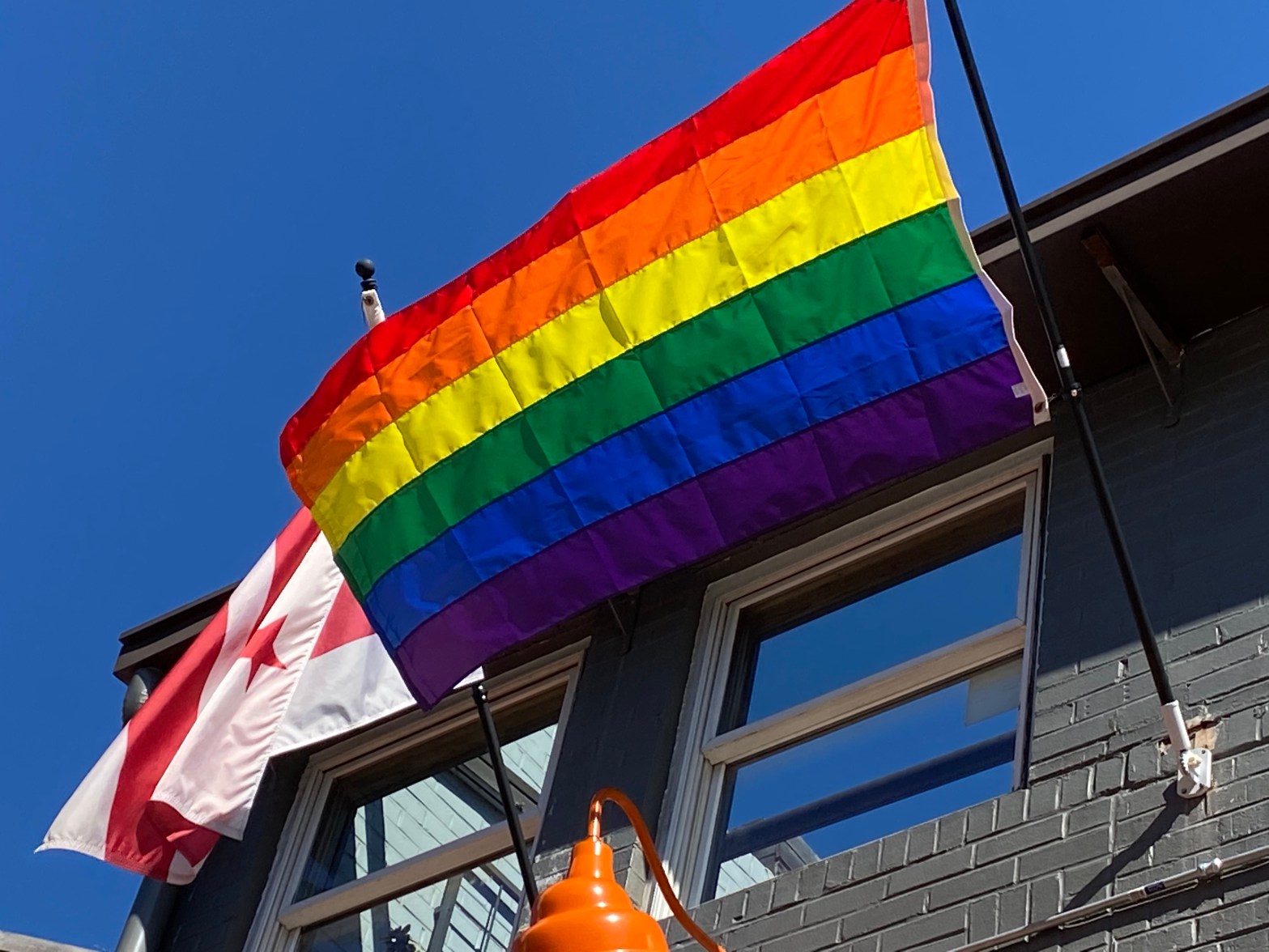
The Supreme Court is expected to make a decision later this year that could impact the rights of Americans who identify as LGBTQ. This upcoming decision has brought about immense waves of activism throughout the community, especially those in Washington, D.C.
Compared to other states, Washington, D.C. has the highest percentage of adults who identify as lesbian, gay, bisexual or transgender, according to the Williams Institute at the UCLA School of Law. However, there is a disagreement in the district on how public officials should work to protect the rights of these individuals.
“We are a progressive city, but there’s numerous things, frankly, that we’re just not funding,” said Japer Bowles, a member of the Advisory Neighborhood Council and an LGBTQ advocate.
Since 1977, the D.C. Human Rights Act made it illegal to discriminate based on sexual orientation and gender identity. Bowles argues that while the act grants these protections, the government is not funding programs that would enforce against discrimination.
Bowles represents the residents of Adams Morgan and is one of the founding members of the Rainbow Caucus, a group of ANC representatives who advocate for LGBTQ rights in Washington.
As a part of the Rainbow Caucus, Bowles says there is still a lot of work to be done by Mayor Muriel Bowser in protecting the rights of the LGBTQ community in Washington.
“They’re very good at messaging,” Bowles said of the Bowser Administration. “But when it comes down to developing a workforce program, that’s something that the council and the mayor are not necessarily taking the lead on.”
A study conducted by the D.C. Office of Human Rights found that discrimination of the LGBTQ community was still occurring by employers in the district. The study found 48% of employers in Washington would prefer a less-qualified cisgender applicant over a more-qualified transgender applicant. The likelihood is even higher for employers in the restaurant industry.
Bowles says that because there is not a strong advocate for the community on the D.C. Council, many of these complaints of discrimination go unnoticed.
“One of the biggest issues that we’re trying to tackle is to actually enforce the complaints,” said Bowles. “We are excited to have a more protected class but if there’s no funding behind it, what is the point?”
In January, the Rainbow Caucus joined a coalition of organizations that brought a $22.5 million funding request to the mayor’s office to be used to fund resources for the LGBTQ community, including $5 million specifically set aside for a transgender employment services program.
LGBTQ activists in the district have had challenges obtaining funding in the past. Last year, the D.C. Council rejected the Rainbow Caucus’ $3.5 million budget request for a grant program to protect homeless LGBTQ youth.
“It’s not at the forefront of many of their agendas and we have felt like we’ve been pushed to the wayside,” Bowles continued.
Protections of the LGBTQ community are becoming more challenging with multiple cases being brought to the Supreme Court that may result in more protections for employers who may choose to discriminate based on sexuality and gender identity.
In November, a case was brought to the Supreme Court by Gerald Bostock, a gay welfare services coordinator from Clayton County, Georgia who was fired when he joined a gay recreational softball league.
The case is to determine if Title VII of the Civil Rights Act of 1964, which prevents employers from discriminating based on a person’s sex, includes protections of sexuality and gender identity.
In an amicus brief, South Dakota Attorney General Jason Ravnsborg and 14 other state attorneys general representing Clayton County argued that the 1964 Civil Rights Act did not protect the LGBTQ community.
“The plain and unambiguous meaning of ‘sex’ in Title VII is biological status as male or female. That meaning is distinct from ‘sexual orientation,’ ‘gender identity,’ or ‘transgender status,’ as Congress’s actions since its enactment of Title VII confirm,” said state attorneys in the written brief.
When asked about the impact of the upcoming decision, some members of the Mayor’s Office of Lesbian, Gay, Bisexual, Transgender and Questioning Affairs say there is nothing that needs to be done to further protect LGBTQ rights in the district. This is due to the language in the D.C. Human Rights Act that protects against this kind of discrimination.
“Because of our laws, we have enforcement mechanisms available regardless of how this case goes,” said Bobbi Strang, president of the Gay and Lesbian Activists Alliance.
Strang said she is instead nervous about an upcoming case out of Philadelphia that could affect the ability to protect against LGBTQ discrimination within the district.
Scheduled to be argued during the Court’s 2020 term, the Philadelphia case will determine if organizations have the ability to discriminate on the basis of sexuality because of their religious affiliation. The case was brought by the ACLU after a foster care facility in Philadelphia refused to provide foster services to same-sex couples.
“If the Philadelphia case goes against the LGBTQ community, we would have no recourse if someone is claiming religious exemptions to anti-discrimination laws that protect the LGBTQ community,” said Strang.
Members of the community are beginning to anticipate that these results could affect them since the Court has recently become much more conservative. This is mainly due to the loss of Justice Anthony Kennedy on the Court.
Justice Kennedy was often a swing vote and wrote the majority opinion for Obergefell v. Hodges, a case that legalized same-sex marriage in the U.S. After his retirement, he was replaced by Justice Brett Kavanaugh who is considered to be more conservative, according to data from FiveThirtyEight.
“I think depending on how much the community reacts to it, we might be able to use this as leverage to get our more local legislative priorities passed,” Bowles said of the upcoming Supreme Court decisions.



 Advanced Reporting Times, Spring 2020