Senators express frustration with Trump administration officials on coronavirus testing

senate help coronavirus mar 3
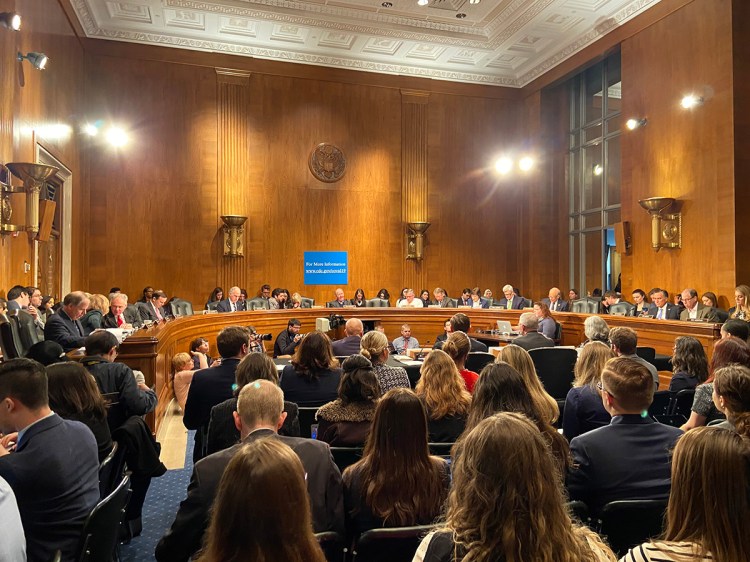
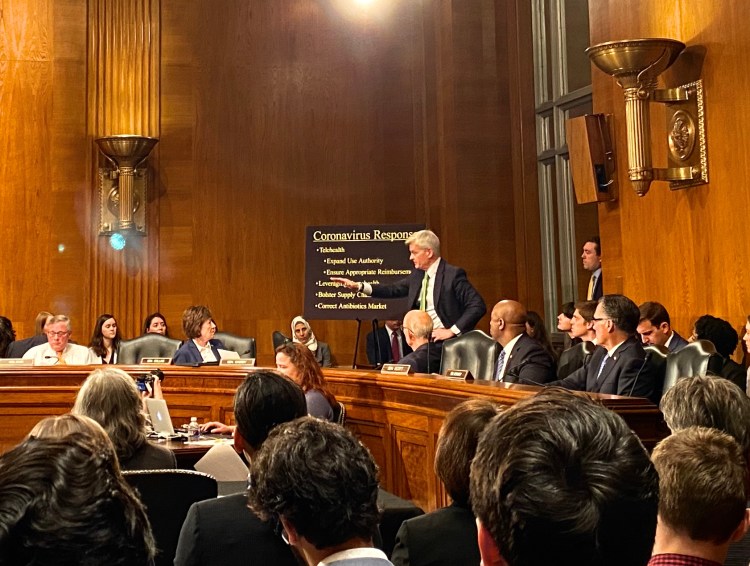
Senators prepare to question Trump administration officials on coronavirus while Committee Chair Sen. Lamar Alexander (R–Tenn.) delivers opening remarks. (Photo by Willard West)

Senators expressed frustration with the “unacceptable,” in the words of Sen. Patty Murray (D–Wash.), COVID-19 testing capability of the American healthcare system to Trump administration health officials in a Senate Committee on Health, Education, Labor and Pensions hearing on coronavirus Tuesday.

Trump administration officials from the Centers for Disease Control, Department of Health and Human Services, Food and Drug Administration, and the National Institutes of Health all testified in the nearly three-hour hearing.

Murray, ranking member on the committee, represents Washington, the state hardest hit by the virus with 10 deaths from the effects of COVID-19 as of the time of the hearing.

“The administration has had months to prepare for this and it is unacceptable that people in my state and nationwide can’t even get an answer as to whether or not they are infected,” Murray said. “To put it simply, if someone at the White House or in this administration is actually in charge of responding to the coronavirus, it’d be news to anybody in my state.”

She added that with community transmission — when the virus is spread by an unknown source in the community — starting in the United States, diagnostic testing needs to be accessible to all who need it.

“People across my state, and, I’m sure, across the nation, are really scared,” said. “I’m hearing from people who are sick who want to get tested are not being told where to go. I’m hearing that even when people do get tested — and it’s very few so far — the results are taking way longer to get back to them.”

The CDC has come under criticism from Murray and others for its slow response in sending respiratory testing kits to labs around the country. While the World Health Organization focused on three genetic components of the virus’s protein crowns (from which the name coronavirus stems) to test for COVID-19, the CDC developed their own test that was quickly shown to be partially defective, according to Time Magazine.

“I thought we were better prepared for this when it happened, and it doesn’t seem to me that we were,” said North Carolina Senator Richard Burr (R), criticizing limited testing ability and efficacy in the first months of the outbreak.

“The CDC’s piece in this is to supply the public health labs with tests,” said Dr. Anne Schuchat, principal deputy director of the CDC. “We developed the test very quickly and then detected some problems after the quality control steps were measured.”

Schuchat said the CDC is now confident in its test and that public health labs would be capable of testing up to 75,000 people by the end of the week.

Schuchat explained that public health labs are only a small piece of the larger testing response to the virus. Private testing labs represent a much bigger piece of the total testing pie and will do far more testing than public labs once it is scaled up, she said. The FDA is responsible for getting those labs up and running for COVID-19 testing.

Dr. Stephen Hahn, commissioner of the FDA, said that a private company is further developing the testing platform pioneered by the CDC.

“Our expectation in talking to the company that is scaling this up, is that we should have the capacity by the end of the week to have kits available to the laboratories to perform about a million tests,” Hahn said.

Dr. Anthony Fauci, director of the National Institute of Allergy and Infectious Diseases, said a blood test that could be performed quickly in a regular hospital clinic (rather than needing to be sent to an off-site lab) might be available soon in response to a question from Louisiana Senator Bill Cassidy (R), who is a doctor himself. This type of test would shorten wait times for results.

Alabama Sen. Doug Jones (D) told officials to push information to the public as quickly as possible, citing anxiety about the virus among the general population.

“We’re about to head into the allergy season, as well, and I just can tell you that people are so scared out there right now that the first time they sneeze with an allergy, they’re going to think that they’ve got [COVID-19],” Jones said. “We need to make sure that we try to educate folks so that those tests that we have, those limited ones, are for the right reasons.”

While testing for the virus should be more widely available by the end of the week, treatments and vaccines have a much longer timeline, according to Fauci. Both have yet to be fully developed and will require extensive safety testing before being deployed for use in the general public, according to the officials. The vaccine is at least a year away, Fauci said.

Fauci also said Gilead Sciences, a California-based pharmaceutical company, has a potential treatment for the disease called Remdesivir, which is being tested in both China and the United States.

“We should know within a period of several months whether or not this particular drug works,” Fauci said. “If it does, the implementation of that would be almost immediate.”

Officials at Senate committee hearing urge prioritization of the elderly and other at-risk individuals in U.S. COVID-19 response

IMG_2837
Sen. Bill Cassidy (R-LA) presents his ideas for the U.S. coronavirus response in the coming weeks. (Photo by Ashlyn Peter)


WASHINGTON—Senators of the Committee on Health, Education, Labor, and Pensions said at a March 3 hearing that the U.S. must prioritize certain individuals and long-term care facilities in planning its response to COVID-19, or the novel coronavirus.


The Director of the National Institute of Allergy and Infectious Diseases, Dr. Anthony Fauci, said that the U.S. does not have the amount of ventilators and other breath support devices that it needs to support the 15 to 20 percent of individuals who are more vulnerable to this illness. “Interventions are going to be critical” for those individuals, Director Fauci said.


The Senate committee hearing gave Director Fauci and three other health experts the opportunity to update politicians on the plans each of their departments is implementing to stop the spread of the respiratory illness.


The Commissioner of the U.S. Food and Drug Administration (FDA), Dr. Stephen Hahn, said, “We should have the capacity by the end of the week to have kits to the laboratories to perform about a million tests.” Some senators said FDA’s communication has been contradictory in recent weeks and expressed skepticism that one million test results will be available by Friday.


Sen. Christopher Murphy (D-CT) said that realistic expectations must be set to effectively combat the spread of the virus. “Your estimate that by the end of the week there are going to be a million tests out there does sound a little aggressive given the fact that we’ve only tested three thousand people,” Murphy said.


“We don’t want to go through all our tests on low-risk situations and not really be able to address the care and the contacts that are going to be critical,” Dr. Anne Schuchat, the principal deputy director of the Centers for Disease Control and Prevention, said. “People with severe respiratory disease who don’t have an obvious diagnosis should be tested.”


Director Schuchat said public health labs should be able to analyze 75,000 tests by the end of the week, which contradicts the prediction by the FDA.


This prioritization extends to medical equipment, as Dr. Robert Kadlec, the assistant secretary for preparedness and response at the Department for Health and Human Services, said that the U.S. only has 10 percent of the materials it needs in the strategic national stockpile if the virus becomes a pandemic.


Director Fauci acknowledged that the national stockpile does not include face masks, but he also believes that the general public does not need them. “Right now, there is not anything going around in the community, certainly not coronavirus, that is calling for the broad use of masks, Fauci said. The best way for individuals to combat the coronavirus is to wash their hands and get their flu shots, Fauci said.


Those more susceptible to the virus need ready access to respirators and face masks, so those items should be reserved for them, Fauci said. In fact, the health experts urged the public to refrain from creating personal stockpiles of materials. “A key planning principle is to protect the most vulnerable,” Director Schuchat said. The best way to do this is to make sure the public is well-informed, Schuchat said, and she pointed to the CDC website as a resource.


Medical resources could be bolstered by a bipartisan emergency supplemental funding agreement that Congress is working on. The agreement would also fund vaccine development, which experts estimate could take up to a year.


A Senate vote within the week is also likely to decide how much should be appropriated from the nation’s infectious-disease fund for this outbreak. Ranking Member Sen. Patty Murray (D-WA) said these additional efforts could make up for the inadequate funding President Trump allocated to combatting covid-19.


Murray said she was also worried about the 27 percent of private sector workers who do not have the opportunity to take paid sick leave (Murray did not cite the source of this figure but the Federal Bureau of Labor Statistics estimates it at 24 percent). Murray urged the floor to consider implementing a policy that would allow these low-income workers to stay home should the need arise.


“When those people’s basic needs are not met, they can’t make choices to protect themselves, which means they can’t make choices to protect others,” Murray said of those without access to paid sick leave or child care. “One person getting sick has repercussions for all of those around them.”


Senators also acknowledged that parents face difficulties if their children need to stay home from school for two weeks. School closures are locally-driven, but the CDC recommends, “Shift to staying home when you’re sick, perhaps canceling assemblies, changing the patterns of what’s done in class,” Director Schuchat said. The goal is “trying to keep classes going because so many depend on school lunches and other services that are at schools,” Schuchat said.


In Sen. Murray’s state of Washington, there have been six confirmed coronavirus-related deaths and worry is beginning to spread. “Families deserve to know, and fast, when testing will actually be ready to scale up,” Murray said. Assistant Secretary Kadlec said that healthcare providers are still months away from providing rapid coronavirus testing for individuals.


Director Fauci also raised the possibility that the virus could disappear in the summer months and return with colder weather later in the year. “It may be seasonal and come back, that’s quite possible,” Fauci said.


Sen. Murray lamented President Trump’s response to the coronavirus, saying that a politician [Vice President Mike Pence] should not lead efforts to combat a health crisis. “To put it simply, if someone at the White House or in this administration is actually in charge of responding to the coronavirus, it’d be news to anybody in my state,” Murray said.


Most people in the U.S. are at low risk according to the World Health Organization, Committee Chairman Lamar Alexander (R-TN) said. Sen. Tim Scott (R-SC) said that health experts must find a balance between urgency and alarmism. “We should be acting with a sense of urgency but not buying into hysteria that will make it even more difficult for healthcare providers,” Scott said.


About one hundred individuals in the U.S. have contracted COVID-19 in the U.S. compared to 90,000 people worldwide. About half of U.S. cases included those flown from overseas and quarantined for two weeks on the west coast.


To further contain the virus’ spread, Sen. Alexander said the Department of State recommends citizens avoid traveling to China, Italy, or South Korea. As more information emerges, the government may modify its recommendations. President Trump imposed travel restrictions on foreign nationals who have traveled to China or Iran in the past two weeks.


Sen. Alexander ended the hearing by focusing on the U.S.’s economy and reliance on China for drug imports. The percentage of how many drugs come to the U.S. from China is unclear, but Alexander said that this virus has shown the U.S. that it should not rely solely on one source for drug manufacturing. When the coronavirus is no longer the government’s main focus, it intends to turn its attention to diversifying the nation’s drug supply, Alexander said.

THE TRAVEL BAN VS. AFRICA: AN UNCERTAIN BATTLE

By Teni Oduntan

 WASHINGTON- In January 2020, the Trump administration announced 5 more countries to be added to the travel ban policy. Immigrants from Myanmar, Eritrea, Kyrgyzstan and Nigeria would be banned from the US while Tanzanian and Sudan citizens will no longer be able to apply for the “diversity visas,” known as the green card lottery, according to the Department of Homeland. Leaving its citizens, both in their countries and in America, perplexed and upset. This policy has found itself to affects all types of members of the African diaspora.

In a Cava restaurant at DC’s Chinatown on a Saturday night, sits Tolu Obalade with his usual chicken bowl, and although his food says cruelty-free, the same cannot be said about the treatment of his people back home in his native country.

With his arms crossed and a light frown on his face, one cannot help but observe his frustration on the topic. Tolu hails from Lagos, Nigeria where he was born and spent the majority of his teenage years. The 23-year-old is currently working on his master’s degree in public policy at the College Park campus of the University of Maryland. With the plethora of opportunities that may arise at the end of his masters and the duration of his F1 visa status coming to a close, Obalade cannot help but feel trapped by this travel ban.

In early February, the Trump administration announced that it would place a travel ban on Nigeria and Tanzania, making it one of 7 African countries to be banned from travelling to the United States.

He heard about the travel ban a month ago and although the Lagos native is already in the states, he cannot help but express his concern over the new policy. “The travel ban is going to affect me almost immediately,” the 23-year-old expresses as he looks to the ground “I have a study abroad opportunity in France with the Organization of Economically Developed Countries, and because my visa is expired, I would have to renew it in the wake of all of this.”

Obalade states that the study abroad opportunity is from June 16th– June 23rd and although it may seem like a short period of time, it could be a life-changing one for the master’s student…..However, the UMD student is on the verge of declining the offer. He explains that accepting the offer and going to France would prove as too much of a risk and he does not want a situation where he leaves the country and is unable to re-enter due to an inability to renew his visa. “So not only does it control my traffic, but it also hinders me from exploring opportunities.”

 Due to his college education, the 23-year-old seemed to have elevated knowledge on the matter in which he was able to analyze the repercussions of the ban. “It is so frustrating, because I feel as though Nigerians give more to an economy than we take,” says Obalade “we are one of the most educated immigrant groups in America, we contribute to the economy; we are doctors, nurses, lawyers, bankers, musicians, actors.” He then explains that the travel ban may prove ineffective due to the phenomenon of Africans illegally migrating to Europe by boat or other communities still making their way to America. “It is like prohibition,” explains Obalade “Despite it being banned, people will find their way around it and migrate here.”

While the ban is affecting people at in individual level, organizations are also receiving the repercussions of it. Advocacy group, African Communities Together, is an organization that offers legal services and training for African immigrants and their families. With chapters in both New York and Washington D.C, the organization currently has 3,000 members to its name.

Establishing the organization in 2012, Amaha Kassa, wanted to create an organization that protected African families in America. “I had worked in community organizing since 1995 and I noticed that other communities would come together when they had issues in policy,” says Kassa “I thought it would be critical for an African organization to exist, that could speak on issues concerning them (Africans) and their habitation in America.”

 With the travel ban underway, the Ethiopian-born New-Yorker, has found many the organization’s members, coming to him on the issue. “The ban affects our organization heavily, it prevents Africans who are US citizens from applying to bring their family members over from Nigeria and Eritrea, to the US. That used to be automatic but now….,” Kassa expresses with a frustrated sigh “This policy would separate families; brothers, mothers, fathers, sons, daughters, husbands, wives.”

The organization’s members have expressed concerns that they would be separated from their families, as some family members would be in the process of receiving their citizenship and unable to leave the country, while the members back home would be unable to emigrate or visit them in America.

The same concern was also expressed by 21-year-old Biomedical Engineering major, Abby Mutiganzi, a Tanzanian student of the Florida institute of Technology. With her upcoming graduation this spring, Mutiganzi expressed her concern that her parents might not attend her graduation due to this ban over social media, much to a large reception.

“I did not think that my post would gain traction,” says the 21 year-old, “But I find it interesting that so many African students have the same fears as me.” The 21-year-old stated that she has anticipated her graduation since her freshman year in 2017. “My dream is for my parents to see me walk across that stage, so that they can see the reward of their hard work and sacrifice, but because of all of this, that might not happen.” Mutiganzi expressed her disbelief when she found out that Tanzania was included in the travel ban. “I was in shock,” she exclaimed with frustrated laughter. “Tanzania is peaceful, we don’t do anything.”

According to the Department of state, the bans on Nigeria, Myanmar, Eritrea and Tanzania are as a result of these countries’ inability to provide accurate information on the country’s safety rates, not meeting American security standards.

However, Amaha Kassa is skeptical of this claim. “They have made it clear that they want to keep out certain types of countries. From Donald Trump’s statement on Denmark and Finland, to his ‘Shithole countries’ statement back in 2018, They have made their xenophobia and anti-blackness clear.”  

 With a tense climate on the situation, both in these banned countries and in the United states, and an uncertain future, these African immigrants have decided to plan their lives based on the situation at hand. “I plan to attain my Ph.D.” says Obalade “I am also heavily considering moving to Canada to attain my Ph. D.”

“Wherever opportunity takes me, I will go,” says Mutiganzi “As of now, my parents are going to keep trying to get their visa so that they can come from my graduation.”

 “I cannot predict the outcome of this bill,” says Kassa “It is hard to say what the Trump administration might do next; they are unpredictable. But we will still offer our services to any families that need us.” With the travel ban that has been underway since February 21st, 2020, many Africans, both in their countries and the diaspora are watchful for the future.

Recent House bill highlights the need for creative PTSD treatments for veterans

H.R. 4305 passed the House of Representatives on February 5 and is awaiting action in the Senate.  Photo by Lindsay Russell.

by Lindsay Russell // March 2, 2020

WASHINGTON – The House of Representatives passed a bill in early February that would launch a five-year pilot program to make federal grants available to nonprofits that train service dogs for veterans with post-traumatic stress disorder. As part of the pilot program, the Department of Veterans Affairs would assess the effectiveness of using service dogs to treat PTSD in veterans.

The Puppies Assisting Wounded Servicemembers for Veterans Therapy Act, known as the PAWS for Veterans Therapy Act, was authored by Rep. Steve Stivers, a brigadier general in the Ohio National Guard.

The grants would be available to accredited nonprofits. Training a service dog costs an average of $25,000, and most nonprofits provide the dogs to veterans free of charge.

The bill comes at a time when the nation is calling for an increased focus on veterans’ mental health treatment. Veterans are not receiving the care they need, and suicide rates are climbing.

On average, 20 military personnel die by suicide each day in the United States, when accounting for veterans, reservists, and those on active duty. This is nearly twice the suicide rate among those who have never served in the military.

Veterans experiencing PTSD can face symptoms including panic attacks, nightmares leading to insomnia, flashbacks, outbursts of anger, hypervigilance and a loss of interest in activities or social interaction. PTSD can ultimately lead to depression, substance abuse and suicide.

“Our nation has an obligation to protect those who have served us, and that’s why suicide prevention is my top clinical priority,” David J. Shulkin, then-Secretary of the Department of Veterans Affairs, wrote in a letter published to the American Association of Medical Colleges website in November 2017.

Since 2017, the VA has trained more than 12,700 mental health clinicians in evidence-based practices like prolonged exposure therapy and cognitive processing therapy, which the VA refers to as the most effective methods for treating PTSD in veterans.

Janice Krupnick, Ph.D., is the director of the trauma and loss program in the psychiatry department at Georgetown University Medical Center. Krupnick says the VA-endorsed PET and CPT methods have high drop-out rates, creating gaps in care.

“What is particularly pronounced in veterans is a lot of social isolation and avoidance of things that remind them of trauma,” Krupnick said.

Many veterans experiencing PTSD feel that they should always be on high alert, which makes it hard to enter crowded spaces like grocery stores, shopping malls and movie theaters. That fear keeps them inside their homes.

Service dogs are trained to interrupt the anxiety and redirect the veteran. They will lick, nudge or paw at the veteran to force them to focus on the dog instead of panic. The dogs are trained to create space for the veteran by putting their bodies in between the veteran and the crowd.

 If the veteran is feeling anxious about leaving their back exposed, the dogs can position themselves to watch the veteran’s back. The comforting presence of the service dogs allows veterans to sleep more soundly.

 “A service dog provides what [veterans’] prescription medications and any other methods they’ve tried to alleviate their PTSD doesn’t,” said Brianna Bentov, public relations manager for K9s for Warriors. They allow the veterans to regain their independence and their confidence.

K9s for Warriors is a nonprofit that adopts and trains service dogs to pair with veterans experiencing PTSD, a traumatic brain injury or military sexual trauma. The organization has matched and graduated 612 veterans and service dogs from their three-week training program.

“Most of our warriors who come here say that this was their last resort, and they wish it had been their first,” Bentov said. After just a few weeks with their new service dogs, Bentov says many of the veterans in the K9 program reduce the pharmaceutical drugs they take to manage their PTSD symptoms.

The House passed the PAWS for Veterans Therapy Act two years after the first quantitative research results were released on the effectiveness of service dogs for veterans experiencing PTSD.

At Purdue University’s Center for the Human-Animal Bond, Dr. Maggie O’Haire and graduate researcher Kerri Rodriguez are working to put scientific data behind the anecdotal evidence that service dogs reduce PTSD symptoms in veterans.

O’Haire and Rodriguez partnered with K9s for Warriors in 2015 to conduct a series of studies. The research team studied the K9 for Warriors program graduates who had been paired with a service dog and the veterans on the K9 for Warriors waiting list who had not yet been paired with a service dog.

 In 2018, they released two promising pilot studies which show that based on both self-reporting and a physiological test, the group of veterans with service dogs had a better quality of life than their counterparts on the waiting list.

“It seems that one of the big benefits to having the service dog is getting out of the house and having the freedom to go into public,” Rodriguez explained. “There were amazing stories of veterans being able to go to their son’s soccer games for the first time or to the movies.”

The first study found that the veterans with service dogs reported lower levels of overall symptoms of PTSD, lower levels of depression and higher levels of overall life satisfaction.

The second study measured veterans’ levels of salivary cortisol, a stress response hormone, and found that veterans with service dogs had more normal cortisol levels, which indicates lower levels of chronic stress and anxiety. The veterans without service dogs had more abnormal cortisol levels, revealing the toll of years of chronic stress and anxiety as a result of PTSD.  

“We did find significant evidence that there is something happening physiologically, as well as psychologically,” Rodriguez said.

This study, published in June 2018, is the first physiological evidence to support service dogs as an effective solution for managing the symptoms of PTSD. It is important to understand, however, that the service dogs do not completely eradicate the symptoms, Rodriguez noted.  

O’Haire and Rodriguez are currently working on a clinical trial to track the effects of service dogs over time. Those results are expected next year.

“I hope we’re giving veterans a voice through science,” Rodriguez said. “We hear these really incredible stories about how these service dogs are saving veterans’ lives, but there is now finally data to start to show that that change can be real.”

 As the PAWS for Veterans Therapy Act awaits its future in the Senate, Stivers is “cautiously optimistic,” says AnnMarie Graham, communications director for Stivers’ office. “Everybody has kind of gotten on board that this is the [bill] that we’re actively pushing.” 

A vote has not yet been scheduled in the Senate.

If you or someone you know needs support, the Veterans Crisis Line is available by dialing 1-800-273-8255 and pressing 1 or by texting 838255.

Doing God’s work through lobbying in the Trump administration

With every new administration, religious nonprofits, who lobby on issues relating to the core values of their faith, have had to build new relationships with staff and elected officials in the executive branch. With the Trump administration, some religious organizations have had to rethink the strategies they use to change public policy. 

“If you’re not at the table, you’re on the menu,” said Raahima Shoaib, communications and marketing manager for Muslim Public Affairs Council, in a phone interview. Organizations like Shoaib’s and others have found it difficult to work with the Trump administration compared to previous administrations. 

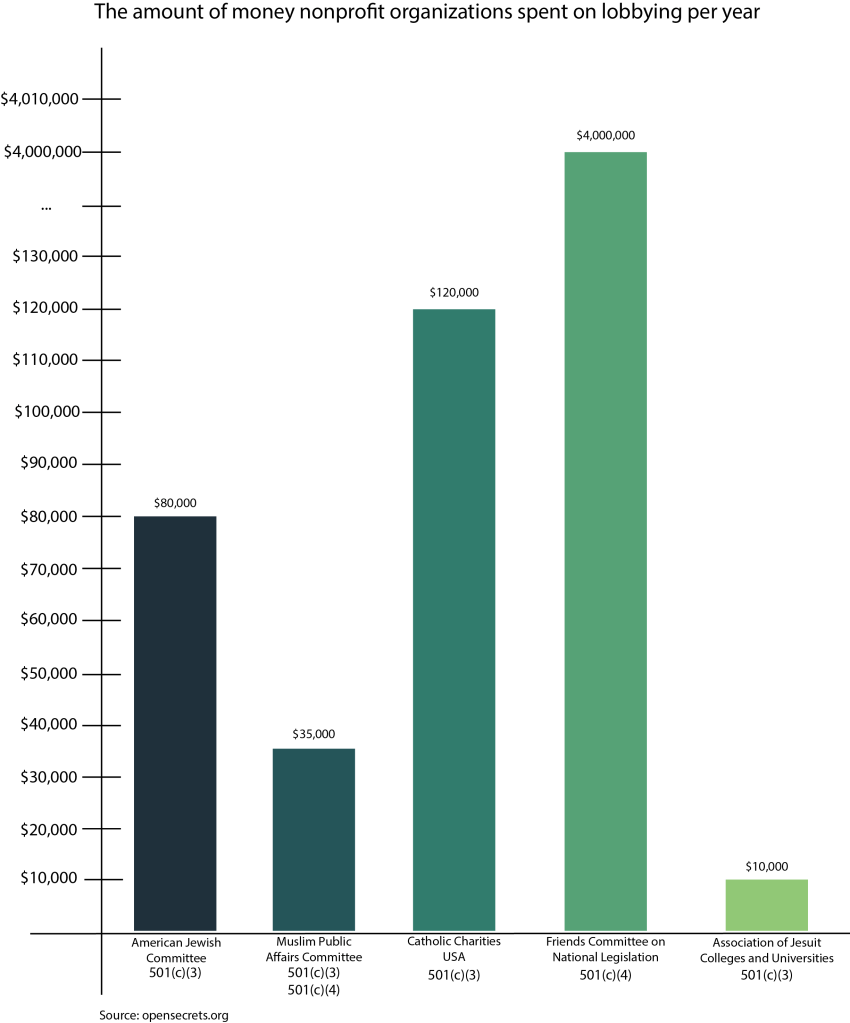
Since 1970, there has been a fivefold increase in religious advocacy in Washington, D.C., What started out as fewer than 40 groups, has increased to over 200 today. Collectively, these organizations spend over $350 million a year on attempting to influence national public policy, according to the Pew Research Center’s study, Lobbying for the Faithful. 

“Once the Trump administration took over, I think that was a pretty big avenue of our work that we needed to reconfigure,” Shoaib said. “They’re not really willing to engage with American Muslims and we’ve seen that over and over again.” 

The Muslim Public Affairs Council shifted their focus from the executive branch, towards Congress when Trump was elected. Shoaib said the response from members in the legislative branch has been positive. “Most people are really open to hearing the other side, it’s just about having the access to do that.”

The organization advocates within the government to defeat misconceptions about American Muslims, and speaking out against Trump’s travel ban on Muslim majority countries. Their main strategy for lobbying is engaging with elected officials, policy makers and civil servants through dialogue. “You need to be in the room that those policies are created,” Shoaib said. 

Catholic Charities USA focuses on a variety of topics, ranging from immigration and refugees, to affordable housing and the opioid crisis. Anthony Granado, vice president of government relations, said in an interview, engaging with the Trump administration has been challenging. “There have been tensions over a variety of issues that have impacted what has been a very cooperative, collaborative relationship between the nonprofit sector, … , and the government,” he said. 

There was more of a realistic approach to communication when working with the Obama administration, Granado said. “They knew the areas where there was disagreement, and we agreed to disagree.” 

Refugee resettlement has become a new concern within the organization because the Trump administration is allowing record low amounts of people to come into the United States, Granado said. Because of this, Catholic Charities will be forced to close many of their refugee resettlement camps because there won’t be any funds, “and there certainly won’t be any refugees.” 

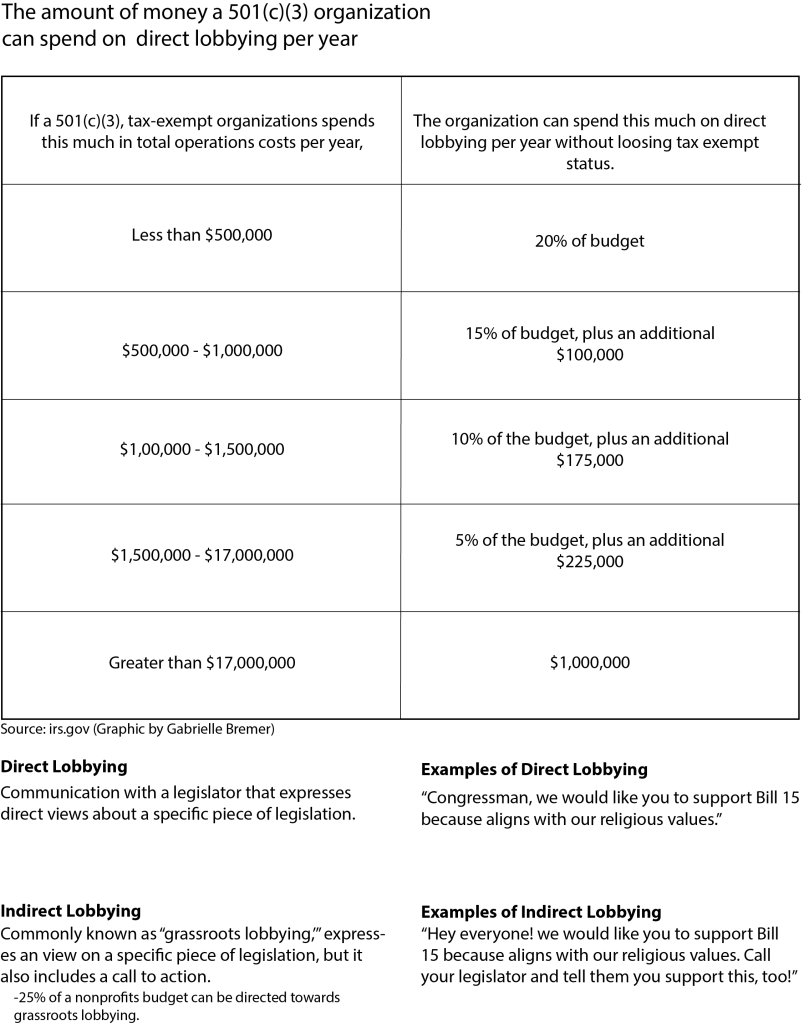
The Internal Revenue Service has strict guidelines on how much nonprofits can lobby. For an organization to qualify for section 501(c)(3), they can’t devote a substantial amount of its activities to lobbying. For a group that spends less than $500,000 a year, they can spend up to 20% of their total lobbying. 

Some 501(c)(3) organizations create a 501(c)(4) companion that allows the nonprofit group to conduct significant amounts of direct lobbying. However, the two organizations must remain two separate entities, and the 501(c)(3) cannot give funds to the 501(c)(4), the Pew Research Center study, Lobbying for the Faithful, said. 

“Each administration brings with it its own personalities, and its own issues it champions better than others.” said Jackie Subar, assistant director of political outreach for the American Jewish Committee, in an interview. “We’re always moving and shifting to figure out where we fit within new administrations.”

American Jewish Committee focuses on a wide range of domestic and international issues. Right now, the group is working on combatting the rise in anti-semitism in the United States and Europe. Subar said one of the key ways they conduct their lobbying is by attending meetings and strategy sessions with members on Capitol Hill. “Building relationships on the Hill is always important to getting things done,” Subar said. 

Friends Committee on National Legislation, a 501(c)(4), Quaker lobby organization, has also stressed the importance of building relationships, and maintaining an open dialogue with government officials. Sergio Mata-Cisneros, young adult outreach program assistant, said in a phone interview, “We’re there to have a dialogue and build a relationship with them to see how we can work together to address the concern we’re meeting about.”

“What we lobby is rooted within our faith. As Quakers, we believe there is that of God in everybody,” Mata-Cisneros said. There is good within every administration, and the organization has found room to work with Trump’s staff. However, the administration has also put forth legislation that doesn’t align with their values.

Other religious organizations have had difficulties communicating with the administration. Jennifer Smulson, the director of Government relations for the Association of Jesuit Colleges and Universities, said in an interview, there are times where organizations can be on the offensive side. She can go into meetings with government officials who are very receptive to her concerns. However, “I think the Trump administration has put us in a very defensive position,” she said. 

Smulson said this administration isn’t as willing to engage in dialogue compared to previous ones. There isn’t as much of a value placed on higher education, which creates slow progress. “Anytime that we see an increase in pell grant funding, … , even as small as it can be, I would look at that as a victory,” Deanna Howes Spiro, director of communications, said in an interview.

“Everyday, you’re going in, bracing yourself for ‘what are they going to do today?’” Smulson said. Other organizations who are having similar frustrations with the Trump administration are feeling the same way. However, some are trying to make the most of their time with this president and his staff, and accomplish as much as they can. “Real change happens when you’re able to change the hearts and minds of people,” Shoaib said.

House Hunting in Prince George’s County

By: Matt Sacco

Maryland – Walking up and down the National Harbor in Prince George’s County, you will see your fair share of young, college-aged adults.

Some stroll the waterfront enjoying the views of the Anacostia, while others peruse the many shops and restaurants lining the streets.

“It’s a hidden gem. After a while you’ve pretty much been everywhere, sometimes it’s nice to just get out of DC for a little.” Lindsay Evans said, surrounded by a group of other GW students.

Washington D.C. is by no means a cheap place to live comfortably. And for a recent college graduate, finding an affordable area to live can be a challenge. 

For Rashad Turner, returning to the DMV was about balance. 

“I always thought going back to Washington would be a no brainer for me, but I guess not.”

Rashad grew up in Delaware his whole life, before moving down south to Blacksburg, where he would receive his degree in Civil Engineering from Virginia Tech. After four years, Turner received his diploma in exchange for a hefty sum of debt.

As a native of the region, Rashad always thought he would move to DC after graduating. Growing up in a small town, Rashad said he was always attracted to the hustle of metropolitan areas, like New York or Philadelphia. 

However as reality set in and Rashad tried to manage a budget with his new job, he was less hopeful.

“I went to school in Blacksburg, so it was sort of a shock. When I was looking at the rent I was going to be paying I started to have some doubts.”

Rashad began his search in areas like Alexandria, Arlington and Montgomery County; typical hotbeds for recent graduates with entry-level jobs. 

“Maybe if I had majored in finance, I could have afforded the rent over there.”

With minimal options and a strong desire to begin his career in Washington, Rashad was persistent to find a decent, affordable living situation in close proximity to a metro stop. 

“I don’t have a car down here, so if I can get around by the metro I’ll be fine.”

Inevitably, Rashan found a home, not nestled in Alexandria or Arlington, but across the water in Prince George’s County, a few minutes away from the National Harbor.

To quantify just how expensive the area is to live in, the Bureau of Economic Analysis ranked the District of Columbia, and its surrounding counties in Virginia and Maryland as the second most expensive region in the United States to live in. This ranking considered prices for rent, gas, groceries and transportation.

While living in much of the DC metropolitan area is not attainable to average, entry level workers, some counties vary greater than others.

Montgomery County, Maryland’s most populous, offers somewhat reasonable rent prices and ease of access to transportation. The current median price in households in the area is around $438,000 according to the Maryland Department of Commerce.

Opposite, and across the Anacostia is Prince George’s County. Lagging just behind Montgomery in total population, the story is not the same for PGC in terms of households. The latest data available shows the average price to be around $286,000.

Both are located in Maryland, are close to DC, and have metro access into the city. Yet this huge gap between both regions still exists.

Mary Hunter and Stephanie Proestel of the Housing Initiative Partnership both have first hand experience working with this community and rebuilding after the financial crisis of 2008, a recession, they say, that disproportionately affected the region and its predominant minority population.

HIP provides various services specifically to Prince George’s County. Mary Hunter works directly on the counseling side of business, as she provides guidance to potential homebuyers who may not know the process of securing a loan. Her department additionally provided counseling during the financial crisis.

When asked how greatly the area was affected during this period, Mary said “Prince George’s County was considered an epicenter of the foreclosure crisis nationwide.”

“We had one of the highest foreclosure rates nationwide, it unfortunately happened in 2008 and it went all the way up through 2013 or 2014.”

The crisis left an incredible amount of houses vacant, many of which are in the same condition to this day. 

In conjunction with Mary, Stephanie Proestel works within to physically revitalize neighborhoods. HIP buys dilapidated buildings in the area and eventually turns them into affordable housing spaces for low and moderate income residents of the community. 

These renovations are not typical, run-of-the-mill affordable housing units. HIP prides itself on paying attention to detail when building their units, as well as creating eco-friendly, green homes for its residents. 

When asked if these regions have fully recovered from the foreclosure crisis, Mary said “I wouldn’t call it a crisis anymore, but you know there are people who are struggling for various reasons, but not on the same level.”

There is some hope that things are improving however. Prince George’s County has experienced a steady gain in job growth over the past few years. In just the span of six months, the unemployment rate in the county dropped nearly a full percentage point down to 3% according to the Maryland Department of Labor.

Much of the county’s employment comes from the University of Maryland, as well as branches of the federal government like the IRS and Census Bureau. Recently, Amazon has had a spillover effect across much of the DMV area.

When asked what is contributing to this growth, Stephanie said “We do probably have the largest growth because we have the largest potential of growth.” 

She notes that the county has always lagged behind in jobs, so there is invariable more room for the area to grow.

Additionally, Stephanie said “There are lots of good things happening and I think the county is focused on economic development. You see things like the purple line and infrastructure coming in.”

Rashan agrees. “My apartment for now does the job. It’s cheap, I can get to the metro pretty easily and I usually come down here [The National Harbor] on the weekends with friends.” 

He said he looks forward to riding on the purple line once it finally opens. For now, Rashan is happy where he is.

Revised: Numerous Efforts Underway to Strengthen and Diversify the Homeland Security Workforce

By Terrence Kane

Committee on Homeland Security, Subcommittee on Oversight,management and accountability convenes to discuss diversity in the DHS workforce. Photo by Terrence Kane

WASHINGTON – Officials from the Department of Homeland Security (DHS) and the Government Accountability Office (GAO) testified before Congress on efforts to develop a more diverse and inclusive workforce.

This hearing was the first in over a decade to look specifically at efforts within DHS to increase diversity and inclusion. “The Committee last held a hearing on this topic in 2009 after learning that racial minorities constituted only 20 percent of the DHS workforce,” Chairwoman Xochitl Torres Small (D-NM) said in her opening statement.

DHS Chief Human Capital Officer Angela Bailey and GAO Director of Strategic Issues Yvonne Jones provided testimony. Attendance included several members of a non-partisan, good government group called Partnership for Public Service. The organization aims to increase access, retention and equity in the federal workforce via legislative oversight and education.

Dara Carney-Nedelman, an intern at Partnership, described how her organization worked from outside the government to create a diverse workforce. Her area of focus is political appointee positions and educating the public on how they can apply for these positions. This education is crucial, she says, “so the general public is well informed to ensure that there is the most diversified portfolio of candidates at least applying for the positions.”

Madison Kubinski, an associate at Partnership whose focus includes workforce development, said actions taken by the Trump Administration regarding agencies within DHS caused her concern regarding workforce development. The Transportation Security Administration became the second DHS agency to suffer a hiring a freeze that was announced in early February.

“I am concerned with the TSA recent hiring freeze that they just announced. There have been a few other freezes that the administration is doing,” Kubinski said, referring to recent disruptions to federal hiring. She continued, “I was very happy to see that they wanted to give everybody a percentage increase on they’re paycheck. However, these latest moves are somewhat concerning to me.”

Kubinski says that she is hopeful moving forward that DHS will continue to make it a priority to hire and retain the most qualified people possible. This positive sentiment was echoed in the hearing by Ranking Member Dan Crenshaw (R-TX).

“Current efforts at DHS, like developing robust internship programs, recruiting at minority service institutions, and veterans hiring initiatives will all help in continuing this progress,” Crenshaw said in his opening remarks. The hearing also included discussion on several programs and initiatives that have been enacted in the past ten years and what affect, if any, they have had on increasing diversity and retention in the DHS workforce.

DHS has established an Employee and Family Readiness Council with a goal to identify top stressors for workers, as well as provide them with the resources necessary to manage the stress. The Council identified five major challenges that DHS workers face: general stress, dependent care, personal relationships, mental health, and financial concerns.

The department has instituted new training and counseling practices that specifically target the challenges related to personal and mental health to increase worker satisfaction and retention. However, working to increase the diversity of the workforce can often cause challenges for the department particularly in dealing with non-traditional workers.

Non-traditional workers are typically those that work reduced hours or engage in teleworking to accommodate their responsibilities outside of work. While non-traditional work seems like an easy set of solutions to a significant problem for many employees, Bailey made it clear that things aren’t quite so simple.

Asked about the potential expansion of teleworking withing DHS, Bailey said “So it depends, right? Because when you are going through the airport you certainly don’t want your TSA agent teleworking because I think you’d want to get on the plane,” providing an example of roles that may not be eligible for telework programs.

Telework expansion, according to Bailey, is “a balance of making sure the mission is able to be accomplished and then making sure that those who are eligible to telework can.” This provides a narrower path for retention for some DHS positions that require employees to work in person. But Bailey indicated that expanding the telework program where applicable would be a priority for the department moving forward.  

Another initiative created a process by which subject matter experts take an active role in the hiring of new works, rather than it being left solely to the human capital office. “It helps tremendously,” said Bailey of the initiative, “What it really helps with is that they actually get more qualified people because they actually know who they want to hire. And I don’t mean by name I mean that they are able to recognize talent.” However, the initiative is still too new to have statistics showing its affect on worker diversity or retention.  

During questioning, Republican members were focused on the nature of diversity barriers, rather than the specific efforts to combat them. The questions focused on whether the barriers were intentional or unintentional, to which both witnesses responded that there were no “intentional” barriers to workforce development.

However, Democratic committee members questioned the claim that DHS was significantly more diverse than it had been a decade ago. They cited specific reports that showed the department was failing to retain female workers at the same rate as their male counterpart, and that the department had a crucial shortage of bilingual employees.

As a result, Democrats continued to call for stronger efforts and better reporting of results. These improvements could be the ultimate effects of legislation currently before the committee, the Department of Homeland Security Enhanced Hiring Act.

The Enhanced Hiring Act has two provisions related to hiring veterans and workforce diversification. First, the act would condense several veterans hiring authorities into a single program to increase efficiency.

Second, the act would allow DHS to hire workers regardless of work history, so long as the total workforce still maintains at least 20% veterans. This would increase opportunities for diverse hiring as it loosens the current requirements on DHS to hire veterans at a hire rate than other applicants.

Secretary Devos pushes for changes to academic discipline

WASHINGTON — Betsy Devos appeared on Capitol Hill this Thursday to testify about the Department of Education’s proposed budget and Title IX rules that further rethink discipline in the academic setting. 

The new budget proposal would change how Title IX, the federal law that prohibits sex discrimination in education programs that receive government funding as well as covers sexual harassment and violence, is applied in school settings.

The proposed rule changes involve new definitions for domestic violence, dating violence and stalking. The changes also include new guidelines for addressing formal complaints of sexual harassment or violence that shift away from what the Department of Education calls the “investigator-only” model and towards live hearings and cross examinations. 

Devos also proposed a shift in the burden of proof from a “preponderance of the evidence” to the higher “clear and convincing standard.” 

These changes, the Department of Education says, seek to ensure that due process protections are available to all students. The rules are also a response to the increase in reported on-campus assaults during Devos’ tenure.  

While victims’ rights advocates welcome the addition of concrete definitions of sexual harassment, some are worried that these rules may make it harder for victims to report and get help after incidents of sexual harassment or violence. Experts also worry about the potential for retraumatization of victims when facing offenders, the high likelihood for a repeat offense, and how the new standard of evidence will dissuade survivors from coming forward.

The proposed rule changes follow on the Department of Education’s move just over one year ago to end an Obama-era push towards restorative justice, which emphasizes repairing the harm of criminal behavior by bringing together all involved parties to discuss the harm done and how it should be resolved.  This push had been an effort to reduce the number of disciplined, suspended, and expelled students of color and disabled students, both of whom received disciplinary action at disproportionately high rates.

“We should think of accountability in a less individualized way” said Eve Hanan, Co-Director of the Misdemeanor Clinic at the University of Las Vegas and Co-creator of the University of Baltimore Juvenile Justice Project. “A child in a fight is responsible, but what brought them to that point? What is a school’s accountability? What brings people to the place where breaking the rule is less complicated than the alternative?”

At the time, Devos called the restorative justice a “one-size fits all” solution, and urged schools to “seriously consider partnering with local law enforcement in the training and arming of school personnel” as opposed to using restorative methods to solve conflicts. 

Restorative justice initiatives remain popular for those involved in criminal and civil dispute resolution.

“Instead of pulling [offenders] apart from their school community and the people they’ve harmed they have the potential to fix their relationship with their peers, school, family,” said Hanan. “We need to stop trying to exclude or reject people when they commit harm, and instead bring them in closer.” 

In participating, victims and offenders are an active part of the resolution of that crime. Victims can decide what is necessary to make up for their experience, and offenders often face reduced punishment. 

According to the FBI website, states such as Texas, Pennsylvania, Maryland, and Oregon that have implemented restorative justice programs in their schools have seen reduced recidivism rates, improved restitution rates, and over two thirds of victims and offenders reported feeling positive about the process. 

The push towards restorative justice also includes an effort to bond communities by teaching both forgiveness and restitution. Restorative justice theorists propose that by rebuilding relationships instead of unilateral punishing wrongdoing, there will be stronger and more cohesive communities and increased social networks within towns and neighborhoods, and therefore less crime in the future.

 “Justice isn’t something that happens in one moment,” said urban sociologist Jordana Matlon. 

But for sex crimes in particular, some worry that restorative justice is not the right approach. 

“Justice reform can have a place to change an atmosphere and move along the sensibilities of someone exhibiting boorish behavior,” said sexual abuse, trafficking, and domestic abuse lawyer Michael Dolce, who himself was a victim of sexual abuse as a child. “But not a behavior that exhibits a kind of pathology like sexual assault.”

The Office of Justice Programs, an agency within the Department of Justice that focuses on crime prevention, reports that sex offenders are often skilled manipulators, a strategy that helps them gain a victim’s trust before an attack. If the same manipulation occurred in a restorative justice setting, it is possible that college administrators wouldn’t notice. 

“Can you accept an apology on face value from someone who has the pathology of a sex criminal,” Dolce said, “are you safe now because they made an apology? Or are we reinforcing that from a restorative justice position?” 

Prosecutors and police can be satisfied by restorative justice programs because they require the offender to acknowledge guilt and apologize, noted Hanan. But criminal situations can be ambiguous. 

“A lot of conflicts that result in harm aren’t as clear cut, there’s a whole world of un-agreed upon facts,” Hanan said. Acknowledging guilt can also mean that the offender has given up his or her right against self incrimination.

Both Devos’ efforts and the efforts of the restorative justice advocates continue as they seek the best way to find appropriate and just solutions for all stakeholders.  

“One of the reasons we’re having this discussion is because people are looking for an alternative, some sense of positive outcome for survivors,” said Dolce. “There’s still an opportunity for a sense of justice in lieu of having to gain proof. A victim has an absolute right to confront a perpetrator if it’s right for them, but survivors have different needs in the aftermath.”

But despite the push for a rule shift, some people remain skeptical that justice — either restorative or punitive — can ever be achieved.  

“There’s an added level of injustice to expecting justice,” Matlon said. “In the end, justice is contingent on who’s defining it.”


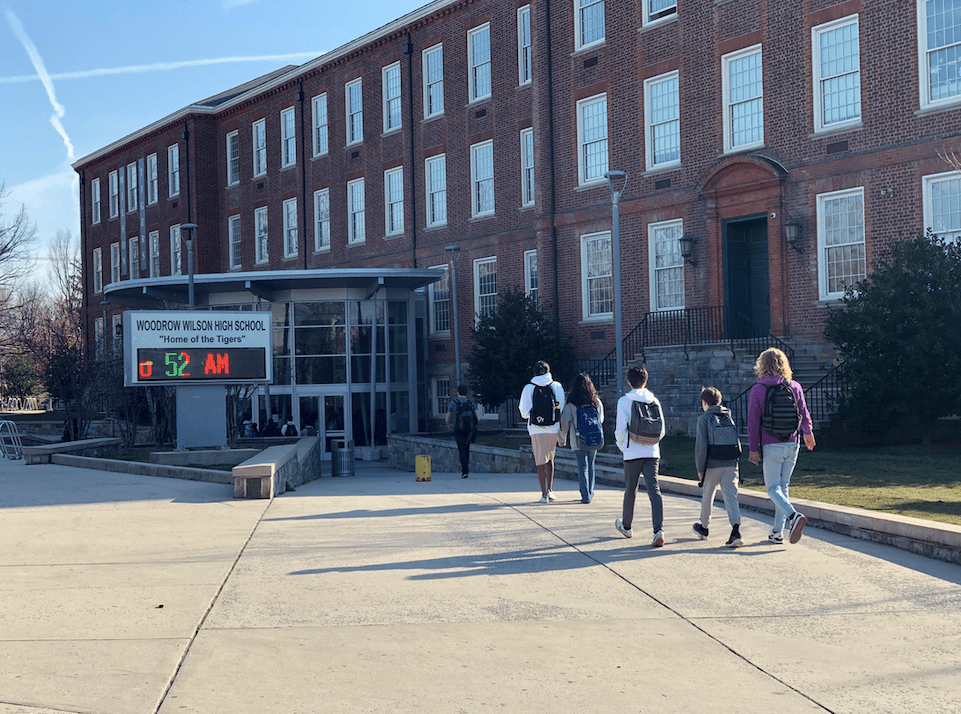
Students enter Woodrow Wilson High School, where the restorative justice program could be affected by Devos’ new proposals. Photo by Hannah Rabinowitz

Domestic Workers Protection Legislation Gains Momentum in D.C., Nationwide

In 2020, domestic workers’ rights is a rising issue in states from Massachusetts to California, and has recently found a footing in D.C. — both at a local and federal level.

The D.C. Council’s Domestic Workers Protection Act of 2019 amends numerous other laws that domestic workers like housekeepers and nannies were intentionally written out of in decades past. Most notably, the bill would amend the D.C. Human Rights Act of 1977 to include domestic workers as a category protected from abuse by an employer by law. 

According to Antonia Peña, a domestic worker and D.C.-area organizer with the National Domestic Workers Alliance, domestic workers face discrimination on both a systemic and personal level, because a majority of the workers in this field are women of color, sometimes with a limited ability to speak English. 

Domestic workers have little to no protection under the law, even from things like sexual harassment and assault by their employers, according to Vox

“Our job is not socially valued. People shame us,” Peña said.

The bill would also insert language including domestic workers in basic labor protections in D.C. labor laws like the Wage Payment and Collection Act, Minimum Wage Act Revision Act, Accrued Sick and Safe Leave Act, Family and Medical Leave Act, Universal Paid Leave Act, Parental Leave Act, Occupational Safety and Health Act, and Pregnant Workers Fairness Act, all of which previously excluded domestic workers.

These laws are the underpinning of basic labor protections like paid sick leave, family and medical leave, fair pay and a safe working environment that are enjoyed by around 800,000 workers in the District. Currently, domestic workers are at the mercy of their employer when it comes to all of these protections.

Since domestic work occurs primarily in the private sphere, it can be difficult to regulate. This is why domestic workers say they need more than to simply be written into existing laws. Key to making sure these protections actually take effect is oversight and outreach, according to advocates.

“The other part of this is also establishing a labor standards board and creating the mechanisms to enforce our rights,” Peña said.

The Domestic Workers Protection Act of 2019 would establish a Domestic Workers Standards Board to, “provide a forum for hiring entities, domestic workers, worker organizations, and the public to consider, analyze, and make recommendations for the District on the legal protections, benefits, and working conditions for domestic workers.” It would also create a Division of Paid Care within the Department of Employment Services to educate the community on new standards. 

The primary opponent of domestic workers labor protection legislation nationwide are au pair companies, according to Peña and Joanna Arellano, a press strategist for NDWA. 

Washington, D.C., Maryland and Virginia are among the top destinations for au pairs, according to the State Department.

Au pairs are foreigners — usually women — who come to the United States to work as a live-in nanny in what is billed as a cultural exchange program by the State Department and the au pair companies themselves. Positions like these are common in and around upper class areas of East Coast cities like Washington, D.C., New York City and Boston.

In Massachusetts, au pair companies sued the state government to exclude au pairs from a domestic workers bill of rights law, as it would increase the cost of employing an au pair around 250 percent. However, as families fought against the additional protections for workers, many au pairs were elated about their newly confirmed rights, according to The New York Times.

The State of Massachusetts reached a settlement with the au pair company that would provide partial refunds to au pair families in early February.

The comprehensive federal regulations provide extensive protections for au pairs, including protections beyond those found in domestic worker laws,” said Ilir Zherka, executive director of the Alliance for International Exchange which is a trade organization representing au pair companies, in an emailed statement. “Attempts to misclassify au pairs as domestic workers will only serve to weaken the protections from which they currently benefit under the federal statute as J-1 visa holders.”

However, a 2017 Politico Magazine article detailed how au pairs fall victim to many of the same abusive practices that other domestic workers do. Au pairs, like other domestic workers, are frequently the victims of stolen pay and time, sexual harassment and assault, and common cruelties at the hands of their employers. And while the State Department and others sell the program as cultural exchange to the public, to prospective families it is sold as cheap childcare and au pairs have little recourse against abusive employers, according to the magazine. 

The D.C. bill is expected to get a hearing in front of the Committee on Labor and Workforce Development in fall, according to spokespersons for the committee and for Council member Brandon Todd, who introduced the bill. 

The bill received sponsorships from Council members David Grosso and Robert C. White, Jr., who are on the labor committee. Council member Elissa Silverman is the chair of the committee, but is not yet prepared to release a position on the bill, according to a spokesperson who also said that the committee will be occupied by oversight and budgetary duties until summer.

Whether legal protections are won or not, the NDWA is devoted to making domestic workers’ lives easier. They are using technology to ensure fair benefits and expectations for domestic workers.

NDWA has created two software programs — ALIA and Contracts for Nannies — that make it easy for employers of domestic workers to make contributions to a benefits account that workers can use for things like paid time off or insurance, or to write up a clear and concise contract understandable to both parties, respectively.

“ALIA provides a platform where domestic workers can have all their employers plug into this system where they can accumulate paid days off, because as domestic workers they don’t benefit from those types of basic labor protections that most workers have,” Arellano said.

Trump Administration’s Proposed Health Plan Threatens to Risk Federal Funding for Medicaid Services

By: Theo Smith // March 26, 2020

In late January 2020, the Center for Medicare and Medicaid Services (CMS) revealed a plan that would allow states to apply for waivers to block-grant Medicaid funding.

Medicaid is a federal and state program that provides low or limited income individuals and families with health resources and services. These block-grants allow local and state authorities to allocate money to a wide range of services outside of the Medicaid program.

This plan would change the Medicaid program by limiting health services that were previously funded by the federal government. Patient advocates say this proposal has the potential to drastically change health plans and insurance coverage.

According to the National Health Law Program, a progressive health policy organization that focuses on Medicaid eligibility litigation, there are 74 million people covered by Medicaid in the U.S. The proposed CMS guidance would restructure the Medicaid program and radically affect health insurance for recipients.

Hannah Eichner, a policy fellow at the National Health Law Program, explained how the Medicaid program fills gaps in the current health care system and picks up the slack that private insurance plans miss.

“Medicaid allows people access to health care that can’t afford private insurance,” said Eichner. “These block grants are extremely problematic because they would cut coverage for people who need it the most.”

In a statement last week, Leo Cuello, Director of Health Policy at the National Health Law Program, expressed disappointment in the CMS proposal.

“These block-grants would be devastating for any state that attempts to implement them, and any irresponsible state leader that pursues this policy will be acting against his or her state’s interests and the people who depend on Medicaid for their health insurance coverage,” said Cuello.

Currently, one in five low-income Americans rely on Medicaid for health insurance. Additionally, college students around the country rely on Medicaid’s out-of-state health services. American University Sophomore, Ahmad Hamid, expressed how D.C. Medicaid has serviced his health needs.

“Since I don’t have health insurance, when I go to the University health center I have to pay a larger fee than other students,” said Hamid. “Because of this, I typically use services off campus because it’s so much easier and cheaper.”

The Trump administration claims this new program would allow states to offer more benefits to patients and directly control government spending. However, many health advocates, insurance providers, and patients have spoken against the proposal due to its ability to undermine insurance for the poor.

The current CMS Administrator, Seema Verma, disclosed that the newly named program, “Healthy Adult Opportunity,” would be an important step for conservatives; like Oklahoma Governor, Kevin Stitt, who have been trying to prevent Medicaid growth. Many conservative states including Idaho, Oklahoma, Utah, and Indiana, have expressed interest in controlling their own funding and support the guidance outlined by the new waivers.

“These waivers are a lose-lose situation for people covered by Medicaid,” said Eichner. “For the most part, states would cut funding for expanded Affordable Care Act coverage and family planning services.”

The Affordable Care Act (ACA), more commonly known as Obamacare, provides more than 20 million Americans with health insurance coverage. This monumental federal statute increased coverage and access to health care services for people around the country.

“The point of the ACA was to invest billions of dollars on preventative health care now, in order to save trillions on services later,” said Aimee Richardson, health educator at Kaiser Permanente. “The backlash from the new plan will come at a huge cost, not financial but human.”

Health experts from the National Health Council, the American Medical Association, Avalere Health, and many more, argue that altering flexibility on available Medicaid services would be far more harmful than beneficial.

“We didn’t wait for the ACA to work, we didn’t give it the time it needed in order to be effective,” said Richardson. “The constant changes to [the ACA] is fracturing the system in a way that will be irreversible.”

When the ACA passed in 2010, it expanded services to a wide variety of people including the unemployed, pregnant women, children and college students. One of the most important aspects of the ACA and Medicaid is that there are built-in protections that ensure that states provide people with high-quality health care.

“When I was in school I couldn’t afford to use the health center for my primary care needs,” said recent American University alumna Maisha Hoque. “I was covered by Obamacare and was able to use the services in DC, even though it wasn’t my permanent residence.”

The Trump Administration’s proposal would force states to take on more financial responsibility and allow flexibility of available services for Medicaid enrollees. The current system requires the federal government to pick up 90% of the financial burden of Medicaid and Medicare services.

States have a balanced budget and can’t take on debt. Accepting these waivers would increase the financial risk of a state’s economy. Several states, including Maine, California and Nebraska, have been speaking out against the CMS proposal.

“States wouldn’t just be cutting funding,” said Richardson. “They would be cutting opportunity, access, and the possibility of a healthy future for those who are enrolled in these plans.”

These block-grants allow states flexibility in choosing which core protections, established by the ACA, insurance plans offer. According to the Center on Budget and Policy Priorities, a non-partisan think tank that analyzes federal and state budget policies, states who accept the waivers should expect to face litigation, as the announced plan violates federal law.

“Health policy is an extremely polarized issue and has become increasingly so in the past 10 years,” said Eichner. “It’s difficult to get a general consensus about a piece of legislation or new health plan. So to say that there is strong opposition against this plan is a big deal.”

IMG_4714

Ahmad Hamid, 19

Design a site like this with WordPress.com
Get started